Showing posts with label Patch-working. Show all posts

Thursday, 17 April 2025

Pumped for the weekend

My professional life has seen a tumultuous two weeks. High stress, long hours. You can probably guess why. Yes, that's right. The stream of conciousness spouting from a certain person in the United States of America has made recent weeks a misery. I have good coping mechanisms though, in particular birding. If I can get an hour or so out on Wanstead Flats before I head to work then I face it in an upbeat frame of mind. Birding is permanent, this lunacy will pass.

Egyptian Goose. Lovely.


I've missed just one day, and whilst on many of the days I've perhaps not seen a great deal it has been immensely helpful for my mental health. That is if I am allowed to even mention mental health these days, this and many other emminently sensible approaches to wellbeing and basic humanity seem to be on the retreat in this brave new world. 

Anyway, of all the recent days Tuesday and today have been the best. Tuesday was grim, constant rain that became a fine mist until at least lunch time, and it was no surprise that a Ring Ouzel dropped in. Found by hardier birders than myself, I tend not to go out in heavy rain, but by late morning it was starting to clear and knowing it would still be around I went out to look for it. I jammed it more or less immediately as it flew from one area of cover to another. My 46th on the patch, I couldn't quite believe it when this statistic popped up. The murk also landed a couple of Wheatear, and my day was enlivened by a steady stream of Swallows passing more or less over my house as I manfully attended call after call.


Wheatear

Wednesday was less exciting, a single Sand Martin battling against the breeze and being blown east when I suspect it had north in mind. Fast forward to this morning and Bob found a Nightingale singing in Motorcycle Wood. I was with James on the other side of the road talking about whether we would get a Nightingale this year. Turns out "yes" was the more or less instant answer. It was my 6th - the first was in 2013 but all the others have been in the last five years, a rare instance of an uptick in numbers. I wasn't able to see it as it sang from thick cover, but I very much enjoyed it. To say I am pumped for the long weekend ahead is an understatement.

No, I am not obsessed with Parakeets, why do you ask?


Monday, 10 January 2022

The Patch

Low-carbon local birding is clearly a growing theme in 2022, and like many others I'll be doing a local patch list this year. This is not as novel for me as it is for some, something like my 15th in succession - all on foot with the odd emergency twitch by bike. From memory the Black-necked Grebe, Iceland Gull, Mandarin Duck and Red-crested Pochard were all arrived at very rapidly on two wheels; the journey back often a bit slower, my fitness is appalling. Look however at this trim young man who last year cycled 3500 miles. That's roughly London to New York. Pete has several years on me, and I...well, I have several kilograms on him. Well done Pete, absolutely amazing. If like me any of you are in need of inspiration please go and read about his adventures.

To my chagrin my 10km never really took off last year, and it is not like I did much else. Partly I suppose this is because I was so intensely wedded to Wanstead, but it was also because I am very lazy. This laziness is only really present prior to any given activity, once I actually start everything is fine, most enjoyable actually, but I find that initial hump so hard. Consequently it is easier to wander across the adjacent and familiar. This apathy hump does not just apply to things that require physical exertion, it's many things, almost everything in fact. Reading a book, mowing the lawn, unstacking the dishwasher, twitching.... yes, even twitching. I 'need' both the Pacific Diver and the Belted Kingfisher that so many people have been to see. I would dearly love to add them both to my UK list, yet I cannot get over that initial hump, which in this case is getting into the front seat of the car and turning it on. The thrill of either of these birds would be amazing, I know I would love it. If there was a way to get there instantly, without a nine hour round trip, I would have gone immediately. As it is I reckon I'm going to miss them. I couldn't drum up the enthusiasm to go see a confiding Little Bunting in Bexley. Hell, I couldn't even be bothered to go to Walthamstow for the Dusky Warbler, a bike ride of perhaps 40 minutes. That's where I'm currently at.

But I have managed a few little excursions in Wanstead, which whilst very same old same old I find does fit with my current life goals. I had a good mooch around Bush Wood which I already recounted, and then one day last week before work, perhaps the only day when it hasn't been constantly raining, I overcame the "oh it's a bit cold" type of crap and got out into the Park just before dawn. It was excellent, nicely cold with half the water bodies almost totally frozen and birds nicely concentrated in open patches and easy to count. Of note was a Water Rail skittling back into the reeds at Shoulder of Mutton as I came around the corner, and then down by the Ornamental Waters a flock of about 40 Siskin came across from one of the islands and landed in a large tree at the bottom of the Glade. As they flew off again they were joined by another 30 that I had not noticed in an adjacent tree, an impressively noisy swirling cloud. 

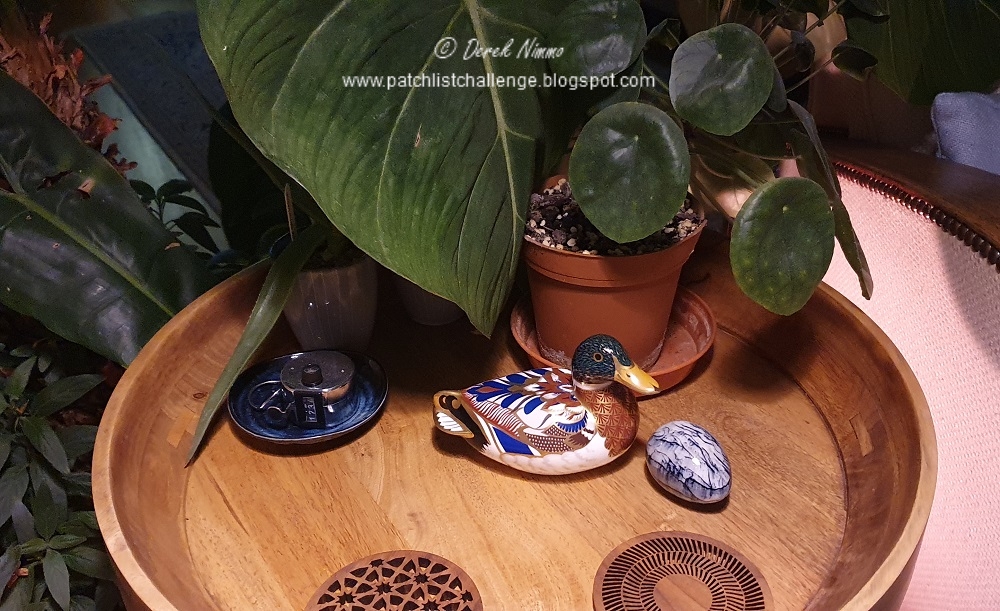
My fledgling 2022 effort now stands at 54. I know for a fact that there is a Pochard at Jubilee, and the possibility of Linnet there too, but there's that hump again.... I was about ready yesterday and then it rained all day. Again. There is plenty of time ahead of course, but what should be spurring me on is the arrival of the Golden Mallard in the post on Friday. This fine porcelain gem is the major prize in the annual (and original) patch list challenge that I have been participating in for several years now. So not only was 2021 record-breaking in Wanstead, it also gained me custody of the coveted Mallard for the next year with a score of 116.27%. The rules are that the average of your prior three years of patch lists is your new baseline of 100%, thus a good year puts you at a distinct disadvantage for the following the year, and to a lesser extent the next two years as well. As such it is rare that the Golden Mallard spends longer than a year with any one of us. Its last journey to Wanstead was in 2016, and given the number of birds I need to see to even get to 100% this year let alone retain it, it is certain to migrate to pastures new in 2023. For now though it has pride of place on a small table upstairs where it reminds me that I should get out more.


Tuesday, 25 August 2020

A clean sweep

Yesterday I managed to condense autumn into a single day. Over the course of three brief birding sessions I managed to see all the commoner expected migrants. First up an early morning balcony sky-watch, then a mid-morning whistle-stop tour around the brooms on Wanstead Flats, and finally a mid-afternoon dash to the SSSI - there and back in fifteen minutes. My personal totals are a thing of great beauty, and in years to come looking back on August 24th 2020 will always elicit a smile.

3 Whinchat

3 Wheatear

2 Redstart

1 Pied Flycatcher

1 Spotted Flycatcher

1 Tree Pipit

2 Yellow Wagtail

8 Willow Warbler

1 Lesser Whitethroat

Other birders picked up a few more here and there - another Redstart, another Yellow Wag and two more Whinchat and Spotted Flycatchers, but when I look at my list I am once again reminded what an incomparable spot Wanstead Flats can be on a good day. Prof W, now a foreign correspondent, remarked that he too wished he lived by the coast, and he is not wrong. Remember for a minute that Wanstead Flats is not a remote headland or a shingle spit. Instead it straddles zones 2 & 3 of the London tube network, and it has no right to get so many passerine migrants and yet it does. It provokes feelings of jealousy in other London birders who can only marvel at why this should be. I always offer two alternative explanations.

1) The amazing skill, passion, dedication and diligence of all the local birders, by which I mean me.

or 

2) The fact that from the air at night Wanstead Flats must look like a fabulously inviting dark space in the middle of the blazing sea of light that is east London. If you were a bird looking for a spot to dive into as your night flight comes to end where would you head for? This place literally shines out. Or doesn't, if you see what I mean.

Number two strikes me as altogether more likely, although you cannot rule out the fact that the coverage here is excellent, particularly from certain individuals, by which I definitely don't mean me.

So that was my birding day and I am dead chuffed. The longest session was the early morning one, starting at 5.45am out on the balcony. This delivered the (calling) Pipit and the two Wagtails, all of which I also saw. The Chats were all in the brooms, and the Flycatchers and Warblers were all in the SSSI which saw somewhat of an emergency visit later on when I realised that a full house was on the cards. I didn't have a camera for any of it, no time, and the freedom of birding without being fully laden is something I find myself enjoying more and more. But of course all blog posts are enhanced by a photo, so this is the most recent burnt area two weeks after the fire that I wrote about here, and as you can see it is doing quite nicely - the deluge last week has accelerated the recovery to the extent it looks really quite green already. Lovely stuff. And even more lovely was that it contained two of the three Wheatears.


Monday, 26 February 2018

Extremes

On Sunday morning I was leaving Oman - by the time the plane left at around 9.30am the temperature was approaching 30 degrees. The previous afternoon it had been 37 degrees. Even the birds that live there seemed to be finding it hot, as this panting Wheatear shows. By the way, if you happen to have a hunch that this is Hume's Wheatear and not a Variable Wheatear, or vice-versa, do please let me know as I am undecided.


This morning could not have been more different. The local birding team had enjoyed a Lapwing bonanza over the weekend, birds pushed from the slowly freezing continent over the channel to the relatively mild UK. It doesn't feel like it, but compared to Europe we're enjoying a bit of a mild spell. So before work I trotted out onto Wanstead Flats to see if I could get in on the action. As it happens I could, and in the hour or so that I had 27 birds flopped over - excellent. It was however absolutely glacial - the snow came in horizontally on a bitter breeze and hiding from it meant missing birds. Oman anywhere slightly below Muscat is officially the tropics - that area where the sun will be directly overhead on at least one day of the year, so to come back to the UK after a nice little break sniffing out Wheatears and other nice birds in sweltering sunshine was a bit of a shock to the system.


Friday, 27 October 2017

Woodpigeon spectacular

I hit Wanstead Flats again first thing this morning, with the aim of addressing the Hawfinch-shaped gap on my patch list. I was only away for a matter of days, but predictably one of those was the one when some Hawfinches flew over. I console myself with the fact that had I been in the country I would have just been sitting down at my desk in Canary Wharf as Bob and Nick were high-fiving each other near Long Wood. I think that would have been a lot worse. Anyway to cut a long story short, once again I didn't see any. Fine, I'm used to this being the result of a morning on the patch. However, what the patch lacked in Hawfinches it more than made up for in Woodpigeons. I realise that a Woodpigeon and a Hawfinch are in no way equivalent in quality. But how many Woodpigeons are there to a Hawfinch? What's the exchange rate? 100? No. 500? Nope. What about 1000? Personally I think the pendulum is swinging at this point. 5000? I think we're there.

In short it was spectacular, and no words or photos (of which there are none) can adequately convey quite how magnificent a sight the sky was this morning. I've waxed lyrical about the magic of mass bird movement before, notably about Lapwings and Hirundines, and this morning was another one of those that is right up there. I gave up counting, I had to, but there were thousands upon thousands. When I lifted up my bins upwards to attempt to count a near flock, the sky behind them was also filled with multiple more distant flocks. And I'm not talking the odd 10 or 20, I'm talking about hundreds. They were coming over 200 at a time, 250. I counted in blocks where I could but I was not equal to the task. I am conservatively recording 5000-6000 birds in the space of little over an hour. It was probably a lot more than that but I like to remain cautious, even with dirt birds.

At first - just after dawn - the birds were low, most likely just having come out of roost locally. Half an hour later the first high flocks started coming through and then they just didn't stop. Every time I looked up I could see tightly packed groups of birds, stretching to the far horizon. In front of me, behind me, a broad front passing over London. Howard, watching at Rainham, reported the same. Tony, in a traffic jam on the way to work could also not help but look at the sky. The craziest count I saw came from Darryl Spittle in Wales who estimated over 200,000 birds in nearly 6 hours of watching. Mostly I don't give Woodpigeons a second glance, but when there is a mass movement (of anything really) you cannot help but be wowed and amazed by the spectacle. How did they form up? Why is today the day? Where did they come from, and where are they going? So many questions, but best not spend too long dwelling on what you will never know and instead just gratefully witness a marvel of nature. I was deeply pleased that despite some mild jet lag I had got up and out, it was one of those mornings which I will remember for a long time. This is what patch-working is all about.

Monday, 18 September 2017

Top patch moments

Between lulls in Redstart activity last weekend my fellow patch-workers and I got to talking about our best moments on the patch. What was interesting was the almost total agreement between us of which particular days those were, so much do they stand out from the norm. The norm of course is what we were doing, standing around chatting as there was nothing much else to do – most days on the patch stand out for being really really boring and containing very little bird interest. Very very occasionally there is some major excitement which anywhere on the coast would be classified as “Much about?” “Nah mate, dead”, but round here you take what you can get. So here are my picks in chronological order.

Finding my first Ring Ouzel
I still remember this as if it were yesterday. After years of trying to twitch other people’s Ring Ouzels, mainly dipping, and finally driving to Hertfordshire for my first, I got up one October morning and said to Mrs L that I was going out to find a Ring Ouzel. Remarkably that is exactly what I did, I rounded a corner near Esso Copse and came face to face with a fantastic male Ouzel. I still can’t quite believe it. Unfortunately I was not writing a blog in 2008 so the world remained ignorant, but I repeated the feat the following spring. If you fancy seeing how amateur (even more amateur) my blog was back then, you can check it out here.


Lapwings, Jack Snipe and Golden Plover
This might still take the prize as the best patch day ever – bitterly cold, snow in the air and on the ground, and over the course of that February in 2012 day I saw close to 400 Lapwings.  Given that seeing even one Lapwing in any given year can be rather a challenge, this was and remains nothing short of sensational. They came in wave after wave, each floppy flock being greeted with increasing enthusiasm. It was one of those days where we could do no wrong. Whilst checking out a Med Gull on Alex, itself a rare bird, a Jack Snipe dropped onto the ice which was a tick for everyone. Whilst we drank in the Snipe movement overhead caught my attention and a group of six Golden Plover flew over us, another patch tick. I believe my shout was heard on the Essex coast. You can read about it here.


A large fall of Wheatears
Spring 2013 was notable for a really delayed passage. Migrating birds were held back on the continent by poor weather and for weeks we got practically nothing. And then the floodgates opened and we were deluged. One particular morning I went out on the Flats to discover that it had started, and standing at the VizMig point and turning 360 degrees I could see over 20 Wheatears. Given my affinity for this species, the experience was magic. As before, the original is here.

Grasshopper Warbler in the morning, Red-legged Partridge in the evening
Birding plans changed rapidly one spring morning when Tim called to say that he had a Gropper in the Old Sewage Works whilst surveying reptiles. At this time of the year all the action is typically on the Flats, and it is a good twenty minute walk. As one we hoofed it over there, with Marco beating us all as he had a bike. Whilst watching this great new addition to the patch list we then got news of a visiting birder (Barry, one third of the trio that also contains Harry and Larry/Stuart) had seen a Red-legged Partridge on the Flats where we had all just been! With work looming I charged back there but couldn’t refind it before I had to leave. Naturally those patch workers lucky enough not to be saddled with employment enjoyed it at their leisure not long after whilst I had to sweat it out in Canary Wharf. I fully expected it to be eaten by a dog during the day, but nonetheless left work early hoping I might be lucky. I was lucky! I found it pottering around under a set of goalposts on one of the playing fields, and had enough time to dash home, grab a camera and get back to it before the sun set. A memorable day, which can be relived here.


Thousands of Hirundines
All of us old and new remembered this day, being as it was relatively recent and entirely amazing - September 21st 2015. Most of us had never seen anything like it anywhere, let alone on home turf. A trickle of hirundines became a torrent. I still can’t think of an adequate way to convey it really, you just had to be there. Thousands up thousands of birds passing from knee height to hundreds of metres up. Almost as quickly as it started it stopped again, but that hour or so will – and I honestly mean this – be with me for the rest of my life. That’s the power of birding. Here’s how I wrote about it at the time.

Yellow-browed Warbler, 3 Ring Ouzels, flock of White-fronted Geese
This was only last year but still creeps into the annals of Wanstead Birding as being worthy of inclusion. The whole event lasted a matter of minutes, but was amongst the most exciting moments on the patch that I have ever experienced. In a nutshell we were all celebrating a Yellow-browed Warbler, the first one that had been multi-observed, when three Ring Ouzels came up out of Motorcycle Wood and circled the western Flats. As this was happening a skein of Geese came in from the west making a slightly unfamiliar honking. It took a while for us to register the difference, but these were no regular Geese, this was a genuine flock of autumn White-fronts, long distance migrants from a long way north. A number of us had had two full-fat patch ticks in as many minutes, and we all agreed that as far as mornings go this was right up there. Again, you had to be there, but I hope that my original post goes some way to setting the scene.


Saturday, 28 November 2015

Firecrest and Dr Who in Bush Wood

New fact learned today: Bob is capable of light-speed and quite possibly time travel. Handy trick to have up your sleeve if you're a birder, and frankly explains a lot. I'd just found a Firecrest in Bush Wood and had texted the news when all of a sudden my phone rang and there was Bob, literally the other side of the bush. Was that the zap of a lightning bolt? I'm not entirely certain but it was remarkable.

"Jono, are you the other side of this bush?" 
"Er, I don't know, hang on, I'll shout.....HULLO!!"
"JONO!"
"Yes I am!"
"Are you playing Firecrest as I think I may have just heard one in this bush"
"No I'm not, but you have just heard one and i'm looking at it!" 

*Zap*

"Oh hi Jono, where is it?"
"How did you do that?"
"Oh, er, well, you know...."
"Right, well now you're here it was just round this trunk...."

And there it was, in fact there two were, chasing each other around and generally being amazing. I marked the spot with a secret birdy sign, and together we continued around Bush Wood, Bob on foot this time, hoping for Treecreeper or Woodcock but finding neither. 


Woodcock was the whole reason I was in Bush Wood in the first place, as I still need it for the patch year list. I'd put the word out and two hundred people had come to help me look. I hadn't told them to dress up in stupid clothes but I wasn't going to argue. I blew my whistle and they all charged into Bush Wood and started doing circuits while I stood patiently on the edge waiting for Woodcock to fly out. Sadly not even this extreme tactic worked, and when my army of flushers got bored and ran off, I ventured off-piste to the north-east of the pond just in case. As I fought my way through the brambles and holly and trod on no Woodcocks, it occured to me that this was historically one of the best areas for patch Firecrests, and a few years ago I'd seen up to four birds in here. Every other site in London has got wintering birds at the moment, where are ours? Heaps of various Tits and Goldcrests doing circuits, a few Woodpeckers, and suddenly, low in a Holly, a Firecrest! I could barely believe it, after all this place is regularly surveyed.....;-)  (sorry about that Mr H)..... So I put the news out via text and within about two seconds Bob teleported in.

Remarkably these are the first Firecrest on the patch this year, we all managed to miss them in the early winter season. With a couple of spring records we did wonder a couple years back if they bred on patch but couldn't really find any evidence either way so we assume not. Still, glad they have returned, and this glorious find takes me to 112 for the year, somewhat against the odds but I'm firmly in the groove now. I'll no doubt be pottering around there tomorrow seeing if I can't add to the total. Bob meanwhile will be looking for Common Tern back in June.

Wednesday, 6 November 2013

Blasphemy

I am considering not doing a patch year list next year.

Bad, huh? I mean, could this in fact be blasphemy? Is Lee going to issue a fatwa, especially as I'm not even second division in that other facet of birding, twitching? It's not that I am bored of the patch, not at all. I love it, but I simply cannot do it justice, and it really annoys me that I can't get out there anywhere near as much as it needs. Time is at a premium, work is ridiculous, I travel a little bit, and the bottom line is that I don't have time. Can a patch be done just at weekends? I don't think it can. Although this year has been a record-breaking year for me, actually mostly other people have found the birds and I have simply popped out to see them. Counting them up, of the 17 what I would consider less-than-annual birds on my list for 2013, I've found just six of them and twitched the rest. Maybe this isn't so bad in the grand scheme of things, a relatively lively ratio in fact considering how little I went out there in comparison to some of the others. Nonetheless it still irritates me, and my response is to maybe give up. Now that I put it like that, sounds pretty crap. Oh dear.

Maybe it's all Nick's fault? He is fortunate enough to be able to do the patch all morning every day. This means that I have lost count of the number of times that I've had to leave to go to work, and he has turned up something good either as I've been on a train, or at my desk. As you can imagine, this is very painful. Once, fine. Twice, OK, I'll cope. All the bloody time? Gah! Especially when the bird in question was probably there the whole time, but as is the habit with small birds, inactive/still asleep when I went through early on my way to Canary Wharf.

But that's not the sum of it. Far from it. The patch is way too busy, even early in the morning. The seemingly exponential increase in usage from all quarters is driving me insane. Stunningly arrogant and loud dog-walkers, all out at the crack of dawn. The litter left everywhere, from innumerable all-night drinking clubs, from the mass scattering of water and sports drink bottles after football, the devotions of rice and so on left on the edges of ponds, to the absurd quantities of rotting bread left out for birds. The joggers who run in front of my lens, the man who listens to air traffic control from the Wheatear log of all places, the radio-controlled planes that ruin weekend afternoons. And of course the gay cruisers that hang around Long Wood, and what they leave behind. The fact anybody finds any birds at all is astonishing, and the overall effect is spoiling it for me. The dog walkers are the worst of course, but quite a few of the others aren't all that far behind. Mind you, I'm rather tense at the moment, and it takes ever smaller indiscretions to annoy the crap out of me.

So what to do? Not bother? Seems weak, but it may be the answer. If I can't go round it very often, and when I do I can't move for other people and half the birds are asleep, then it lessens the pleasure I get from it. And that is if course the whole point. But is being miserable about not doing the patch worse than a lesser amount of happiness, and fair amount of annoyance, from doing it a small amount with a lot of disturbance? One to ponder. I would definitely miss it, but equally maybe a rest from it would refresh it for me? Then again, what would I do instead if birding was restricted to the weekend only, as seems likely. Would I be desperate to get out there, or would I be keener to go further afield?

Tuesday, 3 September 2013

Banging (them in), Hanging (in there)

I'm still just about clinging on to my Wanstead year-listing ambitions. The need to be at work at the exact time that passerines start to become active is a constant bore, with the possibility of people finding birds when I'm in crowded train carriages or negotiating busy platforms an almost constant problem. Sometimes I get lucky though and today was one of those days. Failing yet again to haul my ass out of bed at a sensible time, due in no small part to the inevitable conclusion that I would see nothing at all before I departed the patch, only for all the birds to come out and show superbly whilst I was on the way to work, I missed a patch Nightingale. This bird had been suspected the previous day, but Nick had made sure to be there early doors, and had been greeted by the sight of it perched up and having a morning preen. When I got there it had naturally dived into cover, and two untickable flight-views later I was on the bus, which is where I learned about the Wryneck that was also in the Brooms. Piss. Still, our third in four years - what a patch!

But this story has a happy ending. Leaving work sometime after seven, I received news that the Nightingale was in its original spot and sub-singing. A quick diversion from my normal route home, and it wasn't long before I was nearing the viz-mig point, where Bob, Dan and Stu were apparently seeking safety in numbers and listening out for the bird. As luck would have it, my timing was impeccable, as approaching the large patch of broom the bird was rumoured to be in, the briefest snatch of sub-song emerged. For the record, it went duh-duh-duh-duh in that way that only Nightingales can do. But was it the bird, or was it an iPhone?! Happily it wasn't the guys, and so on to the list it goes. A short while later the bird broke cover briefly and flew to the next patch of broom, allowing short views that without the heard bit would probably still have been insufficient, but frankly were one coincidence too many. In any event, Nick has some photos from this morning, which hopefully when on the big screen will show it in all its glory.

The last few days I have been properly banging them in, as in addition to being a full fat patch tick, this takes me to the Nelson, 111, which is a major milestone as it is essentially my average patchlist over the last three years, and thus my 100% for the Patch List Challenge. It is also just two away from my record of 113, achieved in both of the last two years, and given I'm still missing resident Tawny Owl and Bullfinch, I've got a good feeling. Plenty of other possibilities as well, Med Gull, YL Gull, Brambling, and who knows what other winter birds. The record could be on. I'm miles behind Nick, currently on 118, but I'm definitely hanging in there.

Ringo from Ireland, nothing whatsoever to do with this post.


Saturday, 10 November 2012

Grotty

Typical. My one morning out on the patch and it's raining. Raining quite hard in fact. Yep, though it pains me to admit it, I am a fair-weather birder. Especially in mid-November when there is little chance of seeing anything new, and little chance of getting a photograph that will please me. I woke up fairly early with thoughts of noble patch-working in mind, and padded softly to the window to peer out. My eyes take at least two minutes to actually work first thing, presumably another sign of ageing, and so I struggled at first to see what was going on. Was that a puddle I could discern on the other side of the road? Yes, I think so. Hmm, but was the surface of that puddle still..... some rubbing, some squinting, and yes, there were raindrops. Dammit! Still, every cloud..... I padded softly back the way I had come, and into the still-warm dent (crevasse!) in the mattress.

This is a great shame, especially as I was hoping to snaffle a Waxwing on the patch today and thus advance up the Patch List Challenge leaderboard, despite the devasting news of the loss of the main prize. Flocks up north are numbering into three figures now, and gradually a few are coming down south. London has had a handful, and surely will get more, so I need not worry unduly. It isn't all about patch ticks of course, it's about being at one with the birds joggers, dog-walkers, footballers, drunks, litter.....

Wanstead managed a flock of around 40 birds last year, and, most spectacularly of all, a small flock flew over my garden one morning while I was sky-watching - I couldn't stop grinning for days. But as everyone knows, it's all about taking photos of them as they are lovely and bright, and generally fearless. The best opportunity last year was at Lakeside Shopping Centre, somewhere I would never normally willingly go. I counted 225 there in January last year, and the carpark hedges were teeming with them just at car-window height. Perfect.


So what have you been eating then? 

Wednesday, 22 August 2012

Wanstead Rares

Never one to pass up an opportunity to talk patch stats, I thought my lucky readership might be hugely interested in what birds I have not seen many of in Wanstead. Kind of the bottom ten. The great thing about this is that each patch is more or less unique, and what is common in one place would be mega in another. I will never forget birding Girdle Ness with Mark L when three Canadas flew past. Whilst I carried on picking my nose, Mark was jumping up and down and fist-pumping, shouting "Patch Gold!" at the top of his voice. I just love that expression. Anyhow, here, in decreasing order, like "Pick of the Pops", are my personal Wanstead Patch Golds.

Some basic information. I've lived and birded here for eight years. I don't go out every day, but I do go out a lot. All the below relate to individuals, as opposed to occurences. I thought about doing it in terms of 'times seen', but it would have been a bit more difficult. Natch.

10. Firecrest
Exclusively wintering birds in Bush Wood or Reservoir Wood, with up to four seen in a day. Fantastic, we are lucky to have them.


9. Common Tern, Peregrine Falcon
Common Tern are a summer visitor, and one has the distinction of being on the garden list. Peregrine live nearby year round, but are infrequently seen.

8. Tree Pipit
Autumn buzz-overs, and one spring bird. I'm still waiting for one this year. Any day now I expect.

7. Bullfinch
Resident, but shy and retiring, and on the bit of the patch that is furthest from my house.....

6. Golden Plover / Goosander
The Golden Plover were in a single flock this winter, and were visible for approximately ten seconds. Mega. Five of the Goosander were from the same cold snap, with four in one go. Never easy, they don't linger.

5. Red Kite
Five single birds, always flyovers, and always in the latter half of March. The first time I saw one was thanks to Prof W going shopping, and I nearly fell off the roof trying to see it. Definitely on the increase.

4. Shelduck, Pied Flycatcher, Brambling
Shelduck are always flyovers, as are Bramblings. Pied Flycatchers are a difficult passage migrant, but last year I saw two.

3. Woodcock, Med Gull, Sedge Warbler, Nuthatch, Treecreeper
Seen three of each of all of these. Woodcock is a winter visitor and a question of pure luck. Med Gull is very scarce, but they tend to be eminently twitchable, and Nick is responsible for all three. Sedge Warbler is remarkably difficult, and why Nuthatch and Treecreeper should be so mega is anyone's guess - the habitat in the park is ideal.


2. Red-crested Pochard, Mandarin, Garganey, Green Sandpiper, Wood Sandpiper, Yellow-legged Gull, Little Owl, Yellowhammer.
The wildfowl constitute a pair of each, the former being long-stayers and the Garganey being available for one day. I've seen two of each wader, and two Y-L Gulls, all on the Flats. Little Owl was a previous resident, only two indivduals that I know of, and I've had Yellowhammer twice.

1. The creme de la creme, and unsurprisingly the longest list. It's worth going through them one by one, as they're so special.

Osprey - my greatest moment, at 6am one September morning I wondered why every single Woodpigeon in Wanstead was going ballistic.....

Oystercatcher - heard only one foggy morning. A long overdue tick.
Stone Curlew - a gem of find by Nick that somehow stayed for two days
Little Ringed Plover - found this by the Alex, after sticking around to investigate a two-bird theory.
Jack Snipe - One of those "Oh my God" moments as this flew in and skittled around the ice. "Is it?", I asked myself. You know what, I think it is. "JACK SNIPE!!!!!!!!!!!!!!"
Dunlin - Amazing, and stayed all day.
Caspian Gull - a short-staying bird on the Flats one day; dog-related departure. May or may not get accepted, this is me we're talking about after all.
Turtle Dove - in Long Wood, purring away merrily. My daughter chose this exact moment to wet herself and so I never saw it.
Dartford Warbler - Stu found a male about 100 yards from where I predicted one would turn up. Well done him!
Rook - a summer garden flyover, never again.
White-fronted Goose - I looked through this bird several times before realising there was something funny about it. Provenance unknown, but it did nothing wrong so I'm having it.
Wryneck - who can forget this one. Stayed a whole week, and was even twitched by Lee. What more could a bird want?
Goldeneye - a long-staying female on Heronry
Smew - another cold-snap gem.
Pheasant - a long-staying male in the SSSI. Disappeared when the fair turned up, I could not possibly comment.


So there you have it, my top ten, or my top 38, depending on how you see it. With fifteen birds appearing only once in eight years, a true top ten would have been slightly difficult to produce, but thanks for reading this far. You'll note that Ring Ouzel, Redstart, Whinchat etc don't feature - far too common you see, we're falling over ourselves most years. Note how nationally common most of the single-record birds are. One Rook and one Pheasant in eight years? Patch Gold.

Tuesday, 21 August 2012

Common Sandpiper

Finally nailed the Common Sandpiper that has been hanging around Jubilee Pond, and it was as friendly today as it was yesterday when I didn't have a camera. There is a God afterall. Jubilee Pond is pretty mucky really, and the area in which the Canadas have been moulting is now about two inches deep in a heady mix of feathers and poo, not the greatest for when you want to get down low, but when a bird comes this close it doesn't really matter and you just have to go for it and hope you don't succumb to HN51 further down the line.

I like close birds. I like close and still birds even better, but this little fellow was constantly on the move. At 6am this morning I was getting shutter speeds of about 1/60th of a second. Oops, bo-ooring! Anyhow I returned over my lunch break in much better light and had a much more successful time.


In other news, Nick and Steve found a streaky Acro in Cat and Dog Pond. I had to leave after about an hour and a half, but four hours later and it still hadn't given itself up. Whilst the sum of our collective snippets is adding up to Sedge Warbler, the time of year and an Aquatic Warbler on the Wirral is making us all a little nervous, especially as tape of Sedge Warbler illicited precisely nothing whereas a tape of Aquatic Warbler had it zipping out of (and straight back in to even denser) cover to see what was going on. Steve saw its head in profile briefly, I saw part of its head obscured by reeds, and then all of it in flight briefly with Tim and Dan that left us none the wiser, and Nick saw it through a bush. Later on I heard some quiet Acro chuckling which sounded most like Sedge to me, and the flight call when it did move was a very hard "tik". Aquatic Warbler in Wanstead? I'm sure crazier things have happened but I am struggling to think of them. The massively overwhelming likelihood is a Sedge Warbler, which we have had at this time of year before, and that's what it most looks and sounds like based on what we have so far. All previous Sedge Warblers on the patch have given themselves up really easily, but this one is managing to hide in a bramble and reed patch about twenty feet by twenty feet, and is easily the toughest bird I have attempted to see this year. With the exception perhaps of Roller.....

Friday, 10 August 2012

Jersey Tiger!

Another early start, another lie-in spurned. But seeing as this blog has been far too bird-heavy of late, before I left for Wanstead Flats I thought I'd check the moth trap.....whoa!! Three Jersey Tigers! I've caught a Jersey Tiger before, but it was dead underneath the trap and half of it was missing, so it was somewhat anticlimactic. These three however were very much alive, and simply gorgeous, in so far as an insect with wiggly antennae and creepy legs can be gorgeous. I eargerly scooped them up and popped them in the fridge to photograph later.

Here they are, none the worse for wear. Now I know one Jersey Tiger looks much like another, and one photograph would probably suffice in place of three, but....


Out on the Flats all three Garden Warblers were still present, though I only saw one. Later Nick saw another in the Park, so they're coming through thick and fast. That was the best of it though, so I just wandered about looking for things to point a camera at. The only thing that really came close enough was a Whitethroat, part of a family group of five birds all in the same tiny hawthorn. A few Swallows were heading south, but once again there were no waders. What will the weekend bring I wonder? Tree Pipit has to be on the cards in the next couple of weeks; looking back at my records suggests that August 24th & 25th are the best dates, but Hawky had one over Dagenham Chase this week, so a few are already on their way.

Thursday, 9 August 2012

Garden Warblers


I spent ages trying to dream up a nice play on words involving the word garden. Garden of Eden, In the Night Garden, stuff like that. I couldn't get there, so this post is fairly unambiguously called "Garden Warblers". Note the s. Plural. More than one. Three. Lots, in other words. Garden Warbler was a big miss this spring. I'm reasonably sure they have bred in the fairly recent past in Wanstead, in the Old Sewage Works, but this year none could be found. This changed yesterday, when there were two - one in the scrub east of Alexandra Lake, and one in Long Wood. It being Wednesday, I chose to look for the one near Alex, and scored pretty quickly.

Today I again started at Alexandra Lake - such is the power of the Olympics that the shoreline was awash with joggers before 6am. Truly birders have it tough here. Despite this, three Curlew, one Oystercatcher and seven Sanderling were feeding happily in the shallows. Not. After giving the lake a [very] quick once over, I proceeded to the scrubby bit, which was alive with birds. A Garden Warbler, likely the same bird as yesterday, quickly gave itself up whilst flycatching, along with a Willow Warbler, and tons of Blackcap and Chiffchaff. Here it is:


The low-lying mist had largely burned off, and I headed back across the Flats to Long Wood. Early mornings it is best to check the north and east sides first, and my tactic of just standing looking at the edge paid off pretty quickly with another Garden Warbler crashing around the elders and hawthorn. Presumably this, too, was yesterday's bird, but when it disappeared off round the corner I followed it, and was pleased not only to refind it but also find another one close by. I never managed a shot of them together, in fact I barely managed shots of them singly, but here nonethless are the pitiful results.


For lovers of stats, and frankly who doesn't like a good old patch stat, I've seen eight Garden Warblers in eight years here, including the bird yesterday. They're much more tricky than you might think, and even they are present they seem much more difficult than other Warblers to actually pin down and ID, with an ability to pop up, make you say "Oh, was that a Garden Warbler?" and then melt away never to be seen again. If I had counted every single one of these occurences as Garden Warblers I'd probably be on many more, but I am of course far too conscientious for that (hah! - Ed.) and so my total remains, as of today, on a lowly ten.

Wednesday, 29 February 2012

And I thought we were doing well!

I spent a couple of hours on Wanstead Flats this morning before heading to the Salt Mines, and very pleasant it was too. The highlight was probably hearing, then seeing, Lesser Spot in South Copse - one of the copses that bore the brunt of some recent ire. I should probably apologise now for possibly being wrong, though it's still early days. The need to apologise increased when one Lesser Spot became two, and although there was no visible interaction, one was a male, and the other a female. This was around 7am I suppose, so filthy year-listers still requiring small Woodpeckers would be advised to get here early to stand the best chance of connecting.

As I continued my rounds, I bumped into Nick, and commented that it was all going rather splendidly this year, with many fine birds during the cold period, and now some encouraging signs of spring. His reply was shocking. We're doing really badly! Eh? Well, Nick, as I am, is a fan of patch stats. Who isn't really? Hours of fun.... Wheatear, he said, was species number 95 last year, and we're only on 81 at the moment. Gadzooks!

The Wheatears were very late last year, the first not being seen until March 30th, but nonetheless another 13 birds between now and then seems a tall order. We wondered aloud what we might be missing, especially after our run of rare waders and sawbills, but couldn't get anywhere near to 95, and thus descended into glum slience, and only really perked up when we found over 20 dead frogs in various states of both dessication and bloatedness near Cat and Dog pond. I had a little think at work, and even with the benefit of a post-it note and a pen couldn't work out where we were falling short. Happily, patch stats once again have the answer. On the other less-ranty blog, we recorded our collective 2011 year list, and cleverly put dates against migrants. Wheatear was indeed number 95, but where do we place now, and what was inbetween? I've never seen Tree Sparrow here, and didn't bag Stonechat until the autumn, but the Caspian Gull (#82 and still with the LNHS Stonkingly-rare Patch Birds Committee) was mine, and occurred very briefly on February 26th, until flushed not by a right-wing dog as you might think, but by a couple of footballers. The Red Kite was on March 14th, a full two weeks away, so with 2012's year list on 81, I'd say we were basically level.

But something is niggling. The cold snap produced seven amazing species, only one of which had been seen by this time last year, and indeed most were not seen at all. So even with these bonuses, we're still one behind. Oh dear, I see what Nick means. Last year those cold snap birds were replaced, numerically at least, with Tawny Owl, Rock Pipit, Waxwing, Treecreeper, Yellowhammer, Little Owl, and Yellow-legged Gull. To come between them and Wheatear were the pending Caspo, Tree Sparrow, Stonechat, Red Kite, LRP, Common Sand, Water Pipit, Pheasant, Goshawk, Lapwing, Shelduck, Buzzard and Sand Martin. We've already used up Lapwing and Buzzard this year, and a lot of the species I've mentioned are extremely scarce, so scarce in fact that I've not seen quite a few of them (Goshawk and both Pipits in case you were wondering, plus the aforementioned Sparrow). It looks like it really will be a tall order to compete with 2011, and we may not even come close. That'll teach me to feel chirpy and positive about the patch. It's actually rubbish!

Saturday, 11 February 2012

Wanstead and elsewhere

This post can be summed up as follows: Another weekend, hooray! Yet more cold weather, hooray! More birds, hooray!

But you're not getting away that lightly. I was looking at my stats the other day, and they dared to suggest that the average length of time people spend on this site is about five seconds. Wow, fast readers, I thought. Or maybe people just look at the pictures? I'm not sure, but there haven't really been many good ones recently - pictures that is. Indeed, some posts have had none at all, not even something totally spurious. Time is a big factor, it takes effort to select a photo that has nothing whatsoever to do the text, and I don't want to get it wrong and somehow give the impression that this is all well thought out and carefully considered. I've also not been out with the camera much, other than to bounce it off Southend Pier about a month ago. With no family duties today, it was a good opportunity to get a little amortisation in.

First stop, naturally, was the Basin. I know a few of you are rooting for Goldeneye, and I had high hopes, but after what must have been an extremely cold night, the open water had shrunk so much that any passing Goldeneye that had tried to land would have embedded itself in a Coot, of which there were at least a quarter of a million, all crowded into about a tennis courts worth. I moved on to the Heronry, where some kind soul at the Corporation has turned on the inflow - as such there was a lot more clear water than otherwise would have been the case, and though there were no Goldeneye, a pile of Pochard (is that the correct collective noun?) were enjoying an early morning preeing session. I busied myself getting ready for post-preening flaps, which were numerous and excellent, and while I was doing that noticed a very small Woodpecker fly to the trees at the end of the Perch pond. Yay! I wandered over but it had vanished - I thought I had heard one a few days ago, but it only called once, and good conscience prevented me from counting it in case it had been a Starling or something, which have been known to make a similar sound and bamboozle me before.


Once Crufts was fully underway, complete with entrants joyfully causing some duck angst, I mosied over to the Old Sewage Works, where literally the first birds I saw were two Linnet, another patch yeartick. For those of you keeping track, that's 78, which is loads and loads. Pleased with this minor success - in fact the first Linnets I've seen anywhere this year - I headed to the Roding for an extended Smew photography session. This went very badly, mainly caused by the total absence of Smew. I walked down into Mordor, ie off the patch, but there was no sign to the Aldersbrook, though 15 Teal, all on-patch, were quite nice. I went a similar distance upstream to about level with the Canal, but there were no birds at all that end, mainly due to dog. So I gave up and went for another cup of tea, and two bits of cake - one a late breakfast (the banana one), the second a mid-morning snack (the carrot one). Both were excellent, and fully justified by the cold weather that I'm sure I read is much more calorie-intensive.


South of the bridge


North of the bridge

Although it was great on the patch, lovely light and so on, the call of an Essex Woodlark, currently living it up in the picturesque Roding Valley Park (in a dog-shit strewn stretch of mud underneath the M11 flyover) proved too strong. I picked up Bradders kind of en route, and found the spot without any trouble at all. Mainly by smell. I can categorically say that I have never been anywhere, and this includes Cornwall and Grays, where I have seen quite so much dog muck concentrated in one spot. Whether this is the work of a single dog over a long period, or multiple dogs over a shorter period I cannot speculate. However, protected from the weather by the motorway above, it endures beyond its normal lifespan, and was EVERYWHERE and totally disgusting. And hopping around amonst the innumerable little curls of turd was a fantastic and congenitally anosmiac Woodlark.


Much as I enjoyed the bucolic appeal of the area, it was the only bird there, and once it been flushed by a horse, a bike, several dog-walkers, several dogs and a nameless photographer, we felt it was time to leave. With high tide approaching, we made for the river. Rainham, to be precise, which had the draw of warm food as well as birds. In the visitor centre I looked longingly at the homemade Bakewell slices, but then saw the price - £2.10. Seriously. Rainham food prices seemingly suffer from hyper-inflation. Every time I go there the price has risen again, the place makes Canary Wharf look cheap. I've not been keeping notes, that would be very petty, but last time I came the Bakewells were £1.80 or £1.90, and before that they were £1.40, and the sausage rolls were £2.00 - now they're £2.50. It is getting beyond unreasonable, and I don't mind saying so. I know they need to pay for the mega-hides somehow, but it's out of control. None of this matters as Bradders bought lunch, though in deference to his recently deceased boiler I skipped the cake. Just so you know RSPB, a piece of cake at the Tea Hut of Happiness costs 60p, and a cup of tea is 70p.

Perfect, no post would be complete without a good whinge.


Monday, 30 January 2012

Cold wind a comin'

The moment many local patch workers have been waiting for is nearly upon us. The big freeze. Ok, so it isn't big, and it isn't going to be particularly freezing - at least not in Wanstead - but it's the first properly cold snap of this year, and, crucially, the continent is going to be properly cold. I'm told that's the key really, and that the weather in Wanstead is irrelevant. Wanstead has no interesting birds, thus places that do have interesting birds need to become inhospitable in order for any of them to travel here. Suits me.

I've devoted quite some time these last few days to thinking about what I'd lke to find, and where I'd like to find it. This has been slightly problematic, as because I'm working from home quite a lot, I'd really like to find things in my garden. Trouble is, the birds I'd like to find are things like Smew, and unless the weather does something truly remarkable, I have a nagging feeling my garden is going to miss out. I'd rather it does actually, as any feelings of extreme meganess are likely to be tempered by feelings of extreme worry that my house is now in the middle of a lake, with the Thames flood plain a, well, flood plain. Hawk Owl in the big tree at the end? Yeah, that'll do.

It's basically all about movement of wildfowl and waders. Lapwing area good shout, and if I'm spectacularly lucky, a Golden Plover. Wild Geese and Swans usually put a good showing in in the London area, but again, you have to be lucky, and realistically, on the river. Ducks are by far my best chance. Wigeon may move, we could get a Goosander or two, but the real prize would be a Merg, or the aforementioned Smew.  

This weekend I was mostly going round in circles 

As I may have mentioned already, I didn't see many birds this weekend. Mainly I was busy enjoying real life, but when I did get out to Wanstead Flats briefly on Sunday afternoon, there wasn't a whole lot to see. This is the trouble with the end of January - well, most of January really. By the end of the first week you've seen pretty much every bird you're going to see until the end of March - that's why this upcoming continental cold snap is so exciting, it could bring variety, something DIFFERENT. On my brief foray out into the broom fields I noted two singing Song Thrushes, a Fieldfare sat in the top of a tree, and three Meadow Pipits. The excitement stakes were briefly raised when several straggly lines of birds appeared from the south, but rather than the Bean Geese I was hoping for they materialised into Cormorants. 31 Cormorants is pretty impressive for here, especially in one flock, but there's something undeniably crappy about them. Like they're just shit basically. Further excitement came with an uberflock of Ring-necked Parakeets heading in the opposite direction - I had just had a couple singles heading towards Forest Gate, and then a group of six, when a cacophony came down the breeze. The biggest flock of Parakeets I've seen this side of Sidcup cruised over the Coronation Plantation and onwards to who knows where to wreak destruction and chaos. I managed to whip out the trusty smartphone for a snap, and later counted 67 dots. That's loads, but again, not really something I can greet with any particular enthusiasm. A fly-over Bewick's Swan? Now that would be greeted with considerable enthusiam!