Showing posts with label June is Rubbish. Show all posts

Tuesday, 15 June 2021

In defiance of June

Looking through my birding records for the month of June does not typically take very long. 

2020: 3 species

2019: 3 species

2018: 2 species

2017: 13 species

2016: 1 species

2015: 1 species

I clearly pulled out all the stops in 2017 with a quite remarkable 13 species, but normally it appears that I just stop birding. I am not sure what happens, it is not as if I suddenly become a keen lepidopterist like many birders, but one thing is for certain: dusty bins. If my last post is any guide I suspect that I swap them for my trowel and hoe and get busy in the garden, and I reckon many birders do the same. Talk to many birders and they will all say the same thing. June is rubbish. Everything has finished travelling north, none of it has yet come back. Nothing is singing particularly overtly, everything is hiding in thick vegetation. Local patch lists, and UK year lists if you are in to that, are stagnant. Nothing to see here. Wader passage starts in mid to late July, see you then. 

June 2021 is different. Before you ask, no I have not driven from London to Somerset to Northumberland to Devon then back to Northumberland and over to Scilly. At that point your hobby is driving, and in any event I have a job and can't dredge up the big twitch zeal very frequently these days anyway. Yes I saw the Mockingbird once I was able to travel, and had a great day out in Devon whilst I was at it, but that scratched that itch for a while and the various goodies on offer over the last couple of weeks have done nothing at all to raise my blood pressure. I have been more than happy with a more relaxed style of birding, simply wandering around with no great expectation of seeing anything spectacular (correct assumption as it happens) but enjoying being outdoors.

I birded Fife quite hard at the start of the month, several hours on most days, so I saw quite a lot that week that I would not normally see. I also took a day off as there was a family outing planned in the Highlands to meet up with my sister and her family. Mrs L and I went overnight the evening before, ie sans enfants, and in addition to a cheeky walk at the Pass of Killiecrankie on the way up which turned up Wood Warbler and Dipper, we spent a morning around Aviemore before a beach afternoon at Loch Morlich. We saw a ton of lovely birds, Slavonian Grebe, Red Grouse, Crested Tit, Pied Flycatcher and so on, but drew a blank on Caper and a few of the other residents. We enjoyed this very naughty bird cleverly defeating a squirrel feeder.


Guilty as charged m'lud


The drive down south missed the Red-necked Stint by a day unfortunately. I could have driven back up on the Sunday, and I would have got it as well, but frankly I'd rather have chewed my own arm off after the eight hour drive on Saturday. I had a couple of mooches around the patch which, Quail aside, has been as dead as the proverbial, but even Wanstead in early summer cannot dampen my current enthusiasm for birds, and so I've found myself doing a spot of birding further afield - Kent, East Sussex, Suffolk and Essex.

Now before you all accuse me of year listing, I'm not. Proper year listing would have meant getting in the car and driving to Northumberland and all those other far-flung places. No thanks. I've been there and done that, about a decade ago. It was great fun at the start, but ultimately exhausting and by about October, perhaps earlier, I'd had enough. But there has been an element of listing, and actually I think this is good thing. Much like cricket stats - the highest second innings fourth wicket partnership at Lords vs New Zealand on a Monday in July when both batsmen's surnames start with the letter C -  birding has an almost inexhaustible supply of lists and sub-lists, and I have been using these to get me out and about when I might otherwise sit on my backside and do nothing. 

So I have now seen a Spotted Flycatcher in Suffolk for example, and Blackcap was a tick in Perthshire, just five miles from my parents' house in west Fife. On one level this is extremely tragic, but I prefer to view it in a more positive light. I can use silly things like this to keep myself motivated, as a way to channel my energy and ensure that I stay connected with birding and don't lose the love for it, rather than get on that regular rollercoaster. The result is that I have seen 138 species this month, rather than almost nothing like I usually do, and I am keener than ever to somehow find a Sparrowhawk locally which simply acts as a convenient excuse to get up and go birding again.

June isn't dull.

Monday, 15 June 2015

Snippets from the big wide world

Dealing with a few observations from recent times, this post is about dogs, massages, and twitter. All perfectly logical and highly complementary. I'll start with the dogs as it has been a while has it not? I've been saving this one up, not because I agree with it (go figure) but because I've been busy and then subsequently misplaced it. I found it again the other day tucked in a book, and it comes from the Science Editor of The Times - not a newspaper I normally I read but I found a free copy somewhere (a plane? Ed.) back in April. A bit of light-hearted science is applied to that most esteemed character, the dog owner who is so blinkered by their own inalienable and innate sense of right that they simply cannot  see any other point of view. Ever met anyone like that whilst out birding? No, neither have I.

A German academic, amusingly called Matthias Gross, has conducted a study lasting a decade which concludes that afternoon dog walkers are more likely to pick up their beloved pet's mess than their morning counterparts, who often pretend not to have seen their dog curl one out. You could argue that this particular fact only requires a week to work out, perhaps not even that long, but you have to admire the dedication. The study paper is titled "Natural Waste: canine companions and the lure of inattentively pooping in public", and I am urgently trying to find a copy.

The professor notes all sorts of behaviours that the likes of you and I will immediately recognise. Sudden earnest phone conversations for instance, termed "strategic non-knowledge". Or if a dog-walker does make the effort, the conscious over-the-shoulder look as they do so. He also notes that fabulous phenomenon of the "poo tree". Apparently in the ten years of the study he never once witnessed the ritual of hanging a poo bag on a tree. Thinking about it, neither have I, but a particularly brilliant quote highlights; "they [sic] conduct dirty protests against a society that oppresses their dog's right to defecate at will." He argues that it is an important way of rejecting social expectation by expressing their scorn with parody. I argue that it's being an asshole, but then I'm not a scientist. Where the Professor and I do share a view however is in trying to get to the true answer. But apparently dog owners declined to be interviewed. Who knew that The Times was so sensationalist? Approaches were frequently met with aggression, with friendlier responses being "mind your own business", and "don't you have anything better to do?" After ten years you may well agree with the latter point, but coming from someone who frequently challenges dog owners, all I can say is that if any of them were ever so measured and polite back to me I might easily faint there and then. Commoner responses can be summarised neatly as "Fuck off you prick", or alternatively "I'll do whatever I want, fuck you. (you prick)", but of course my favourites are the incredibly poorly constructed arguments as to why their dog, and by association themselves, ought to be able to do exactly what they want to the detriment of all other human beings and animals. I have enough material to fill a book, so it's disappointing that the study doesn't delve into these irrational outbursts as a psychoanalyst (or birder) could have a marvellous read. Nor does he explore the mythical dog-walker apology, but then again the study only lasted ten years so he can probably be forgiven. My most recent highlight from the field is being bitten on my watch by a passing puppy, the new dog of a grumpy man who lives on my road and who in ten years of walking past me has never exchanged so much as a single word. Well it turns out he's not mute after all, as after pulling the animal away from my wrist via a big smear of saliva and a nice red weal on my hand, was heard to say "come along Poppy*". My wry retort of "You could apologise" was not acknowledged. But I know where he lives, and I may deliver his poo back to him later as never once has he returned home with a bag. You are welcome.

In other social interaction of the heart-warming kind, this week I have been called out as a bird-hater, someone who is all talk no action, and an ass. Well, one of three isn't so bad I guess, but this particular story is so wonderful that it merits some kind of record for posterity, and if you read the news possibly Twitter, which is where this thoughtful exchange took place, may not be around for long. In summary it contains the worst of anthropomorphic drivel, high levels of stupidy, total non-acceptance of conventional wisdom, and a rapid spiral into abuse. I take it back actually, Twitter's commercial future is as rosy as it comes. 

Anyhow, one of my followers  - for the sake of anonymity let's call them halfwit - found two nearly-fledged birds close to a nest. Oh @Wansteadbirder, what should I do? Well let's see, I reckon you should pick them up, give them names, hand-rear them for a while, and then wait for the canonisation that will surely follow. I didn't say that of course, as I am not the facetious type. Instead I suggested that the birds be left alone, and shared an RSPB link to a long-standing FAQ about what to do in this situation, which in summary says "leave them alone" (just on the off-chance that anyone really really stupid out there hasn't grasped that fact yet). I also mentioned that unfortunately this does happen, and nature isn't necessarily all cuddles and happiness. This touched a nerve with halfwit, who went on the offensive immediately with a number of absurd statements, including various pathetic hashtags, accusing me of hating birds, calling me various expletives, and culminating in the insightful "If you get hurt in an accident I hope nobody calls an ambulance just like wot the poor birds won't", or something even less grammatically excellent. Obviously I did not respond in kind, but agreed that in posting the RSPB advice I did indeed hate birds, and that I was chuffed to bits that we had got to the ambulance bit so quickly. This irony fell on deaf ears, and the tirade unfortunately continued for some while, even involving a few genuine bird-lovers that I know, to whom my thanks. Oh sorry, my mistake, they all hate birds too. Nothing of course beats the ambulance tweet, but I did enjoy halfwit's courteous gratitude towards Prof W, who said to leave the birds alone and shared......the same RSPB link. Thank goodness that at least somebody was helpful. I was also advised by halfwit to give up my job, as obviously all people's Twitter account names reflect exactly what it is that they do in real life, oh yes. Two days later and still being called a twat I decided that the "block" feature might be usefully employed, so sadly any further gems won't be seen, or at least not by me. However I would ask that correspondents and readers keep me fully informed about anything that could surpass the crass idiocy of the ambulance tweet, as that would be special and a real shame to miss out on.

In other news I had a back massage. It hurt a lot and was indescribably awful in all respects. It came included with an airline ticket, but I remain utterly mystified as to why anyone would pay good money to simply be abused. Twitter, on the other hand, is free.

*name changed to protect the innocent guilty. Gosh I am being good today.

Tuesday, 3 July 2012

Well, June is over, I can get my bins out again

So, what did I see on the patch in June? A quick look at my records....and just sneaking in on the 1st of June is a Tawny Owl. Practically May really, not sure I should really count it. So nothing new, just a gradual diminishment of activity. Common Terns continued to visit Heronry, the Great Crested Grebe chicks are growing up, and I've seen Hobby a couple of times from the garden, but basically it has been typically dead and unworthwhile.


Instead, I have atypically been visiting other parts of the country in search of birding fixes, and belying the month of the year, it has been exceptionally good. First up was a Marsh Warbler at Rainham, a London and Essex tick - it doesn't come much better than that. I never saw it, but  the song is the best bit anyway, and there was plenty of that. June also delivered the Little Bittern at Stocker's Lake, a mere 45 minutes away, which was rather special, but the most amazing part was having a two tick weekend with the Little Swift on the Wirral, and the very next day an adult PGP in Norfolk. Somewhat of a stressful and car-heavy weekend without a doubt, but that's all forgotten now. Last year I got no ticks whatsoever in June, so 2012 has punched well above its weight. Does it trump the Oriental Pratincole at Dungness in 2010? Probably.

Now July, my thoughts are beginning to turn to the sea. The first Wilson's Petrels have been reported from Scilly, though they involve getting on boats. I've still not seen one, but I'm going to give it one last try from land before succumbing to being bounced around on the open ocean. Me and boats don't agree, especially small ones. I have though conquered my fear of the Scillonian III, two almost exemplary twitches last year convinced me I could do it. If another long-stayer appears, I'd almost certainly go over again. By helicopter. My primary interest is sea-watching though, far more excitement to be gained there than by crashing through Lower Moors looking for stripy lost waifs. I wish I lived by the sea, the six hour drive to Cornwall, with the prospect of dense fog that you didn't and couldn't know about when you left, is somewhat fraught. I've never actually dipped the sea, though came very close in August 2009 when the fog closed in by lunchtime. Happily the view out to the Runnelstone buoy was still clear at around half eleven; you all know what happened next!

Wednesday, 25 May 2011

More things to do in June: Moths

If you thought you were crap at small brown birds, wait until you try Moths. Really, most small brown birds in this country are do-able if you give it enough time. Dunnock or Sparrow, you'll get there. Linnet or Redpoll, there are a couple of differences. And really you only have a few hundred to learn. With Moths, a few hundred of them look identical, and there are thousands. About 800 or so are big ones, Macro Moths, that you at least stand a chance with, and then there are another couple of thousand tiny ones, Micros, that you stand almost no chance with. The average garden will likely have several hundred species present at different times of the year - do you like listing? And there you were thinking that there was just one really persistent one buzzing around your patio light.


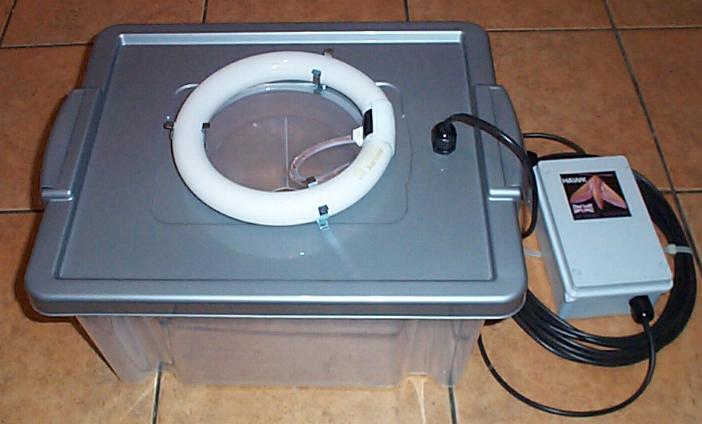
For a modest outlay, in my case £65 I think, you can purchase a moth trap. Or you can make your own if you're feeling clever. A moth trap is essentially a light on top of a box. There are different types of light, and different types of boxes, but they all do essentially the same thing. The light draws the moths in, and they flutter into the box, get stuck in the labyrinth of egg-boxes you have put in there to baffle them, and then go to sleep until you potter along the following morning, stick them in little pots, and then cut their willies off to look at under a microscope. You don't have to do the last part. I never have, in fact it disturbs me a little. For the ones where supposedly you have to, I have come up with a brilliant solution. Just call it whichever one you have not seen before, and you thus get a tick out of it, and the moth can be released without harm. Win win.


I started mothing about a year ago now, and with the aid of a cheap little book have so far managed to identify a whopping 178 species. There are about 30 more that I have long since given up on. It is actually pretty straightforward. My trap has a long lead, and runs off mains electricity. It is on a timer, and so comes on and turns off without me needing to do anything other than adjust the timer now and again. I have a morning routine whereby I go and decant the trap into small pots, and then make a cup of tea and ponder over them. Many, it must be said, are brown. A few however make your heart leap.


Check out these stunners.


Respectively, Barred Yellow, Blotched Emerald, and the superb (and yet to be bettered) Scarce Silver Lines.


It is addictive, just like birding, except there is potential for something new and exciting in June. Or May. You can actually trap year-round, there are different moths all through the winter. Pickings are slim though, so I tend to start in April and give up by about October. You don't have to go anywhere, so no time in the car, and no outrageous fuel bill, it really is ideal. The only trouble is that as dusk gets later, and dawn earlier, sleep gets squeezed by mothing at one end and birding at the other, but if you can cope with that, this could be another feather to your all-round naturalists bow. And you can get the kids involved too - mine are fascinated by it. Sometimes I come down in the morning to find that Muffin has been out, emptied the trap and ID'd half of what is in there before I've really woken up, and put the rest in the fridge for me.

Yes, the moths go in the fridge for the day. It does them no harm, makes them dopey and thus easier to photograph, and means they remain calm until it is time to release them safely the following evening when the birds won't be around to pick them off. It also has the possibilty of pleasing your loved ones a great deal, especially those with a proprietal interest in the fridge.

So, mothing, an ideal summer activity for all the family. Ticks all the boxes - natural history, listing, photography, learning, child-entertaining, wife-pleasing. What are you waiting for?

Tuesday, 24 May 2011

BirdTrack. Scientifical enlightenment for the bored birder.

As you may know, I have recently been beavering away on a taxonomic section of the 2008 London Bird Report. I was asked to contribute to the 2007 report, had the time, so said yes. I thought it would be a way give something back to the London birding community from whom I have learned a great deal over the past few years. Having spent many hours going through about seventy LBRs looking for historic records from Wanstead, I can appreciate the extraordinary amount of work that a small number of people put into this publication.

It took hours, far more work than I was expecting. No sooner had I submitted my section for 2007, 2008 appeared in my inbox. I procrastinated for ages, ignored it for longer, and finally started about a day before the deadline. It too took ages, several evenings of work, and then a day-long slog to break the back of it. I finally finished last week. No pressing of "send" has ever felt better. I have a dreadful feeling that 2009 is 'in the post', but I'll cross that bridge when I come to it.

Being totally open and honest about it, it was not in any way enjoyable. In fact it was downright dull - it felt like I was back at work. I had a monster spreadsheet with thousands of records, and I had to write them up extrememly formulaicly, with little or no scope for individual expression. That which I managed to sneak in was ruthlessly edited out once I had sent it in; my contribution was as a number-cruncher and touch-typist. I am being extremely selfish I suppose, but it wasn't my kind of bird-related fun.

Nonetheless I did it. It would have been churlish to return the email marked "Sorry, too boring", and a slap in the face for the many hours spent submitting records by what I have to say is a very small number of extremely dedicated birders. My section has been Crests to Treecreeper. This includes Blue Tits.

Reader(s), do you count Blue Tits as you walk round your patch? I don't, or do so very rarely. Yet there are people who do, and do so religiously. As I worked through the data, I marvelled at the effort it must have taken, after every patch visit, to go online and submit counts. Real counts, counts of 13 singing males, or a pair with three fledged young. My kind of counts are "One, two, three, ten, 15, ah call it 40". Or, "'Cor, that looks like a lot. Er, 80 I reckon". These people have made much more effort.

I go birding on the patch most days of the week - except in June, and more recently, May - and I record my sightings on my own home-made spreadsheet that has now been going years and is extremely unwieldy. I also used to dutifully record the more interesting birds (ie not Blue Tits) on a web page of London Sightings. Were these somehow taken off for the LBR? A quick search of the data I had in front of me suggested not, so I got in touch with my local recorder to ask how it was done. The upshot of this was that I went through my spreadsheet for 2008 and 2009 cherry-picking interesting sightings, and sent them to him in the desired format. When I got my hands on the 2008 data Crests to Treecreeper, the first thing I did was to look for my name - obviously. Four records. Four lonely records, though these did include my gem of a Pied Flycatcher from near Alexandra Lake on a morning that will remain in my memory just about for ever. Still, four records is Pitiful, and with a capital P. I resolved to do something about it.

Enter Birdtrack. The patch workers who make up the bulk of the contributions for the LBR use Birdtrack. After each visit, they conscientiously log the details of their entire visit, and that data feeds not only the BTO's national database for the purposes of proper scientific stuff, but also the local recorders. It turned out I already had a user name and password from the BTO Altas tetrad stuff, so I put that in and off I went, starting from January 1st 2010. I'm on March now, and boy is it dull. Duller even than writing the LBR, and that is saying something. Were I starting from the present day, it would be easy though, a synch. The format is very straightforward, it would take five minutes a day if that. But I have over 150 site visits to enter, plus all my garden skywatching sessions. A quick calculation reveals that I have about sixteen hours of solid data entry ahead of me. Whoopee. I started yesterday, and am now on about mid-March for Wanstead Flats in 2010. It is a long road ahead...
Am I selling it to you? I doubt it. But look, forget about your past records, I am just being bloody-minded. If you start from today it will be easy, a piece of cake. As I was doing a few errands in Wanstead Village yesterday morning, I casually noted a recently fledged Pied Wagtail with an adult. It was the work of moments when I got home to enter it into Birdtrack. Confirmed Breeding! And very satisfying. And so Sean H, who may or may not still be writing Larks to Waxwing in 2011, will now get an additional line in his spreadsheet that I expect he will simply gloss over, as the smallest number of Pied Wagtails from the Essex sector that got a mention in 2007 was 46, and I am 44 short.... But I will have contributed to our national knowledge of Pied Wagtails in urban environments, and I am immensely proud of that. J Lethbridge, OBE, for services to science and stuff.  But if I can replicate that consistently going forward, then my contribution will keep growing and growing, and all the hours I put into patch-working will not just sit on my computer, but hopefully be of use to the wider birding community. So go on, give it a try. Come on, it's June, what else were you going to be doing?! I promise that it's really really easy. Athough you do have to actually count the Blue Tits first....


This juvenile Starling, the first I've seen this year, is now a scientific record.

Monday, 23 May 2011

May is the new June

The weather has been ace. Too ace. Never content with what is actually rather pleasant, particularly for layabouts such as my good self, most British birders are now moaning about how bad (ie good) the weather is. It is too nice, and all the good birds are simply flying straight over the top of frustrated inland patchworkers. The Norfolk coast is getting a few bits, Spurn and the East coast are getting a few bits. London however is dead, and Wanstead is at the lower end of the dead scale. Neither I nor any of the local birders have registered a new patch bird at all in May. We logged our first Swifts on the last day of April, and since then, the only things going through have been tumbleweeds.

That said we had an excellent April - too good, we commented at the time. It's going to be a long summer, we said. The first Wheatears arrived on March 30th, and then we had everything in the space of about three weeks, including almost all the birds we expected to see in the autumn. We're missing Spotted Flycatcher, which is nailed on in the last ten days of August, and Common Tern, which depending on the fortunes of birds in the Lea Valley, we may see feeding during the summer. Essentially, although June is a week away, it's actually been June for the last three weeks. This is why I have been uncharacteristically meandering somewhat off-topic of late - there is nothing to tell of birds in Wanstead. I went and checked for you to see if the Grebe chicks had hatched, they hadn't, and I am now sat at home waiting for autumn.

So, if you, like me, are struggling for inspiration, and the light at the end of the tunnel seems very very distant, here are a few things you can be getting on with - this is what I am currently doing. And seeing as this website is my life in html, all of these get to be future blog topics. Sorry.

1) Enter all your historic bird sightings into Birdtrack.
2) Catch moths in the garden.
3) Relive past twitching glories.
4) Taking the rough with the smooth, recall with fondness your best ever dips.
5) Dust the house. Damply.

Unless something extraordinary happens (which, being June, it won't), that's me done for a week in the blogging stakes; I'll do one a day (apart from number 5, which I have no intention of doing at all), so you can dip in as and when you like. If Birdtrack isn't your thing, come back on Wednesday. Similarly, if you don't want to hear about Fea's [type] Petrels and recent Audouin's Gulls, my advice would be to skip Thursday. Bet you I get loads of hits on Friday.


Thursday, 24 June 2010

Yes, I am bored

There are no birds to see, and even if there were, the particular type of pollen that my nose and eyes object to is off the scale today. I can barely go outside and I'm dreading the school run. And as for wondering what to put here, as Thing from Fulham says, in the total absence of bird-related material, I'm feeling vaguely guilty about posting yet more photos of moths up. Not guilty enough though...

Here is one I caught a couple of days ago. VERY exciting, it being my first plume moth.


Lets look at that from another angle. Yup, wow. Imagine if it were six foot long!


Anyway, keep admiring the Platyptilia pallidactyla, I have to pick up number one son from school, and who knows what excitement that might bring.

1 HOUR LATER...

Right, I'm back, and actually there is some interesting news. Well, depends on your point of view I suppose, but it is at least news. It needs some lead-in though, so bear with me.

There is a child at the school - no, really - who is in a different class to Muffin. I don't know which one, and it doesn't matter. The child is from somewhere in Eastern Europe, I don't know where. It is not the child I am going to talk about though, it is its mum. Occasionally I coincide with the mum. She is always on the phone, which is how I know she is from Eastern Europe somewhere. On the way into the school, on the way out of the school, the phone never leaves her ear. I have never heard her even talk to her offspring, she has always been on the phone. She is blonde, very thin, and in bird-speak, has extremely distinctive primary projections. She also wears very interesting outfits. I would not like to speculate on what her career might be, but one of the more popular outfits is a pink velvet crop-top tracksuit with "juicy" written in sparkly gold writing across the backside. A fetching Leopard-skin print leotard is another favourite. Today's outfit was a new one though, some kind of figure-hugging blue mini-dress, but with a difference. On the front, at the top of the front, where many people might have expected dress material to be, was some kind of drawstring contraption. Kind of like shoelaces, but for breasts. Don't forget that I am on the school run here, in the playground. I am not in Soho at 1am on a Friday night. At the moment, the child is probably only about seven, and thus entirely unconcerned that his mother comes to pick him up looking like some kind of cross between an oligarch and a prostitute. I just snigger quietly at the ever-increasing inappropriateness of the outfits, but many of the mums on the school run wear more material round their heads than she wears in a week, and I can imagine that they might find this rather disturbing. Anyway, the interesting news is that today's staggering outfit revealed that her left (and strangely spherical) boob has a tattoo of a heart with four lightning bolts coming from it. Classy.

At this point I expect many of you are crying out for a photo. I am not going to disappoint. Here is a Blotched Emerald. Pretty nice eh?


Friday, 11 June 2010

"Thud"

I'm in Birdwatch Magazine again this month. Just warning people who may know me so as to avoid any unpleasant suprises. At least one person I know got rather a shock first time around. His issue plopped onto the doormat, whereupon he retired to the smallest room in the house for a quick flick through... Anyway, in this issue, I wax lyrical about the patch I haven't visited for over a week now. Can't say any more than that, go and buy it, it's really really good and I guarantee you won't be disappointed. Ahem.

I'm afraid it's true though, I have not been out on the patch all week. In my defence, it is June, but that is still pretty poor. So basically as you're reading about how working a patch is worthy and rewarding, try not to let the thought that the author is a total hypocrite spoil it for you. I'll tell you what, I'll go out now, and spend the whole of the next week there, camping, so that as you read it, you'll know I'm actually out there, finding Blue Tits and Starlings and generally having a birding extravaganza.

But first, let me just empty this moth trap....

This is part of the reason for my lax patch attitude (that, and the fact it's really dull/June at the moment). My early mornings are spent sifting through my new moth trap rather than out on the patch. Honestly, it is incredibly addictive. Every morning is like Christmas Morning, you just don't know what you're going to get. Last night, the weather was rather poor - cold and with a strong breeze. Experienced moth-ers probably don't even bother trapping in these conditions, but my enthusiasm is still burning bright, and I'm glad I did.

I usually stand next to the trap for the first half an hour or so, a habit which will no doubt fade in time, and just as turned to go back to the house, an enormous "thud" caused me to turn excitedly. It was in the trap! I could see a dark shape, and egg-boxes being roundly scattered by this juggernaut:


Wow! Last year,
on the very first night that I set up my "Bonneau du Martray Grand Cru" Trap, I caught one of these, and last night I felt no less of an adrenalin rush.

BTW, I've just read my old post about June being rubbish and that first night moth-trapping, and reassuringly I called myself a hypocrite in it then too. If you get the feeling that I am just constantly rehashing old material, it's just a figment of your imagination....

As I was examining the Poplar Hawk Moth, there was another enormous "thud", this time from the greenhouse wall. I could see something struggling feebly in the long grass I haven't cut. I quickly popped a jar over it and scooped it up. Brought it inside for a look but all I could see was a large twig. "That's a bit funny", I thought, "I could have sworn there was a moth there?" Keen moth-ers will by now have guessed. Non moth-ers may well have navigated to a birding blog....

Aaaanyway, a Buff-tip.


Not quite as enormous as the Hawk Moth, but every bit as interesting. A substantial moth, with incredible camouflage, though to be fair it doesn't really work on an egg box. It seems to have lost half of one antennae, perhaps in the collision with my greenhouse, or perhaps from an earlier mishap. The first I have ever seen, and I hope to get a lot more - I just hope they don't hit me when they come in. Right, that's enough about birding in Wanstead, I'd better get busy with being domestic. I want the house to sparkle for Mrs L tonight. Then I can go out birding tomorrow with no fear of retribution.


Friday, 4 June 2010

Moth Hating

My moth trap arrived yesterday morning. I finally cracked and bought a budget one with proper electrics after my home-made trap went a few nights with diddly squat, and at 300W, expensive diddly-squat. I quickly put it together and then spent the rest of the day waiting for it to get dark, which took AGES.

Up at five this morning, I tripped excitedly down the stairs and out into the garden, expecting to be awash with the majority of Wanstead's moth population. Three moths. Not three thousand, not even three hundred. Just three. THREE?!!! Pitiful, and very disappointing indeed. The description and accompanying pictures on the website I bought it from showed a catch-box almost overflowing with lovely pink Elephant Hawkmoths, and I get three beige ones. It's like fast food. Famished, you are enticed in by the photo in the window of a two-foot tall burger, crisp lettuce leaves still with dew on. You pay your money, getting hungrier by the second, oh the anticpation, and finally are passed a plastic bun containing a wafer-thin burger with a smear of ketchup, and a limp blob of decomposing green stuff poking feebly out of the side masquarading as the lettuce. Rubbish.

I'm sitting here thinking what might have gone wrong. Was it too cold last night? Perhaps I didn't place the egg boxes correctly? Was the trap even in the right place? Was it too obscured by foliage? Am I just crap?

The three moths? Well, one flew off before I could even photograph it, no change there but remember this is a full 33% of my catch. One I still can't identify, again, no change there, and the final one I have nailed as a Common Swift, which is great, but is going to play havoc with my photographic filing system.

We shall what tomorrow brings. In the meantime, have some garden wildlife that isn't an unidentified beige moth.

Wednesday, 2 June 2010

Oooh, Aaah

A quick dash after work (ahem) for the male Trumpeter Finch was a stunning success yesterday evening. I even took the Dipmonkey and still scored. I'd arrranged with Shaun to hold off during the day and go up together, and then the Monkey decided he would like to come too, despite not needing the bird. Fair enough though, the more the cheaper, er I mean merrier. And to make up the team, Muffin came too, keen to add to his list of rarities.

After waiting for Shaun to make a cup of tea, have a shower and clean his van, we were off! I was slightly worried that by arriving at 7pm the bird might have gone to roost, but I needn't have worried, and there were reassuring pager messages all the way up.

It is fair to say that the Cley Square was having a rather good evening. In addition to the Trumpeter Finch on the shingle at the end of the East Bank, there was a Thrush Nightingale at Walsey Hills, which is basically at the opposite end of the East Bank. Less than a mile east, a Marsh Warbler was singing at Gramborough Hill, and less than half a mile west, an adult male Red-backed Shrike was at Cley Coastguards. Wanstead eat your heart out.


We were obliged to go and see the Trumpeter Finch first, it being the "biggie", and after a brief slog over the shingle we were able to spend some quality time with it. It first showed very well on the fence below the ridge, and then fed right in front of us. For a bird that is pink, its ability to disappear against the shingle is amazing.


The lure of the Red-backed Shrike eventually proved too much, and we had to tear ourselves away. We left Shaun to try for the Thrush Nightingale which he still needs (the rest of us having seen one years ago), and drove the short distance to Cley Coastguards. Wow. Shrikes, you just can't beat them, and there is not much to trump an adult male Red-backed. We drank it in. Much as a Trumpeter Finch is very very rare, and pink, both qualities that appeal to me, the Shrike immediately pushed it off the top spot.


Another tick for Muffin, poor kid. Shaun was having no luck with the Thrush Nightingale, so we went and picked him up and returned to the Shrike so he could enjoy it too. Then we had a choice between standing around hoping the Thrush Nightingale would show (or sing), or standing around hoping that the Marsh Warbler would show (or sing). In the event we did neither, and went and got Fish and Chips. I don't think we missed much, certainly the Thrush Nightingale was neither seen nor heard again, although I think the Warbler did show briefly. Nevermind. Of the four birds on offer, I saw my first two choices. And in fact if I'd have dipped the Finch and just seen the Shrike, I'd have been perfectly happy.

Muffin had a great time - he got to be one of the boys. He's a proper birder, not like the three of us. Whilst we were running down the East Bank, he was stopping and looking at the resident birds. Avocets, Redshanks in flight, BT Godwits, Eygptian Geese. For a six year old, his identification skills are rather good. Satisfyingly good I might add.


Saturday, 22 May 2010

Nearly June....

I got up at 5:15 this morning and drove to Rainham. I spent about three minutes on site, and then drove home. Thick fog. Cold fog. Wet fog. I had been hoping for soft morning light, excellent visibility, and a gently warming sun. What an utter waste of time.


So, it's nearly June, and I havn't had a tick all month. I'm talking about a life tick, obviously I have had a blinder on the patch, but for most of May to go by without seeing a new bird is pretty unusual. And it's not like next month is going to be any better. You can see where this is leading, right? Yup, June.

June. That universally acknowledged rubbish month where all birders despair, and start getting interested in lepidoptery. I'm not even waiting for June to start. Unless this weekend turns out to be phenomenal, which on the form of the last two hours is looking unlikely, June starts now.


Thursday, 25 June 2009

Birding in June rubbish after all. Maybe.

It has been put to me that in fact birding in June is still rubbish, but that twitching in June can be good. This I concede is a fair point, but nonethless, hoping to come back with a withering counter-argument, I went through all my June records for Wanstead. Ah.

I keep my records on an immense spreadsheet, which I usually fill in as soon as get home based on notes I have taken, or more likely, a mental list of what I have seen - generally not too taxing in Wanstead. I moved here about 4 years ago, but only began patching in 2007. Unfortunately for the stunning argument I was going to make, a quick look at my 2007 Wanstead sheet reveals no entries whatsoever. Moving on to 2008, it appears my argument is in deep trouble, as the spreadsheet shows only one outing, on June 8th, with one solitary species recorded, a Hobby. And bar my recent discovery of the local gay meeting point, I have not been out on the patch in June of this year either. Now I refuse to believe that in three years I have gone birding on the patch in June a sum total of twice, as that would be most undedicated and unlike me. I would wager that I have almost certainly been out more than that, and therefore that I have simply neglected to record what I have seen. Sadly this all leads back to the same place - which is that I have probably come back from the Flats so depressed at having spent two hours trudging round for a Greenfinch and a couple of Skylarks that I have just curled up in the foetal position in a corner, bemoaning how rubbish June is and resolving not to bother again until July. Or the latter half of August.


Wanstead Flats, June


So Gavin Haig is probably right that patch birding in June is rubbish. I mean if he finds June on the Devon coast a bit of a slog, what hope have I got on my inland patch that to my knowledge, has recorded one scarce bird in the last 35 years - a Red-rumped Swallow in the Park in 1975. JUNE 1975.

Having said that, if I were, say, a local birder in Orford, just returned from a June 21st patch session....

Birder's wife: See anything Dear?
Birder: Nah it was rubbish. Just a crappy old Woodchat Shrike. [Yawn]
Birder's wife: Never mind Dear, I'm sure it'll pick up in July.

Or perhaps if I lived in Hindolveston....

Birder's wife: Much about Dear?
Birder: Just those boring old Honey Buzzards displaying again. The sooner they piss off back to Africa and we get some proper birds again the better.

Or Cley...

Birder's wife: Any luck Dear?
Birder: Just another sodding Snow Bunting, seen hundreds this year. Bor-ing!

This latter example is probably distressingly accurate. But anyhow, you get the picture, which is that for at least some people, June clearly cannot be described as rubbish. Living and birding in Wanstead, I am unable to convincingly use this argument for myself, but let's just say if I ever find a Woodchat Shrike on the patch in June, or in fact any Shrike in any month, you would never hear the end of it.

So what has been happening on the patch recently? Well I did get a fly-over Kestrel for the garden list (#47 for the geeks out there), but apart from that it has been rubbish. It is June you know. Instead I turned to moths. If you are getting the impression reading this that I am an massive hypocrite capable of astonishing U-turns, then rest assured it is all a figment of your imagination.

Last night I got a text from Shaun saying he had found a Lime Hawkmoth in his garden. Naturally I had no idea what this was. He then sent a photo of it, which blew me away. "Flip!", I thought (or something like that).

Here is Shaun's moth:


And here is Shaun. There are some stones out of shot, being kicked. June? Nope, January.


I immediately resolved to construct a moth trap, and once the kids were in bed, set about my task. I am rubbish at anything DIY-related, I can't really even drill holes in things properly, but just look at this beauty!


Ingredients:
1 wine box (need not be Grand Cru, but be prepared to catch less)
1 work light
1 4ft bamboo pole cut into three
1 top from a seed propagator
2 cable ties
3 egg-boxes
Gaffer tape
Cardboard

By the time I had finished, dusk was approaching. Mrs L was led outside for the grand "Switching on" ceremony. Click. I shit you not, but within 20 seconds, we heard an immense fluttering from the bushes, and out popped the largest moth I have ever seen - much bigger than Shaun's. No wonder there are no birds in Wanstead - they all get eaten by moths! I ran back to the house to fetch a container, faster than I have run in a long long time. How exciting is this! Turned out it was a Poplar Hawkmoth, and it was still there in the morning. And as it is depicted on the back of my moth book that Amazon must have delivered in error, I didn't even have to open it to ID it. This mothing lark is easy!

Bingo


Mrs L is not enthusiastic about me looking at moths. "You are not interested in moths" she said, sternly, "But they're cool, did you see the size of that thing?!". Even more sternly: "I said, you are not interested in moths!". Apparently I have enough hobbies already. Taking this to heart I eagerly set the alarm for 5am so I could go switch off the light and examine what I imagined would be a trap overflowing with moths. In the event the trap was overlowing with just six moths, the largest and most interesting-looking of which flew away as soon I opened it, so no idea what that one was. Another one flew away shortly afterwards, so that too remains a mystery. The remaining four stayed put long enough for me to take some record shots, just like moth-ers are supposed to - following my stunning debut of Poplar Hawkmoth I am now an expert. One minor problem in that I have now been through the moth book three times and still cannot identify any of them. It's just like birding really, except you can do it in June.


Monday, 22 June 2009

Who says June is rubbish?

There is a common misconception that June marks the start of the rubbish season for birding. Most birders have bought into this myth, and so give up birding after May. Generally the BP counter is at a yearly low following spring, and so birders who want to go birding again in August start doing all the jobs they should have done in April and May. Cue a frenzy of decorating, trips to the dump, tree-surgery and so on. Once the counter is approaching zero again - remember, zero is the highest number possible, positive doesn't actually exist - more than a few start looking at insects instead, and people who have paid good money for pagers to tell them about good birds start wondering why they have got a message about a moth.

Bucking this trend and forsaking the dump, I went birding yesterday, and it was fantastic (so another post not about Wanstead then....). My partner in crime for the day was once again DB.

Destination #1: Amwell, Herts.
Another tick for JL with a brilliant Marsh Warbler in full song. About 15 songs in fact - much fun to be had if you treat it like a kind of quiz - we heard Blackbird, Great Tit, Sparrow, Buzzard, Common Tern, Swallow, Reed, Sedge, and half a dozen others - incredible. Slightly elusive, but managed a couple of record shots. Record shots generally occur following the inept use of expensive camera equipment.


Destination #2: Minsmere, Suffolk.
Just down the road from Amwell is the superb RSPB reserve at Minsmere, currently hosting some Roseate Terns. Two happy year-listers found and ticked three of these pinkish marvels, and were also wowed by about about 700 Sandwich Terns. Photo withheld so as not to upset somebody called Martin.

Destination #3: Swanton Novers, Norfolk.
Adjacent to Minsmere is the well-known Raptor Watch-point at Swanton Novers. Two even happier year-listers bowled up, tumbled out of the car, and were instantly treated to a stonking male Honey Buzzard "giving it all that" for about twenty minutes. More shots for my collection of "Raptors in 100 pixels" were obtained.


Destination #4; Cley, Norfolk.
A long drive saw us finally reach the hallowed East Bank at Cley. Two proper birders walked down to the shingle ridge and, alone, located the summer plumaged male Snow Bunting. Actually we were not quite alone - a local photographer turned up after we had been vainly searching for about half an hour. We explained that it had been seen earlier, and was indeed a summer male, but no sign since. His comment was a very matter of fact "we need to find that then". Too bloody right - a ridiculous record for Midsummers Day, and a fabulous bird to boot - why there weren't hoards of birders combing the shingle for this delight is beyond me. The three of us plodded up and down for an hour not finding it, and got diverted by confiding Oystercatchers. On the point of giving up, on what we had promised ourselves was our last trudge, I thought I saw it on the seaward side. Given all my previous excited shouts, without exception, had been for Ringed Plovers, I can forgive DB's scepticism, but this time it actually was the bunting. So we waved to Mr Bhalerao (btw, he took that photo of the Shrike on my scope last year), and spent a happy hour taking far too many photographs of this little stunner. Whilst the majority were obviously record shots, some actually worked, and are presented here. Far too many actually, but it was a great bird, inexplicably not seen by enough people, and has now gone, so I am performing a public service.


Destination #5: Orford, Suffolk.
On the way back to London from Cley lies the picturesque coastal village of Orford. Two year-listers, recently birders, had simultaeneously received a pager message about a Woodchat Shrike. Seeing as it was barely out of our way, we decided we might as well go and have a look, though we took the precaution of calling our wives in case we encountered heavy traffic and our journey home took several hours longer than expected. We arrived to find that the bird had recently been flushed some distance by a Barn Owl, so we went looking for it. Whilst I strung every kind of bird imaginable, except Canada Goose, into the Shrike, Bradders eventually found it back where it had been previously. Against the setting sun, in a wonderfully milky, hazy, soft light, with specks of backlit insects, the Shrike sat on a fence, dropping down to feed every now and again. A superb end to a cracking JUNE day.


So who says June is crap then? Not me. Marsh Warbler, 3 Roseate Terns, displaying Honey Buzzard, summer-plumaged Snow Bunting, Woodchat Shrike, and nary a butterfly seen. I call that a result.

NB. Despite the relative proximity of all the above destinations, we spent quite a lot of time in the car. This is easily explained however by the fact that it was Sunday, and that there were therefore loads of Honda Jazz's on the road. Shit cars for shit drivers.