Showing posts with label Camera Stuff. Show all posts

Sunday, 3 November 2024

All the gear II

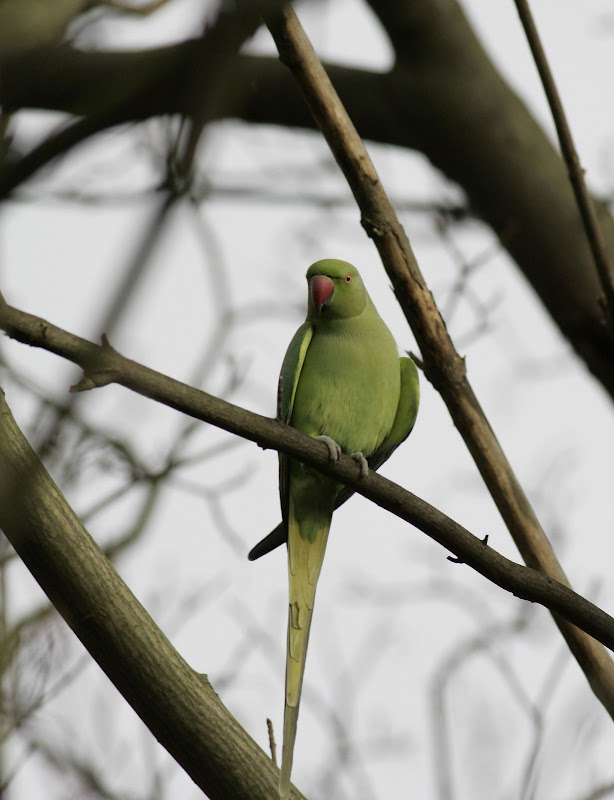
I went out again this morning to try a few new settings. In addition to continuing to muck about with focus I specifically wanted to try RAW vs JPEG, and whether auto ISO was a realistic possibility. So what did I learn? Well I learned that the ISO performance of this little box of tricks is way better than my 13 year old Canon. But it also seems variable, with noise that is inconsistent, for instance a shot taken at 3200 seems to be cleaner that one taken at 1250. I think it must be related to the clarity and/or tone of the background, with a clean green (such as in the image below) behaving much better that a textured brown. I also discovered that there is no point using auto ISO on aperture priority mode. The camera seems to think that 1/500s is a sufficient shutter speed when the lens is at 600mm (900mm equiv), and whilst I don't doubt that the combination of the in-body and lens stabilisers do a terrific job, quite a few of the images came out distinctly soft as a result of the movement of the bird rather than any uncompensated-for movement at my end. It is another murky day here which does not help, but clearly shutter priority is going to be the way to go with a slow lens like this as it will almost always be used wide open hence what's the point in AV? I would rather have control of another part of the equation knowing that f6.3 is what the camera will set. I need to go and test whether this assumption is correct, but I expect that it will be. EDIT - it is.

900mm, 1/500s at f6.3, ISO 3200, handheld. Sharpened and then converted to jpeg and resized to 1000px wide


In terms of focus, it does seem that zone focus works best with birds where you want to be more precise about what bit of the bird you focus on. Once you are locked on to an area the camera does a decent job of staying on that area even when you pan slightly. Eye recognition, whilst wonderfully clever, isn't quite at the level it needs to be and the eye needs to be pretty obvious for it to be able to pick it. It worked on close Egyptian Geese but didn't work on medium range Tufted Ducks. I have no idea if this is because there isn't a specific bird eye algorithm (the choice is between human and animal) or whether I'm not doing something correctly. My Canon shooting style was single central focus point on the eye and then recompose, so perhaps I'll revert to something like that.

Another lightbulb moment was using the zoom functionality for birds in flight. I have discovered that I can set the lens at its widest 200mm setting (300mm in real terms) to easily acquire the bird in the frame and focus on it, and then zoom up to 600mm (900mm!) retaining focus all the while before taking the shot. The camera sticks to a bird against a clear sky like glue, it is very impressive. My Canon used to lose it, hunt in and out, and my keeper rate was very poor. I see this improving things dramatically.

Since yesterday I've also downloaded a basic file viewer and RAW editor, a Sony freebie called Imaging Edge. It has sharpening, cropping, levels, curves and basic noise reduction, but doesn't have a clone stamp tool or easy ways of doing anything more sophisticated. But I'm not very happy at the way that this program produces JPEGs. I think the issue may be the order in which I am doing things, but I don't seem to have a choice. The image always looks better in the software than it does once I see the JPEG on the web - I've got two screens and can look at them side by side and there is a clear difference. The free Canon software I'd been using, Digital Photo Professional, was the same. What a shame that a Windows update killed the copy of Adobe Photoshop CS2 I had for many years. I remember that within CS2 I resized first, then performed three rounds of sharpening, and only then converted, and that seemed to produce better results. And I built it all into a repeatable macro so it was just one click. At the moment I can only resize at the point of conversion and I suspect you lose something doing it this way. But then again neither of these free tools ought to be able to match Photoshop or an equivalent. Anyway I am a bit stuck and will probably have to spend some money. But at least I now have a program that can convert a Sony RAW into something else and has some useable sliders. If suppose if I really wanted the workflow from hell I could covert the files into TIFF and then export them to a portable hard drive that I could then plug into my laptop which still has a working copy of CS2 on it as I disabled the update, and from there I could do everything I wanted. I think I'd rather spend money though for the sake of ease!

As above, but then 20% sharpening on the 1000px jpeg output. 


Saturday, 2 November 2024

All the gear...

First outing for the Sony, at least with a birding lens. In short, no idea. It's hard. Things I immediately dislike: electronic viewfinder. I guess there is no getting away from this particular feature of mirrorless cameras, and it seems not to matter for landscapes or cities, but somehow it just isn't as clean or intuitive for bird photography. I also very much dislike the lack of permanent manual focus on the lens, what I call the 'twig defeater', but you can program a button to do it albeit that you need to keep it pressed down. Some much more expensive lenses do have this feature. I kind of dislike the small form factor, it's much harder to use than a Canon 1D, sits in your hand far less naturally, and in particular the rear wheel is miniscule which is awkward as I've set it to control the exposure compensation and so use it all the time. But then again I bought it precisely because of the small form factor.

But I already like many things about it. I love the weight for starters, it is crazy how light it is versus what I used to carry. It's actually heavier than the Canon R7 + 100-500mm that most birders seem to use, but I much prefer the internal focussing of the Sony 200-600mm, and one tiny twist can get you from one end to the other. The AF system is terrific on the A6600. So far I think I prefer zone mode, but I've programmed a button to be able to cycle quickly to wide and spot. The eye detection feature, programmable for animals as well as people, is pretty incredible for someone not used to it. One of the primary reasons I used to use back button focus was to able to focus on the eye using a central point and then recompose. Here you just point the camera vaguely in the direction of the bird and hey presto it locks on. I've set back button focus regardless for old times sake, but it's probably not necessary any more with this feature combined with zone or wide AF. Another brilliant feature is the zebras, which is a live over-exposure blinkies feature. I've never had this before as its obviously only possible through an electronic viewfinder, but it makes exposure a complete doddle.

As with nearly everything photographic there are compromises in every area, but such is the sophistication of the camera that you can work around most of them. What I can't work around is f6.3, there is no getting away from the fact that this is a slow lens, especially on a murky November morning. I guess I need to get used to very high ISO. Or get back to working with a monopod, as opposed to arrogantly assuming I can handhold it for everything (as I did this morning with some pretty grim results!).

With VizMig dead I wandered over to Jubilee to have a play and to see what worked and what didn't on a variety of tame waterfowl. Not exactly a tough test but this was just for really basic things like which autofocus mode to use, how to focus manually, how to adjust exposure, which buttons to set up to do what. In short I am both frustrated and enthused. Frustrated that I have this amazing tool in my hands that I cannot instinctively get to do what I want it to do.  Frustrated that my years of experience with Canon are holding me back. Frustrated that something that was second nature and that I used to be pretty good at now seem inordinantly difficult. But enthused that my transferable knowledge is already being used to bend this setup to my will, and excited that there are many features of this new world that are game-changing and that will make my images better than they used to be, at least in time. But most of all I'm delighted that I'm not carrying around 5.1kg any more. Although in truth I've actually gained 2.6kg as I simply didn't bother carrying the Canon very much and it has been months and months since it came out with me onto Wanstead Flats. Whatever.

Anyway, loads to do. Here are few straight out of the camera. I don't yet have any software that can read a Sony ARW file so these are JPEGs at the moment. I don't fancy any kind of subscription model so I'm on the hunt for a one-time payment option. So far DXO photolab seems like it might be the pick of the bunch, but I also need to download Sony's own program, Imaging Edge to see what that is like.


Friday, 25 October 2024

The end of an era - Part II

So what will replace over two decades (nearly three!) of Canon? As I mentioned at the end of the last post I don't actually know yet but I do have pretty good idea. About a year ago I sold almost all my non-birding lenses, including the wonderful 70-200mm f2.8, the third one I had owned - the original, the first version with an image stabiliser, and finally the fabulous second IS iteration. This was after a trip to Lisbon where my son had toted around a tiny and amazing camera whilst I struggled with the weight and size of my Canon stuff. I invested what pittance I got back in almost the same thing he had, the most wonderful and tiny mirrorless camera, a Sony Alpha 6600. It is miniscule, look! Paired with a Zeiss 16-70mm f4 lens (24-105mm equivalent) it weighs just 811g. By contrast the Canon set-up with the same focal length weighed 2.2kg. Even pairing it with my smaller 80D was 1.4kg. 600g may not sound like a lot, but combined with the small form factor it is just night and day. It takes superb photos, and is far far more sophisticated and infinitely more clever than my older Canon, benefitting from eight further years of wizard scientists dreaming up new things for it it do, and making existing things like autofocus ridiculously accurate. And whereas my first digital SLR had three focus points this has 425! My 1DX had 61 so this is just incredible to me. I've been taking it almost everywhere, you just don't notice you're even carrying it.

Behold my miniature camera


But could I use it for birding? Well yes I could, but I'm nervous. I could operate the Canon 1DX with my eyes closed. I knew what every dial did, what my base settings were, and what I needed to do to change them without even looking at the camera. I knew it would be right and it was. Muscle memory kicked in, my fingers and thumb moved of their own accord to change the settings seamlessly. As such I got images I might never have got had I been less familiar with what I was using. When I moved from one Canon body to the next I set up the replacement exactly as its predecessor and it was if I was using the same camera. I am worried that it will not be easy to somehow relearn 20 years of using the same physical placement of menus and buttons. 

Now of course Canon do make mirrorless cameras and very good ones at that. Their lens range is also unparalleled. I could replace the setup I just sold with almost exactly the same thing, no work or effort would be required, it would be virtually seamless. But there are issues. The first is cost. To replicate most closely what I've been using would be in the order of £17k, a Canon R3 or R1 with a 600mm f4 lens. Read that number again. Jesus. I suppose I've spent more than that on camera gear over the years, but never in one go and also photography doesn't mean quite the same to me now as it did once. Frankly I don't deserve it at the moment, I just don't engage in bird photography with the fervour that I once did. It may come again, but right now it's not a priority and to spend that amount of money on one camera and one lens would be grossly indulgent. And it's not like I'm going to get back any meaningful amount on my old kit either. I've kept a record of every camera and lens I've ever bought and sold, and the unwelcome news is that I'm being offered 30% of what I paid for it, and that is without inflation. With inflation it's 20%. And they've not yet confirmed the amount as they need to assess it first. Half of me is spitting, the other half is remembering what a great time I had with that lens and camera, where they came with me to, and how much I enjoyed trying to get the best out of them. In deep snow and in -23 degrees centigrade, in Middle Eastern deserts, in the tropics with 95% humidity, in cloud forests in Central America and on boat trips and safaris in Africa. That lens and camera went everywhere and did everything, and mostly they didn't skip a beat, they just kept on going and going. I never mollycoddled my gear, I used it as intended, and the value of the quote will likely go down once they've had a look at it. It always goes down....

The other issue is size - it might be technologically incredible, but Canon gear is by nature still large and bulky. They've trimmed the weight some, but it's not night and day by any means, and broadly speaking the physical size is still the physical size. The kit I just sold weighed 5.2kg, the direct Canon mirrorless equivalent would come in at 4.2kg. Lighter, but not an especially large difference. What I want at this juncture is much smaller and lighter....

So I need to make a change. I am not yet experienced enough with Sony to be entirely confident. The small form factor of the A6600 results in inevitable compromises that I am struggling with, in particular the lack of a dedicated rear wheel or a front dial, though I am discovering some custom settings that get around this. Possibly an A9ii or iii is in my future but for now I will back myself to be able to learn something new. All it requires is time and effort. I think I can get there, I just need to take a lot more photos than I currently do. It is amazing how correlated experience and profiency tend to be, i.e. I didn't get good at using Canon by sitting at home. So I have my eye on a beauty of a Sony 200-600mm zoom lens that paired with my existing A6600 will save me nearly 2.5kg, rather than just the 1kg mentioned above. It is also physically shorter than my Canon 500mm, and far less bulky despite still being a large lens by any stretch of the imagination, and with the APS-C format will yield 900mm vs 700mm on the Canon which included the 1.4x teleconverter. In my mind's eye I can feel it now and it feels amazing. It's also massively cheaper than Canon, as in ten times cheaper. And if I grow to like it, get good at using it, and deserve something better, then Sony also make some quite lovely prime telephotos....

Anyway, watch this space. I'm quite excited by the prospect, and it will almost certainly get me out and taking pictures again, which if I am honest I have not really done properly for quite some time and is a major part of making this change.

Thursday, 24 October 2024

The end of an era - Part I

On a beach in Florida


I've used Canon cameras for as long as I can remember, all the way back into the days of film. I first bought an SLR in 1997 I think, a Canon EOS 500n. I graduated from that to Canon EOS 5. I spent three months in Australia in 1998 with that camera and it was just terrific, with five focus points, a real upgrade! And as a pointless fun fun gimmick they could be controlled by eye! From there I moved to a pair of Canon EOS 1N. I remember climbing Ben Nevis with both of them, one loaded with colour slide film, the other with black and white. Ludicrous when you think about it. I never got into darkroom stuff, I just paid silly money to Fuji to have them do it. I found them the other day, boxes and boxes of slides - Velvia and Sensia mostly, though you would have to be fairly ancient to remember what those names even meant. I am and I do!

My first foray into digital was also years ago. Mrs L and I had a point and click digital camera for a while in the early 2000s. I have no idea what it was, and I don't think we were especially early adopters, but I remember it being novel and fun. I also remember Mrs L dropping it on a rock during a canoing trip in France and cracking it open. My first entry into digital SLRs some time later was a Canon EOS D30, with three whole megapixels and three focus points! It was wonderful, or I thought so at the time. Mrs L broke that one too, cracked the screen against the seat rails of the car one day. Sad times. The next camera I can remember was an EOS 50D, my first properly capable DSLR. I didn't let Mrs L near it! This came out in August 2008 and I think I bought one pretty soon afterwards. It had nine (count 'em!) focus points. Nine! Some of the first photos from this blog in February 2009 were taken with it, and by that time I was beginning to invest in some swanky glass as well - the first EF version of Canon's fabled 70-200mm f2.8 series of lenses. I also had a 28-70mm f2.8 that I had bought at B&H PhotoVideo in New York in around 2007, at that time the most expensive single item I had ever bought at around $800.

By late 2009 I'd stepped up a gear and was using a second-hand 1D Mark II, an older camera than the 50D, but far far better, and from then on that was all I used. I upgraded through every iteration of the 1D until the 1DX which I bought in 2018 and have been using ever since, with the 1D Mark IV as my backup. The lenses improved too. My first birding lens was the non IS version of the 300 f4. I remember buying it at Jessops on Tottenham Court Road when that still existed. I then flip-flopped endlessly between between the image-stablised version of that lens and the non-stablisiled 400mm f5.6, and at some point I capitulated and bought myself a 300mm f2.8 which I used with converters.

But all of these purchases were leading up to just one thing. A Canon 500mm f4. I succumbed in April 2010. Initially my pictures were much worse, I simply did not know how to handle it. Over time I got the hang of it though and I've never looked back. Whilst I sold it in 2012 and moved to the peerless 800mm f5.6, it wasn't long before I bought the new Canon 500mm f4 mkII, nearly 1kg lighter than the prior version and with much better stabilisation and optics. I've been using both of these lenses for over a decade, almost every bird photo on here or anywhere else was taken with one of those two lenses, most probably the 500mm as it was the one I always picked up due to it being so much lighter. For dedicated photography trips with small birds the 800mm came along, for anything else including more general travel it was the 500mm. I loved that lens. 

Here is my 500mm on the day I got. Brand new! It didn't look like this when I packed it up!


Earlier this week however I packed it up in its big grey suitcase and a van came and picked it up. It also picked up my trusty 1DX, both converters, and my one remaining non-birding lens, a Canon 24-105mm f4. Two weeks before that the same thing has happened with the 800mm. Goodbye Canon, it's been great. A sad day and the end of an era. But time marches on, and I don't mean just mean the technology, I also mean me!

When I first started carrying these lenses around I was 34 years old and I barely felt them. When the new 500mm came out, weighing a mere 3.1kg vs the 4.5kg of the 800mm, it felt like a toy. In conjunction with a 1D body the whole lot weighed over 5kg and yet I would happily walk around all day with it dangling off my shoulder. It travelled the world with me, but on more recent trips it's begun to feel heavier. Too heavy. At the same time I cannot help but notice that the technology has moved on. In Singapore earlier this year, a place where almost nobody is a birder yet everyone is a photographer, people I saw were carrying the most comparatively dinky cameras and yet achieving astonishing results. My birding buddies on Wanstead Flats had also moved onwards and upwards, with a slew of lovely mirrorless Canon setups weighing a fraction of what I was carrying, assuming I was carrying anything that is. 

The final straw came a few weeks ago when I went to Mexico with Mick. As usual I had dragged along the 1DX with the 500mm, but he had a shiny new toy, an Olympus OM1 system with an astonishingly small and lightweight lens that in fact magnified more than mine. He happily carried this all day, whereas half the time my camera stayed in the car. Too heavy, too awkward, plus a bit of professional jealousy! Previously I'd been happy to bird with it but now it felt like a drag, a literal weight on my shoulder. We talked about what I should do a fair bit, the pros and the cons, the alternatives and so on, and by the time I got home my mind was made up. I sold the 800mm two days later. What an astonishing optical marvel that was, but fewer and fewer places were servicing it which could be an expensive problem in the future, and I also knew that if the 500mm was now too heavy for my liking the chances of me ever picking up a lens that weighed +50% again were next to nil. I'd rather not talk about the money I got back on it if you don't mind.....  Suffice it to say that photographers are essentially walking pots of money as far as camera businesses are concerned.

This was my full birding trip bag. It weighed around 17kg.


But what will replace my beloved Canon gear? In truth I don't know yet, but I'll cover my thoughts in the next post as I have blathered on for far too long today already.

Thursday, 10 December 2015

My twist on the Midas touch

What's that saying? Everything he touches turns to gold? I've got something very similar going on, but it's not quite as good. Everything I touch breaks. When I say similar, I suppose I mean the opposite really. Rather than making a fortune at every opportunity, instead I'm hemorrhaging money on needing to repair almost everything I come into contact with. It started this summer when I dropped my camera for the umpteenth time and it finally died a short while later in Poland. I'd previously dropped it on Southend Pier, at Dungeness, in the Emirates, frequently in Wanstead - actually it might be easier to list where I haven't dropped it. Anyhow, that was a monster repair bill and a stack of hassle. 

Then the almost brand new washing machine died. Naturally I had not bothered to send in the warranty stuff, and after a failed repair it become more economic to just get a new one. Cue another unexpected bill. So annoying, it was literally about six months old, whereas the previous one had lasted ten years. 

The following week in Hong Kong, the diaphragm on my trusty wide angle zoom froze up. Excellent. The following month, in Florida, I forgot to zip up half of my backpack, and as I swung it onto my shoulders my second camera and a couple of lenses sailed through the air in a graceful arc, bouncing off a parked car and then onto the tarmac. The lenses seem more or less OK, indeed one of them had very recently dropped off the front of the camera at a wedding in Scotland and bounced spectacularly across the dance floor - one senses though that its luck might be running out. The camera however has given up the ghost in protest and will now only fire one shot before freezing up. It's my full frame travel body, and whilst used mostly as a back-up it gives me plenty of options that I now no longer have. I've yet to take either of them to be sorted out, I can't face it.

Then last week I discovered that the hands on my watch had become misaligned, so at six o'clock one hand points at six whereas the other doesn't point at twelve. Nothing major, but very irritating once you notice it and so I sent it off to be assessed at the beginning of this week. I might get away with this one as it appears to be under warranty, but it's still a hassle. No problem though, my shiny new phone I mentioned in the last post tells the time....

Ah. Yesterday I went out for the East London Birders Drinks, and whilst attempting to take a drunken photo managed to drop it on the floor. To be fair I drop it quite a lot, but this time I noticed a few purple spots had appeared on the screen. Ah well, not much of a problem, on with the festivities, more wine please! I woke up this morning to a pounding headache and this.


Whilst the headache gradually subsided, the phone got progressively worse as the morning went on, and when I realised it was to all intents and purposes now useless I conceded defeat and trundled off to a place that specialises in relieving idiots of hard-earned cash, the appropriately named iSmash. There I parted with another vast and wholly unnecessary sum of money, and a few hours later received it back in pre-Hornchurch condition.

They say bad things come in threes, but this is the sixth time this year that I've managed to destroy something expensive to the point of no return. Maybe they meant multiples of three? Anyway, Christmas is cancelled.

Tuesday, 19 July 2011

A Review of the Canon 100mm f2.8L IS Macro

A bit of a departure today with a review of some photographic kit. I have a bit of a lens fetish, and have recently bought the new Canon 100mm macro. I like it a lot, and wanted to tell people about it. I know, I thought, why not use the blog? There are plenty of birders who read it in the vain hope that one day it might be about birds. Many birders also take photos of birds, and many of them use Canon equipment. In the summer there are no birds to take photos of, and many birders turn their attention to butterflies, dragonflies, and anything else that will alleviate the tedium of June. Although it is July now, it is worryingly similar to June. Do they have a macro lens already? Are they thinking of buying one? Maybe yes, maybe no. Shall I do a review just in case? Ok then, I will. If this is even more boring than normal, I apologise. I will revert to moths and domestic triumphs tomorrow. So off we go then.

Canon 100mm f2.8L IS USM Review

Anyone who has tried Macro Photography knows that it is a right old pain. First you have to find an insect. Then the insect has to stay still, and the wind has to stop moving the grass stem or whatever. That miraculous combination achieved, you crouch down to take a shot. Wide open aperture for a fast shutter speed and a fraction of the insect is in focus. You try again. This time you stop down to increase your depth of field, and oh dear, the shutter speed wasn't fast enough, and your photo is blurry. The solution? A tripod. Yes, a tripod will make getting good images much much easier. Except you won't have any images because you hate going round with your tripod so much that you would rather give up photography altogether. It is a common problem, and one not easily solved. Until now that is.
Canon have released a new Macro lens with an image stabiliser. Many of Canon's lenses have had image stabilisers added for some time, but this is the first time a true Macro lens has been the lucky recipient. Enter the Canon 100mm f2.8L IS Macro lens. Lying on my sofa, it looks like this:


Although Canon already make a 100mm Macro lens, this one is an entirely new design, rather than the old lens with an image stabliser tacked on. 100mm is probably the most popular macro focal length, being capable of life-size reproduction on the sensor, so it's no surprise that it got the treatment first. Expect the venerable 180mm Macro lens to get a similar update at some point in the future. Like that beast, this one is also an L lens, where "L" stands for luxury. Special glass or something, and a red ring to show off. As with many macro lenses, the old lens was no slouch, so this is merely an opportunity for Canon to up the price tag. That said, you get a lot of lens for your money.

When you first pick it up, it has to be said it feels a little plasticky. This is good plastic though, and while I am loathe to test it this early on, I bet it can stand up to some fair old abuse. And the good thing about plastic is that it weighs less than metal, and so even with the addition of an image stabiliser and a load of pixies to operate it, this lens weighs in at a mere 625g. This is a fraction more than the older 100mm macro, and if you are used to toting a birding lens like the Canon 300mm f4 IS around, or the 100-400mm zoom, this will seem like a toy in comparison. Plastic or not, construction appears to be extremely solid, exactly what you would expect from an L lens. It is weather sealed with a rubber O ring around the lens mount, and weather sealing is completed by screwing in a 67mm filter at the other end. If you want to take advantage of this, do not under any circumstances buy a cheapo five quid filter from Hong Kong off Ebay. You might as well rub water-repelling grease on the front element for all the good it will do your pictures. Buy a really expensive filter from a reputable dealer. You will only buy it once, and you will not notice it is there. Personally I use a B+W UV Haze 010 MRC filter, which in the 67mm variety costs about fifty quid, but there are other equally good ones out there. You pays your money and you takes your choice.


The lens comes with a deep hood which is excellent, and that I recommend you use all the time (apart from in some circumstances of course, which I'll come to later. Obtuse? Moi?). Using the hood makes removing and fitting the lens cap a pain, but you will be pleased when you bash the lens hood and not your expensive filter. What do you mean you didn't buy a filter?! The lens also comes with a useless grey bag which Canon will try and tell you is a lens case. Throw it away immediately.

The lens's minimum focussing distance is 30cm. Those 30cms are measured from the film plane, or whatever the digital equivalent is. The sensor probably. The lens is about 12cm long, so this means that it can still focus when your front element is about 15cm from the subject. This means that you will sometimes want to remove the lens hood, as it is 8cm long. Insects get scared when large black things approach them. With the hood in place, the large scary black thing approaches to within 7cm. Gah!! If you're working tight, the hood can also bump into close branches and stems, the movement of which will cause the insect to scarper. With the hood off, you can stay that bit further away, but of course you have exposed your front element to the elements. Hope you bought a filter.


The focussing ring is wide and smooth, and with a USM motor, full-time manual focussing is available, extremely useful for macro. The lens does not change length when focussing, it all happens inside. The lens takes an optional tripod collar, sold by Canon for an additional two trillion pounds. The whole point of this review is that you can use this lens without needing a tripod, so don't buy it. On the side of the lens are three recessed switches. AF on or off, a focus limiter, and a switch to have IS on or off. I don't think I have moved them since I got the lens, and my settings are AF on, IS on, and the full focal range. But it's nice to know that they are there if you need them. Why the hell would you turn the IS off though? It's the only real reason for buying the new lens over the old one, and why you're paying a premium of 70%.

IS is great. I mean really great. Canon's latest inception of IS is worth 4 stops of light. That means that in the normal course of taking photographs, you can use a shutter speed a full sixteen times slower than you might otherwise without the benefit of IS. I think that's right, but you might want to go and check. Whichever, it's a lot. Yes, I know what you're thinking. Wow. For the uninitiated, an F stop is either the halving or doubling of light hitting the sensor. One stop down is the halving, one stop up, the doubling. Two stops and you halve it again. A quarter the light. Three, and it's an eighth. And so on. In practical terms, an exposure of 1/1600s at f2.8 on a lens with no image stabliser can be reproduced at 1/100s at f16 with no apparent camera shake on a lens with a four stop image stabiliser. In macro photography, stopping down to increase your depth of field is pretty important. Very important in fact. But without IS, you get shutter speeds so slow you cannot possibly hand-hold the camera and take a sharp photograph. So you need a tripod to keep the camera steady. By the time you have set up your tripod, the insect has probably moved off or been eaten. With the new IS lens, this isn't a problem any more. You can leave your pain-in-the-ass tripod at home and have a much better time out and about.

With IS on. 1/640s @ f7.1, Evaluative metering -1/3rd.


With IS off. Please note that I may have faked this test.


The IS system in this new lens is a little bit different. Canon calls it hybrid IS. This combines correction not only for normal angular movement like all previous IS systems -  ie you wobbling the camera up and down a bit - but also side to side movement which can be extremely noticeable when you are close to your subject. Little tiny pixies inside the lens detect which way you're wobbling, and move the lens elements the other way so that the wobble, or most of it at least, is eliminated. When you engage focus, you can actually hear the pixies, they kind of hum. Move the lens a bit more rapidly, and they begin to whine. No really. Does it work? Yes it does. You actually see the image in the viewfinder steady and then become still. Of course there is a limit to what you can get away with, but it is pretty miraculous. Canon say that at 1:1 Macro distances the hybrid IS system only gives you two stops of correction. I'll take those two stops. I have no way of testing it, and it's far too boring anyway, but my at my personal level of shakiness, I can take a sharp handheld macro pic at 1/15th of a second with this lens. They're not all sharp at this speed, and of course IS has absolutely no bearing on subject movement which is often the real killer, but being able to rely on this very slow shutter speed with a still subject pleases me a great deal, and it will please you too. Please note that all people wobble differently. You may wobble more than me, or you may wobble less than me. I have no way of knowing. Anyway, a macro lens with IS means you can simply wander around and expect to take decent hand-held photos of insects with no messing about. For a birder on the move, this is brilliant.

1/200s @ f10, evaulative metering -1/3rd.


Anything else you need to know? Well yes actually. The lens is sharp even at f2.8. Normally, lenses reach optimum sharpness when you stop down the aperture a bit. Not so with this one, and it is sharp all the way to the corners. I actually tested this, but the resulting test shots don't fall into the "interesting" category. And anyway, mostly it doesn't matter, the centre of the lens is largely what is important in a macro lens. Colours are vibrant and contrasty, just as you would expect from an L lens, and the out-of-focus blur at f2.8 is excellent. Focussing is quick, and accurate. Moving from minimum to maximum is really really fast, not something I was expecting at all. This makes the lens much more versatile. Imagine, there you are taking photos of a small bug. All of a sudden your mate ten metres away pulls a funny face. You quickly recompose, the lens snaps into focus on his mug, IS means the resulting image is sharp, and you have some excellent blog material. You couldn't do that with many macro lenses. 100mm is an excellent portrait length, which is another use for this lens. I use it on my kids all the time.


So there you are, it ain't just birds. A tedious review of the Canon 100mm f2.8L IS Macro lens. The quality is assured, so the question most people will ask is is it worth the price premium over the older lens, which takes excellent photos, and can be snapped up for around £300 on the second-hand market? Well, I can only speak for me, but the IS system, even if the hybrid thingy is less effective at macro distances, means I can use this without a tripod almost all of the time. If I'm out birding, I just bung it in my pocket and off I go. Brilliant. So that is extra cash that I am willing, if not wildly happy, to pay. Its versatility means it sits on my camera a large percentage of the time.

Vital statistics
Focal Length: 100mm
Aperture: f2.8 to f32
Minimum focussing distance: 30cm
Minimum working distance: 15cm
Weight: 625g
Length: 12.3cm
Width: 7.7cm
Filter thread: 67mm
Cost: £725 new, s/h £600ish if you can find one. I did.

Monday, 28 December 2009

Surfacing for air

Escaped the house today and went to Rainham. At first all the birds were really far away, but once I figured out which end of the bins to look through they all became a lot closer. Excellent!

The reserve was pretty quiet, and loaded with about 11kg of optical equipment and a full battery it was somewhat inevitable that the Bearded Tits had departed to reeds unknown, but it didn't really matter and I had a lovely walk in the sunshine with no relatives and no children, which lovely as they all are, is what I needed. I did the full circuit for maximum calorie-burnage, and took any photographic opportunities as they came. Which largely they didn't as most things remained steadfastly distant.

It was clear and cold, with nice light for photography, but my ineptitude and the reluctance of the birds to perch obligingly 2.5m from me meant I didn't get much. I had to resort to using the 2x converter, something I rarely do. As I was set up on the tripod having a pop at a Reed Bunting, a photographer pitched up and asked if he could set up next to me. It's a free country, so I said no problem. He proceeded to set up a monster tripod with a gigantic lens on it, converter, the works. If there is such a thing as lens envy I may have had it, especially when I worked out that he had an extra 350mm of effective focal length yet was carrying 3kg less stuff. This is my problem, one that remains unresolved since Scilly: I can't be a birder and a photographer, as there is too much stuff to carry. On the plus side just as the other guy was almost ready the up-until-then-relatively-obliging Reed Bunting chose to quadruple its distance from the path, so in this particular contest, David (that's me) got a shot and Goliath (him) got diddly squat and had to pack it all up again. I limped off, feeling much better. Even if I took the minimum amount of kit for proper birding and photography, I'm still looking at over 7kg. The additional 4kg today was just a heavier lens, a wide-angle for good measure (didn't use it....) and a few more bits and bobs (like a spare battery that I didn't need...). This is why I like birding in Wanstead. I never take a scope and rarely take a camera - walking round just with bins is hugely liberating.

Well that was pretty boring wasn't it? I know, how about some of the actual photos? Likely to be more interesting than a discussion on how heavy the lens that took them was. Marginally.


the aforementioned Reed Bunting

Wren

This Kestrel looked like a Peregrine for a minute

Collared Dove - if you have a mammoth lense, you can get some good shots of these from the path near the visitor centre's feeding station. If you don't, you can get a less good, heavily cropped shot like this.


Saturday, 12 December 2009

What shall I write about today?

Given that it has been a couple of days since the last post I was just pondering what I might write about. Earlier this week I amazed myself and churned out post after post, but since then have been suffering from Blog burn-out. Kind of like talking nineteen-to-the-dozen without pausing at any point for breath and just going on and on and on and on in a stream of pure consciousness that you could not recount if you even tried and then when you do finally start to pass out and desparately gulp in some air you suddenly forget what it was you were talking about and just do a goldfish impression.
Er....
I did get a vague sense that I might be putting a few people off with the absurd quantity, but went ahead and pressed "publish" anyway. Live the dream! Turns out many readers quite like Dire Straits (a few misguided souls aside - you know who you are.) but that nobody other than me experienced any massively scarring injustices as a kid. Which is absurd, as one of the phrases heard most frequently in this house at least is a strangled cry of

"But it's not FAIR, xyz other child did xyz other thing and I want to too!!"
"No, you're not doing / having it / them / whatever, now leave me alone, I'm writing my blog."
"Waaaaaaahhhhh!"

Clearly you all remain so deeply traumatised that you still can't talk about it and not even the Wanstead Birder 'sofa' can induce you to open up. Freud would have you believe that this repression is unconscious, involuntary - nonsense, it's because you have to have a Google account to leave a comment and that requires yet another bloody password.

Sniff, sniff. "Ahhh, kebab! My favourite!"


Anyway, it is the time of year when filler posts start creeping in with worrying frequency, and my last effort had nothing at all to do with birding. I do need to do my 2010 goals at some point, but in an odd twist on life imitating art, I can't be bothered at the moment.

Last night I went out to London Birders' Christmas Bevvy, and great fun it was too. A bit of a natter, some salacious gossip, no prizes for guessing what about, and a large selection of seasonal ales. All followed by a gratuitous kebab on Leytonstone High Road. My head hurt quite a lot this morning, but what better to clear the fug than to get out on the patch and see the same common birds that I see all the time?


Appropriately enough after my kebab roll, I basically followed the Fatso route, but in a fit of proper birding also went and checked the Old Sewage Works. Bar a decent flock of about 20 Chaffinch, there was nothing to keep up the interest so I went directly back to the Tea Hut for a deserved rest. Whilst there I had a pop at the Black-headed Gulls, some of which came out pretty well, proving that having the shakes is no bar to sharpness. No tripod either, perhaps I have discovered a unique new form of image stabilisation - excess beverage-induced shakes cancelling out normal movement for a rock-steady shooting style? I shall call it the Wetherspoon method. On the way back there were a couple of showy Ring-necked Parakeets, surveying their new manor, and the Goldeneye was still on Heronry. Oh, and I attracted a Rat.


Saturday, 26 September 2009

Aaaaaahhhhh!!


Macro is so much fun!

Not many birds today, no.

Monday, 2 March 2009

Wow, that smells great! Here, have several thousand Brownie Points

I am settling into my new job as a domestic god & local birder. Today I cooked chicken with a honey, olive oil, lemon and garlic marinade. Had it in the oven when Mrs L came in from work. I don't have a Brownie point counter, but several thousand were gained. Also went birding in Wanstead Park, so here are a few gratuitous photos. For the technical amongst you, this is the output of the Canon 400mm f5.6L. Nice isn't it?


Also, stop press announcement that I know you have all been waiting for: The putative Black Brant candidate from Old Hall has been dismissed by those in the know as a "Norfolk Brant", ie it would pass muster up there, but not in Essex, where a more critical eye means it goes down as a hybrid with Brant lineage. As I am sure I must have mentioned, there was no way I was going to tick it, oh no, that would just have been wrong. Fucking Geese.....