Sunday, 26 December 2021

Numbers don't always tell the story

Turns out 130 was not where it ended after all. A Red-crested Pochard, a cheeky one-day wonder that I snaffled between trips to America, has bumped it up to 131, further cementing 2021 as an extraordinary year that may never come again. Although note that when I wrote that post about 130 on 20th November I ended with a solemn caveat about new variants of this dratted virus.... A few days later Omicron became a thing, so I suppose this was more of a nailed-on certainty rather than a prediction or caveat. No doubt there will be another one and then another, we may never be rid of this thing. This is now two Christmas periods in a row that we've been living through this and I would not bet against a third. My office is closed again, and whilst I managed to squeeze some travel in just recently, the plans that I had been making for 2022 are already looking unlikely at best. I reckon I got away with my emergency trip to Nevada last weekend by the skin of my teeth.

Anyway, 131. Given 121 was my previous best, and which only a year ago I thought was amazing and I could never get close to again......I know I bang on about numbers a lot, I'm sorry. Numbers are of course just one facet of birding, the easiest quantifier by some margin, the simple and thought-free way to evaluate things and people. This is why birding latches on to numbers so frequently; the need to categorise and compare. I'm not against numbers and lists, far from it, I love a stupid list, the more niche the better, and I find them to be a critical motivator to get up off my proverbial and go out birding. And so I embrace them.


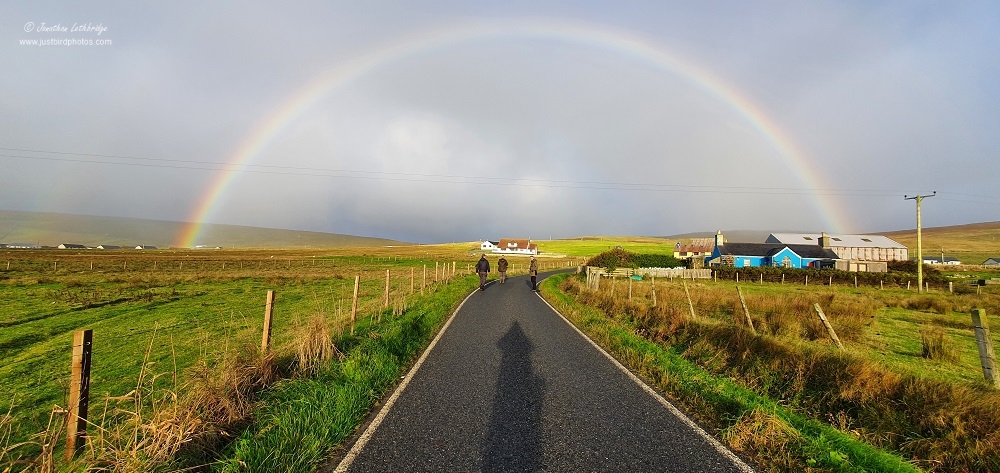
But the more meaningful elements of birding don't lend themselves to easy quantification or comparison. We try of course, but is there any point trying to attach superlatives to everything? The best find, the most enjoyable day, the stupidest moment? I have written about these kinds of things in the past, and in truth it is all these things which are memorable, no single one more than any other really. They all count, they all add up, and together they make up birding. 131 might be inked in for 2021 but we'll all soon forget about that. What I won't forget is raising my bins and seeing that Wryneck across the model airfield this autumn, a most wanted patch find that it seemed like everyone had managed but me. Or the rainbow at Hoswick which perfectly framed my birding companions and seemed to change the day completely. Or racing across to Alex on my bike to find the Black-necked Grebe still present, after a stormy night expected but nonetheless still heart-stopping. Or getting a message about some waders heading east across the Flats, realising this meant they were heading my way, and seconds later turning my head as three Whimbrel flew past. Or any one of countless other small moments like these, from this year and years past, all of which define what is meant by birding far better than a three digit number. Ranking these would be so hard and would achieve what exactly? Although I have probably attempted it previously I am coming to understand that birding moments don't need ranking. Each one has its own perfect little spot in my head, revolving around all the others harmoniously. And they are all looking forward to making room for another.

Saturday, 25 December 2021

Merry Christmas!

Wishing a Merry Christmas to all visitors to these pages, some old, some new, but all very welcome. I continue to be amazed by quite how many people drop in, especially after something like 12 years when frankly I have nothing much left to say, but I keep plugging away. The photo below is a Pileated Woodpecker from Grand Forks in North Dakota, and at -23C it felt rather more seasonal than here in London which is currently damp and grey. I have to say I am really quite pleased with the minimal work required to craft the traditional Santa hat, and can't believe I never thought of it before.

Anyway I hope you all have a nice holiday, and all the best from here in Wanstead.


Friday, 24 December 2021

The Midwest - Day 2 - the Eastern Rockies

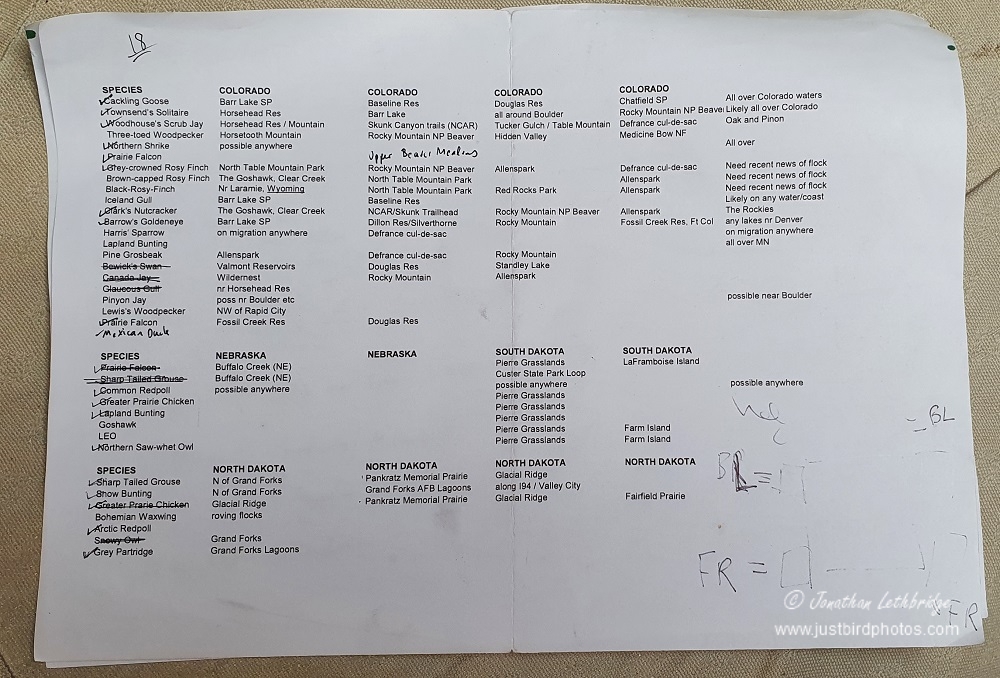
Having managed to unexpectedly scoop up some birds in the fading light on the day of my arrival, this meant I could bring forward my next stop. It also meant I could spend more time birding by driving there in the dark. As you may know I plan my trips quite carefully, with each day divided into four segments - morning, midday, afternoon and evening - and against each of these I then have one or several locations that I plan to visit. Separately I have a list of species I hope to see at each location, and together these form "The Plan". Of course what nearly always happens is that I spend too long looking for something somewhere early on in the day and the afternoon then comes under pressure. I then either spend too little time at earmarked locations or end up missing them out altogether. The secret is to build in some redundancy such that by the time I am several days into a trip I don't need to visit some of the places I'd researched as I've already seen the birds at prior stops. The plan is also always subject to change - generally I use historical eBird information to work out what to do, and of course sometimes that does not work out. For instance this year the weather was so mild and sunny that none of the higher altitude species like the Rosy-finches had yet descended to urban feeders, so those planned spots got dumped, and instead I looked at more recent information on eBird to rework the plan on the fly. And of course if one location is particularly good it may simply merit more time; equally it is not unknown to arrive somewhere and within ten minutes realise it is simply not birdy at all and move on. Flexibility is key.

Page 1 of The Plan. The diagram bottom right is of my car's wheels - I had a lot of fun somewhere in South Dakota trying to work out exactly which tyre was losing air - it turned out the sensors were configured incorrectly, the front right wheel sensor was attached to the rear left wheel and so on....I got there in the end, but not before over-inflating the wrong one, and then in trying to correct it deflating yet another one!


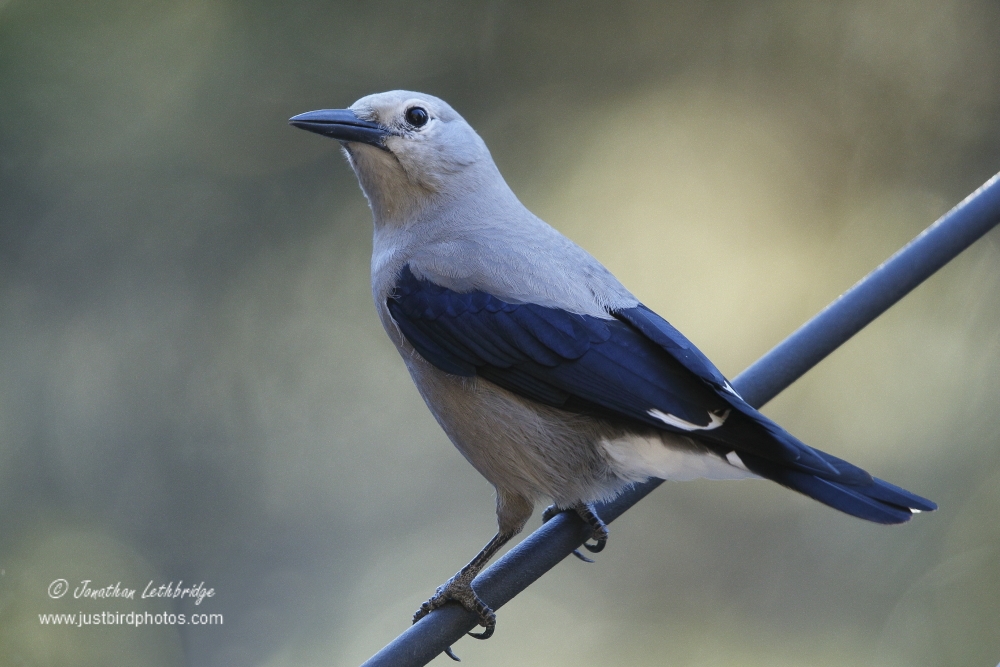
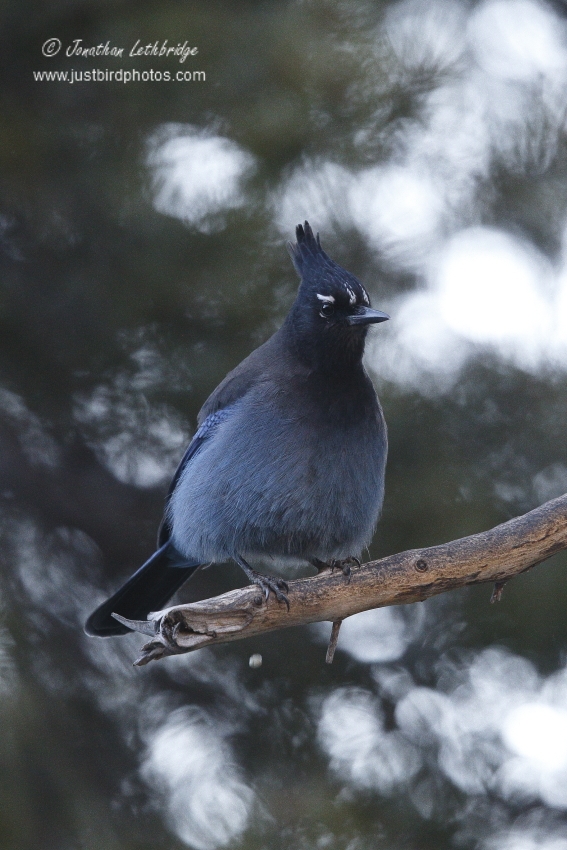
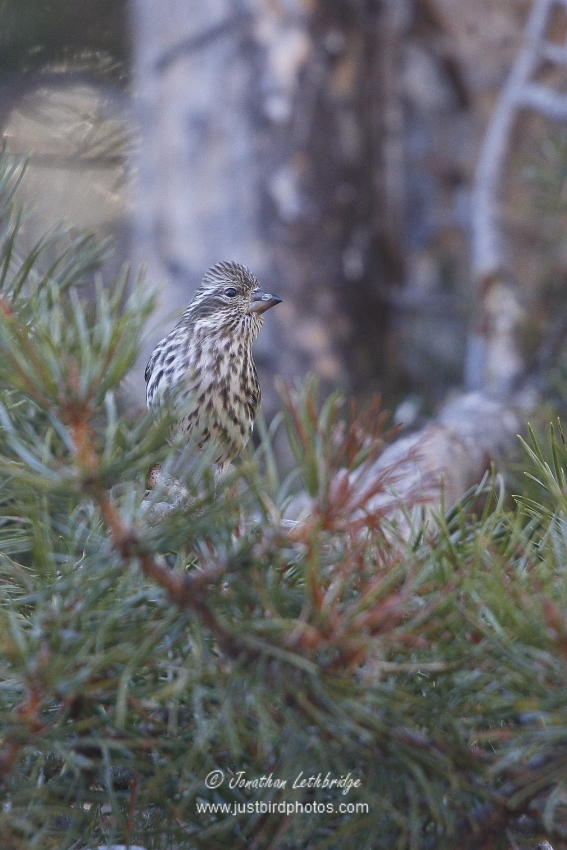
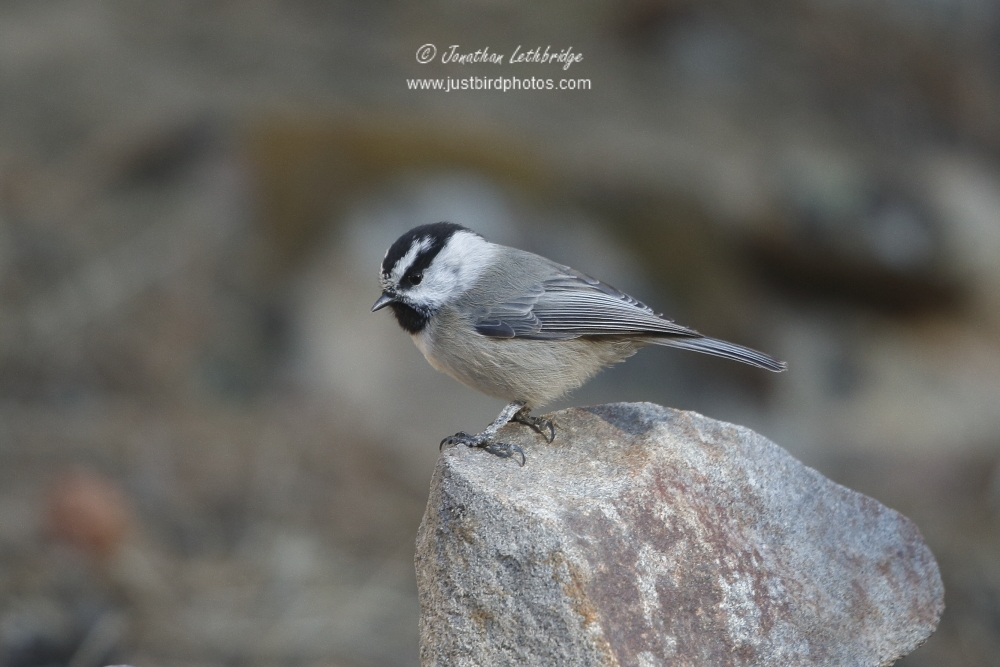
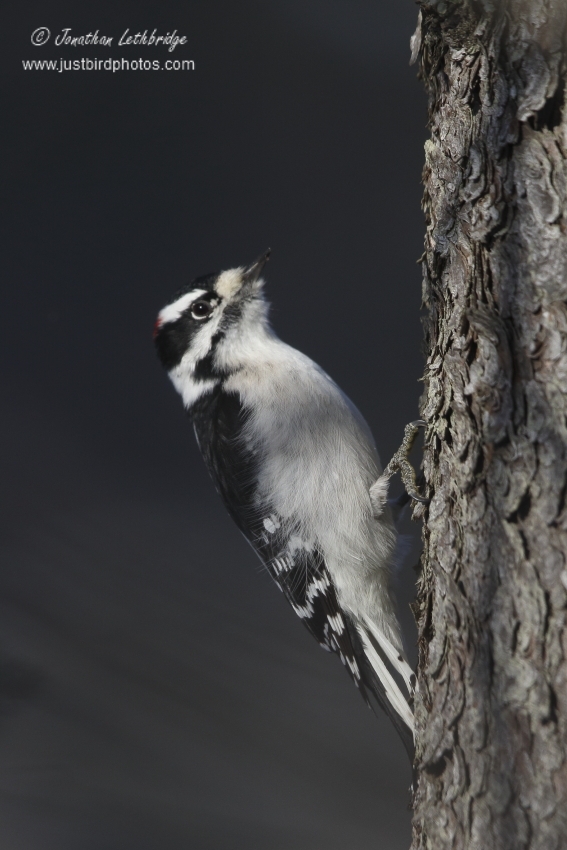
I stopped the car at about 6,500ft just before sunrise and took in the magnificent spectacle as it gradually lit up both the landscape below me and the snowy crags above. It was one of those moments where photographs are next to useless at conveying what your eyes are seeing and your brain is thinking; my camera stayed on the seat. I was headed to a site called "The Goshawk", a private residence but where birders are welcome to view the feeders. It took a while to home in on exactly the right house, but it was soon obvious - adorned with feeders, and with a constant stream of visitors. I heard the Clark's Nutcrackers before I saw them, the call quite similar in intonation to the Spotted Nutcracker in Scandinavia and elsewhere. Brilliant birds, and there were several dashing in to take whole peanuts and then stash them nearby. Joining them in this task were large numbers of Steller's Jays, and Cassin's Finches and Mountain Chickadees fed on the smaller offerings. I gave it a while in the hope that some rare Woodpeckers would appear, but only Downy and Hairy Woodpecker ever visited. And as for Rosy-finches... 

Clark's Nutcracker


Steller's Jay

Cassin's Finch


Mountain Chickadee

Downy Woodpecker


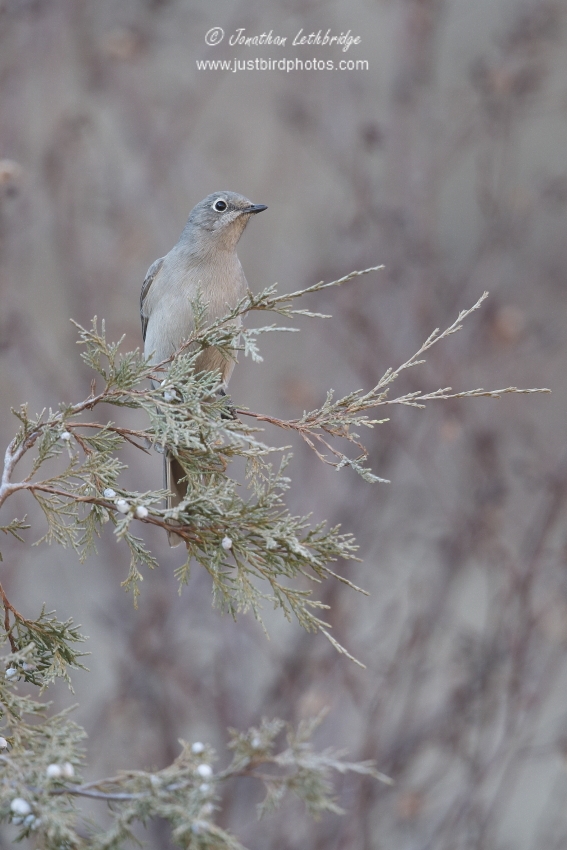
Driving back down the mountain I stopped to scope a bird peched atop a thin tree. It was a Townsend's Solitaire, another trip target albeit one I expected at lower elevations. Still, a welcome surprise and one that took the pressure off. Of course I saw loads throughout the trip, some even singing, but at this particular juncture it felt like a big deal and I was very pleased. Superb underwing pattern!

Townsend's Solitaire


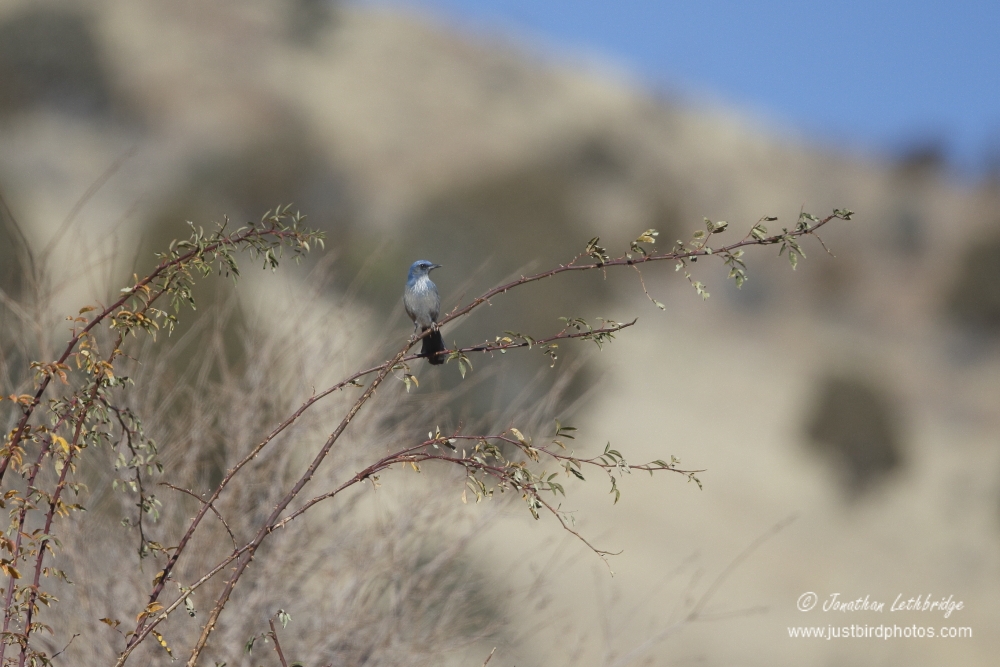
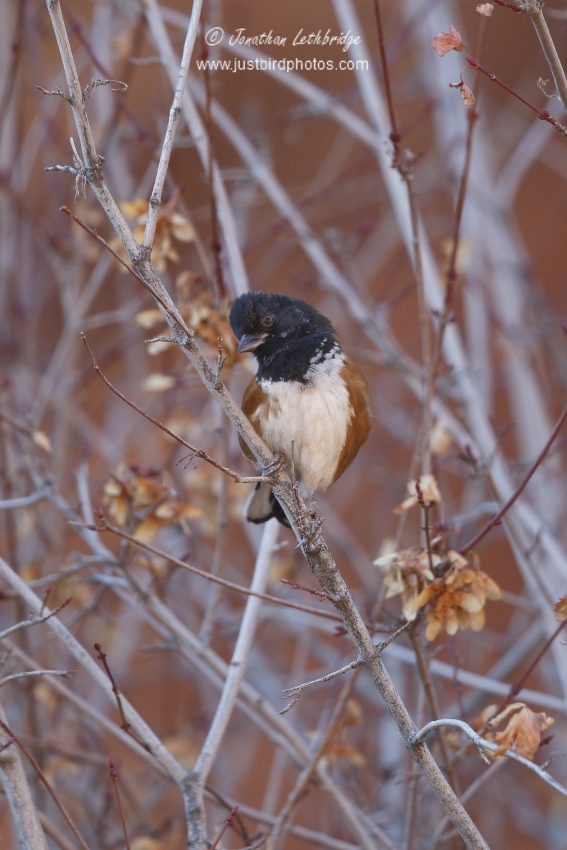
My next stop was Red Rocks Park, back down towards Denver. This has some spectacular rock formations that were indeed very red. More importantly than that it had several Woodhouse's Scrub Jays, another bird on the The Plan. Also my first Black-billed Magpies of the trip, another Townsend's Solitaire, and a good selection of smaller birds like Dark-eyed Junco, Spotted TowheeSong Sparrow and House Finch.

Woodhouse's Scrub Jay

Spotted Towhee


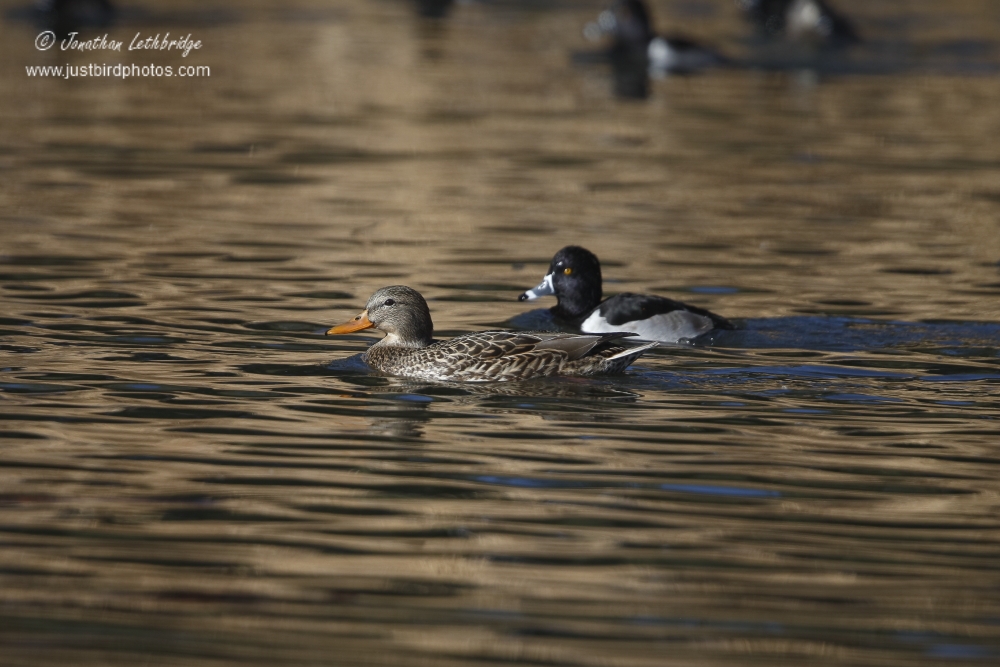
The morning had gone quite well and I was not sure what to do next. Most of my intended stops had not seen anywhere near like the species diversity as in prior years, so I deviated from my route and headed south to the Denver Botanic Garden where an out-of-range Mexican Duck had been hanging out. This was a doddle and the new habitat added Ring-necked Duck, Pied-billed Grebe and Red-winged Blackbirds as well. 

Mexican Duck

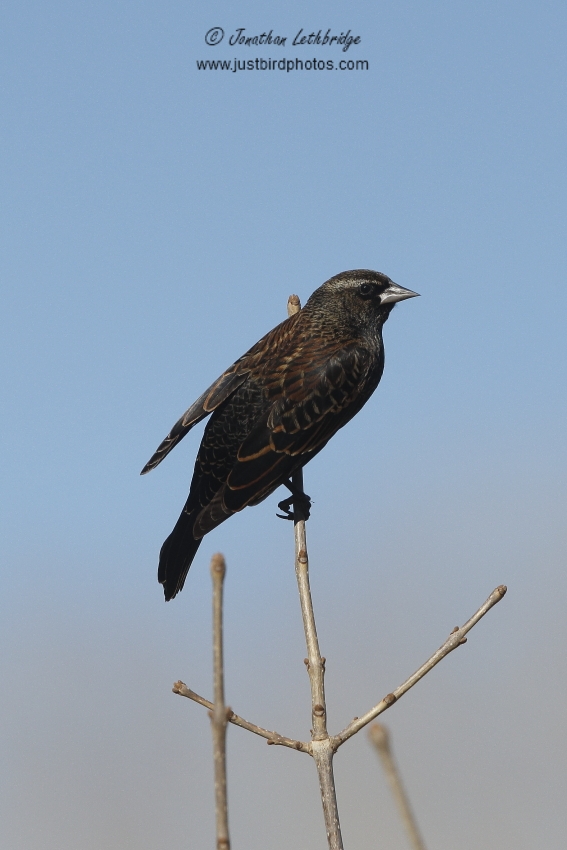
Red-winged Blackbird


I now started to work on the trip list in earnest by stopping off at a number of large water bodies between Denver and Boulder. A number of ABA ticks were possible albeit difficult - various migratory wildfowl such as Black Scoter and Bewick's Swan. There are a surprising number of reservoirs in the area, most of them vast, but I can recommend the ones I visited as having good viewing opportunities - a scope is an absolute must though. The first was Standley Park Lake, and here I added Hooded Merganser, loads of Pied-billed Grebes, good numbers of Western Grebe, Goldeneye and the omnipresent Cackling Goose. As I was walking back up to the car a fast-flying and quite chunky Falcon caught my eye and by jogging up the slop a bit I was able to track it as it flew a long way west and eventually landed in a distant tree. Scope  up, and as expected it was a Prairie Falcon, a bird I had spent ages looking for in Arizona a few years ago without success. The day was going really well! I can also recommend the Boulder Reservoir complex just a short distance away, and this had over 300 Goosanders swimming and diving in formation, as well as a Slavonian Grebe and a Red-necked Grebe with a small flock of Westerns. I finished the day (the light is unbirdable shortly after 4pm at this time of year) at Lagerman Reservoir where I couldn't find the Black Scoter (although irritatingly I later found out it was there!), but did see loads of Buffleheads, Ruddy Ducks, and Black-necked Grebes as well as my first Northern Harrier and quite a few Killdeer. It had been a good day, and I had acclimatised well to both the new time zone as well as the altitude. Denver is a mile high - 5,250 feet - and I had been a lot higher than that in the morning, to 10,300 feet, and had been a little worried I would feel it, but if I did it was not enough to make me feel sick or anything like that.

Thursday, 23 December 2021

The Midwest - Day 1 - Denver


I arrived into Denver at about 3pm, and this being
my country was through immigration very quickly indeed. Nobody checks anything if you're American, least of all Covid documentation, which combined with a complete lack of checks in London was rather worrying. Hassle free for me though, and I'd done everything right anyway so was pleased not to have to waste any time proving it.

This left me with just enough daylight to pick up my hire car and make my way to Barr Lake State Park which is just north of the airport. This was actually my first planned stop for the following day, but visiting now to tick off a few bankers meant I could be ahead of the game. And that's what it is really, a big game. My hire car was supposed to have been a regular SUV, real enough to have 4x4 and so on, but not really a go-anywhere car. In the event I received a very welcome upgrade to a Chevy Suburban, an immense black beast that you generally see accompanying US Presidents. This had enough room for me, my entire family, as well as the family next door. I used the passenger seat for optics, and in some cases to set up my tripod and scope so I could bird out of the cold and wind, but the second and third rows of seats went entirely unused the whole trip. It was superb, supremely easy to drive, had heated seats, and got me everywhere I wanted to go. The fuel economy of 19mpg was less good, especially with the distances I was driving, but this being America.....


By the way, if you want to feel utterly hopeless about the state of the planet and where we are headed - if you don't already that is - just head to America. You will soon realise that any small modifications that you make to your lifestyle here, such as getting an electric car, cycling everywhere, giving up meat, reducing flying, that kind of thing, are totally futile in the face of the juggernaut that is the American dream. This is a country based around the freedom of the automobile, it dominates everything, everyone is an addict. Huge trucks like Ford F150s and Dodge RAMs are almost the default, engine sizes are immense, small roads are five lanes wide, and everyone drives everywhere. I saw people reverse into their drive so they didn't have to get out of the car and walk 15 feet round to their mail box, and then turn around again and drive to the house. Fast food chains are omnipresent, most with queues at all hours, aside from the farming aspect the sheer amount of packaging and waste that they generate is simply incredible. Just look a square block in an average American city and count the food outlets, count the cars, the pickups, the tractor-trailers, count the shops selling all manner of material goods, and then try and extrapolate that across the nation, 24 hours a day, 365 days a year. It's incredibly depressing. So yes by all means feel good about yourself for your self control, your restraint, your abstinence and probably in some cases your unhappiness, but know that your contribution, or rather your lack of contribution, is completely pointless. You might as well go and enjoy yourself with what time you have left, everyone in America is. Despite the now annual wildfires, the droughts, the tornadoes, the hurricanes the mudslides and the flooding, the inevitable future is somewhere else, something somehow remote. How on earth you enact any meaningful change in the US is beyond me, it is simply incredible to witness. But it did make me feel less bad about driving the Chevy.


Barr Lake was a hive of activity. The lake shore was carpeted in thousands upon thousands of
Cackling Geese, my first new species of the trip, and the noise was unbelievable. Nearly dusk, birds continued to pile in in vast numbers. Amongst them were a handful of Snow Geese and a Ross's Goose, hangers on from far-flung lands. Most Duck species were countable in the hundreds, and Bald Eagle sentinels kept watch from bare trees. The sunset over the eastern fringes of the Rockies was spectacular. So far so good.


Friday, 17 December 2021

The Midwest - Logistics and Itinerary


The Midwest, 1st-12th December 2021


This is the first foreign birding trip I have been on since our lives all changed so dramatically back at the start of 2020. I have barely travelled since then, and with a huge stack of holiday to use up as 2021 drew to a close I had to do something. Initially I had planned to go with my Mum for a family event in Ohio in late October. As part of that trip I had also planned a short excursion north-west slightly before heading to the Cleveland area, but a few days before I was due to travel I caught Covid and had to cancel. Fortunately I was able to preserve my ticket cost and moved the flights by a month. And rather than a "there and back again" style trip from Chicago, I decided to really push the boat out and start in Denver, birding the the eastern Rockies for a few days before driving a huge loop eastwards taking in birding sites in several states, including the famous Sax Zim Bog in Minnesota, before dropping down to Illinois. To call this a marathon trip would be a huge understatement - the distances are vast, the landscapes enormous, and whilst I did not completely overextend myself it was extremely challenging. I am not getting any younger it appears.

My targets were threefold - some Rockies specialties I had never seen, some of the Great Plains grouse, and the boreal species that descend from further north for the 'easier' winter in the US. This latter group was the primary reason for travelling at this time of year - at no other point can you see these birds. But it came at a price - the birding was hard, the overall diversity was far lower everywhere, not just in North Dakota and Minnesota, and the weather was not only extremely cold but also fearsome, and towards the end of my trip I had to escape an incoming winter storm that could have seen me get stuck. And then of course the Omicron variant of Covid arrived just as I was leaving, adding somewhat to my logistical challenges and causing yet more changes in the plan. A trip in April or May would get a lot more birds, and would allow visiting leks for the Grouse, but this would come at the expense of most of the Owls and various other northern species.

I didn't see everything, I rarely do, but I had a really good go and came back with a relatively complete list versus my hoped for birds. It was also a pleasure to visit States I had never been to, including what I regard as my spiritual home of Minnesota, oh yah, and above all take in yet more of the majesty of the American interior which is infinitely spectacular. America gets a ton of bad press, a lot of it rightly so, but it is one of my favourite places to visit. 


Logistics

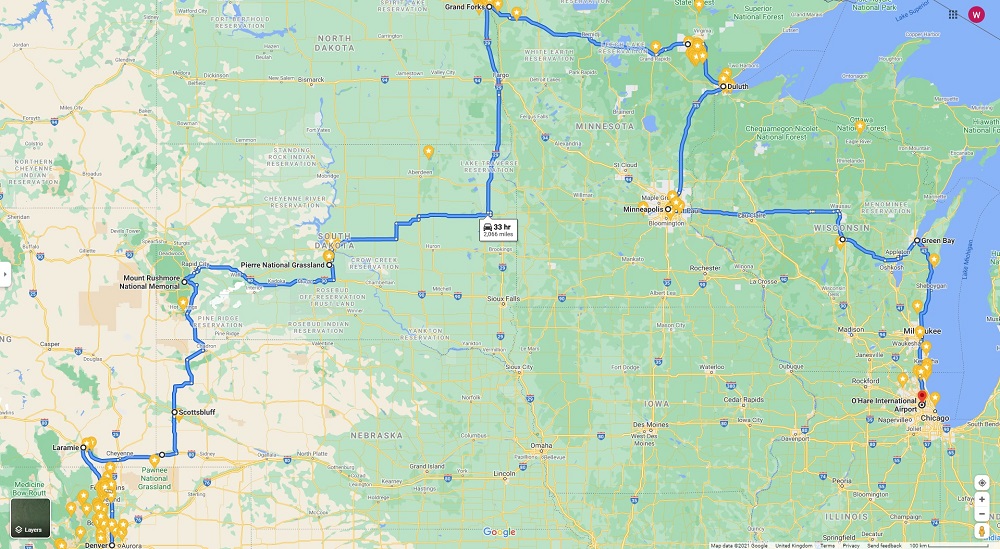
  • Close to 11 full days of birding my way from Denver Colorado to Chicago Illinois, via Wyoming, Nebraska, South Dakota, North Dakota, Minnesota and Wisconsin.
  • Flights: I flew into Denver and returned from Chicago via New York using a combination of British Airways and American Airlines.
  • Covid logistics were a "Proof of Covid recovery" NHS QR code combined with a letter from a recognised health provider confirming I could not reliably take tests and was fit to fly. Otherwise a negative lateral flow would have been sufficient. Half way through my trip UK entry requirements changed due to the Omicron variant and I had to change my pre-booked day 2 lateral flow test to a more expensive PCR, as well as find a rapid fit-to-fly test in America before departing. Whilst I could have simply paid-up at O'Hare I managed to find a free observed rapid antigen test in Wisconsin 36 hours before I flew home.
  • Car Hire: I hired a small SUV from Avis for 11 days at vast expense as I felt having a 4x4 was the sensible thing to do given the winter conditions. I was instead upgraded to the largest "car" I have ever seen, a Chevy Suburban. It was unbelievably nice whilst also grotesquely inefficient. A 4x4 was probably not strictly necessary, but it easily could have been and I felt very confident for having it.
  • Driving: Easy. I did a lot of miles, 3184 to be precise, but they were mostly straight miles on wide roads and not exhausting as they would be here. The car had cruise control and heated seats. Although I had an itinerary that in theory avoided it I did a lot of long-distance driving after sunset - at this time of the year around 4pm in Denver and 5pm further east. I used Google Maps for all driving directions, being sure to download local maps each night as signal can be patchy on the Great Plains - I had no 4G from South Dakota to Wisconsin.
  • Accommodation: I resisted the temptation to sleep in the car due to the weather, although it could happily have accommodated my entire family. Instead I stayed in a variety of ubiquitous US roadside motels like America's Best Value Inn, Quality Inn, Best Western and so on. All of them were fine, but all shared the feeling of having been built in about 1975 and not having been updated since. Crap in other words, but clean and pretty cheap. Most were prebooked, but with flexibility in case plans changed, which was fortunate as change they did.
  • Food: The less said about this the better. It is heartbreaking to see how most Americans eat.
  • Literature: eBird, eBird and eBird, in the pre-planning stage and also "live" when I was there. It is brilliant. 


As you can see from all the stars, I birded more locations than is possible to mention in a brief itinerary.


Itinerary

Day 1: I landed at 3pm and had just enough time to go birding for about half an hour before sunset just north of Denver airport.
Day 2: West and up into the Rockies for sunrise, followed by a variety of lower-lying sites towards Boulder, CO, where I stayed overnight. 
Day 3: Birded around Fort Collins and Lyons for most of the morning, and in the in the afternoon went up to Rocky Mountain National Park and Estes Lake. Overnight in Fort Collins, CO.
Day 4: More sites around Fort Collins in the morning, a few stops around Laramie, Wyoming, early afternoon, and then a long drive across to Nebraska and north into South Dakota after sunset. Overnight in Hot Springs, SD.
Day 5: Morning visit to Mount Rushmore, a bucket list destination, followed by a drive east across South Dakota taking in Badlands NP. Afternoon birding around Pierre in very difficult windy conditions. Overnight Pierre, SD.
Day 6: Birded around Pierre all morning and most of the afternoon, including the prairie grasslands south of the city. Then a long drive north east across the State and into North Dakota via Fargo. Overnight at Grand Forks, ND. 
Day 7: Birded sites around Grand Forks all day in glacial weather. Late afternoon continued east through Minnesota. Overnight Grand Rapids, MN.
Day 8: Birded Sax Zim Bog all day. Overnight Grand Rapids, MN. 
Day 9: Sax Zim early morning followed by birding around Duluth/Superior early afternoon More time had been planned here but I needed to get south of a huge winter storm arriving the following day. A quick pilgrimage to Minneapolis-St Paul at around dusk, and then I continued east towards Lake Michigan. Overnight somewhere non-descript in mid-Wisconsin. 
Day 10: Early morning in the Buena Vista grasslands, and then across to the lake shore at Manitowoc, birding a number of sites south towards Milwaukee. Overnight Racine, WI. 
Day 11: Early morning at Waukegan. Rest of the morning devoted to trying to get a rapid Covid test for my flight the next day. Afternoon birding the northern suburbs of Chicago. Overnight Chicago, IL.
Day 12: Morning birding Montrose Point, early afternoon flight home.

Wednesday, 15 December 2021

The Côte de Beaune


You didn't think I was going to skip the other half of the Côte d'Or having done a lengthy post on the Côtes de Nuits did you? No, no, no. That post generated over 200 views and one - yes ONE - comment, which is actually a lot more than many get. I view this as valedictory I'm afraid, Seth this is all your fault. There will of course be birdy content too, so make you read the whole thing so you don't miss it!

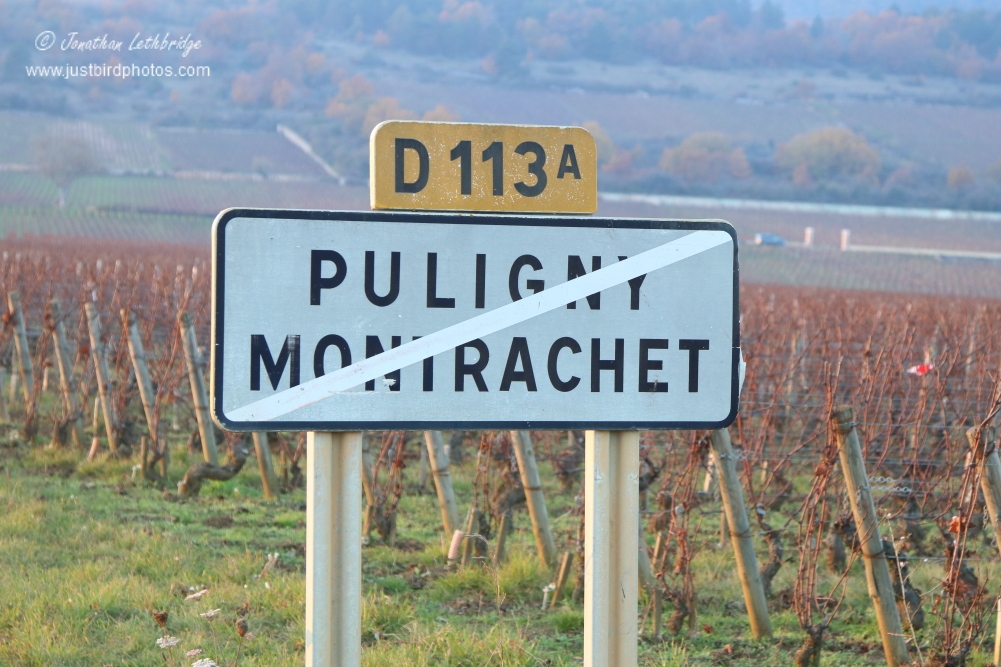
So, to the southern sector. Whereas the Côte de Nuits is famed for its red wines rather than its whites, in the Côte de Beaune it is the other way around - the whites dominate. For the most part that is, there are also some significant red wine appellations, not least Beaune itself, but overall it is the great Chardonnay vineyards that people equate with the area. Puligny and Chassagne share the great mineral rectangle of Montrachet, and the village of Meursault although without any Grand Crus produces superlative creamy white wines that can be divine. The same obscene price increases are in existence here, and with over two decades of work under my belt it is a source of great sadness that wine I could afford in my twenties on a relatively meagre salary is now completely out of my reach and what is more is getting further away. As with the top wines from further north, who actually drinks this stuff?!
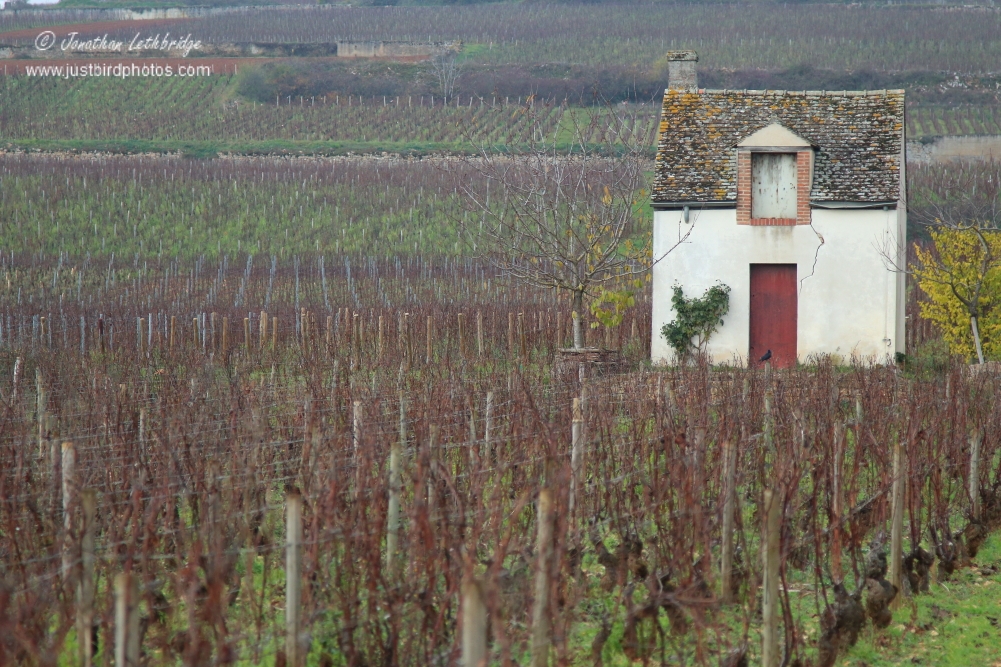


The Côte de Beaune actually starts a little north of the town of Beaune at the village of Ladoix-Serrigny, although the wine here is typically labelled simply as Ladoix. I have never knowingly had a bottle, have none in my cellar, and know nothing at all about it. I suspect that the wine, like the village itself, is simply overshadowed by the hill of Corton. In theory given that some of the production comes from the slopes of that hill but without the cachet of the label there should be some good value wines here. Something to look at perhaps, but unfortunately I missed my opportunity and drove straight through to Aloxe-Corton....

This is a source of top notch red and white, the Grand Cru of Corton (for red) and Corton-Charlemagne (for white). As you will probably realise by now this is not a happy hunting ground for me these days, but I do have a couple of bottles for white from 2009 which I am hanging on to. These were in fact a replacement for some completely oxidised wines from a prior vintage which the Domaine ended up recalling en masse and re-issuing. Mrs L and I drank the first bottle for our 19th wedding anniversary last year and it was stellar - the sommelier at the restaurant we took it to declared it to be "lively", which I think was a nice way of saying we we were drinking it too early.
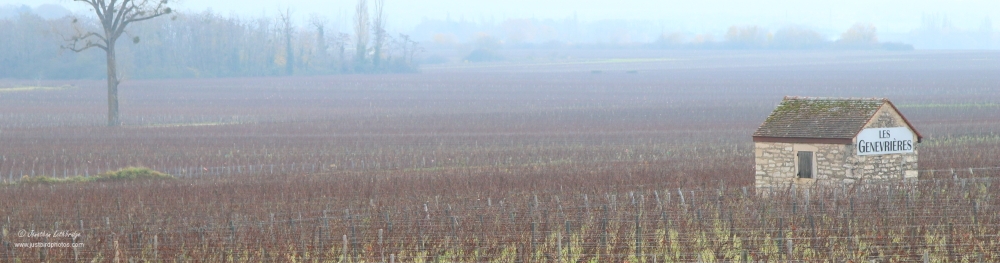


A short word on premature-oxidisation, that scourge of wine which turns what should be delightfully light and floral whites into turgid dark yellow cesspits that taste like bad sherry. The interaction of oxygen and wine is an important part of development, and is expected over time. Premature oxidisation, or premox, is what happens when this reaction happens much more quickly than has been intended. Poor quality corks that are far too porous are to blame, and it was not unusual back in the day to have over half of any given case to be a write off, especially white wines for some reason though it affected both. I remember taking a bottle of Puligny-Montrachet Les Pucelles from Domaine Leflaive to a significant birthday meal and it being nigh on undrinkable - and this is a wine that costs around £400 a bottle (now, not then....)! I had a case of three and all three were poxed, just outrageous. And of course there is no recourse for the wine drinker, or at least very rarely - it was exceptional that Bonneau du Martray replaced the whole lot when you think about it. Of course this could be avoided if one drank the wine young, but these were wines that should have matured and evolved for decades. Although it still happens thankfully it is now much rarer. There is now much more use of sulphur which stifles the interaction of wine and oxygen (but not entirely, as that would be no good) but more importantly many producers have moved away from natural cork, a variable material, to DIAM, which is not. Hell will freeze over before the Burgundians start to use screw caps I expect, but when I buy white wine these days I am much more likely to buy something expensive (high correlation with long-lasting) if it has a DIAM closure. Anyway, that bottle of 2009 was wonderful, and I am crossing my fingers that the other two also have good quality corks that are doing their job properly.
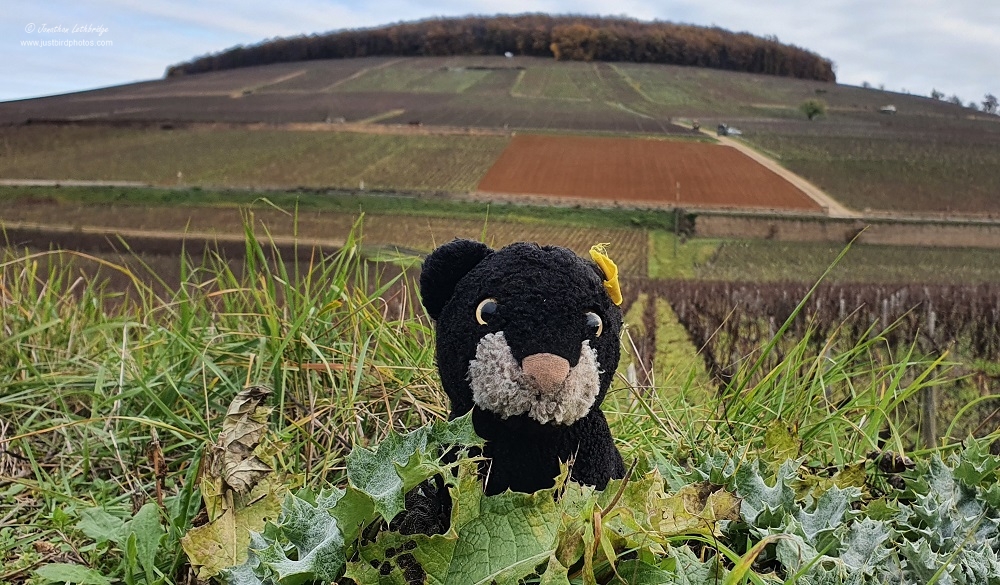
The Hill of Corton

The Hill of Corton, neatly topped on the plateau with a small wood, is a landmark that can be seen from miles around. Although I can't really afford the wine the slopes produce, to the west is the much more reasonable village of Pernand-Vergelesses. These side appellations, and there are more further south, are currently the best/only places to go shopping. The quality is equal in many cases, but it is what is on the label is all important for wine collectors, and so these wines seem to mostly slip under the radar. The word will spread of course - more and more people will get pushed out of the mega appellations and look for value elsewhere, just as I have. Inevitably that means prices will rise here too, and which point I don't know what will happen. What wine-lovers need is a huge and long-lasting recession in the Far East that will slash demand.

Moving south you come to Savigny and Chorey, both of whom use "les-Beaunes" for marketing their wine, hence Savigny-les-Beaune and Chorey-les-Beaune. These are in my mind primarily villages from which to get decent pinot noir at a less elevated price than Beaune itself, and a number of producers are well worth following. If you like wine that is, maybe you don't. If you don't you are of course missing out, but equally you are one less person in the ring for a bottle. Yes, maybe don't read any further, it's fine, I don't need page views.
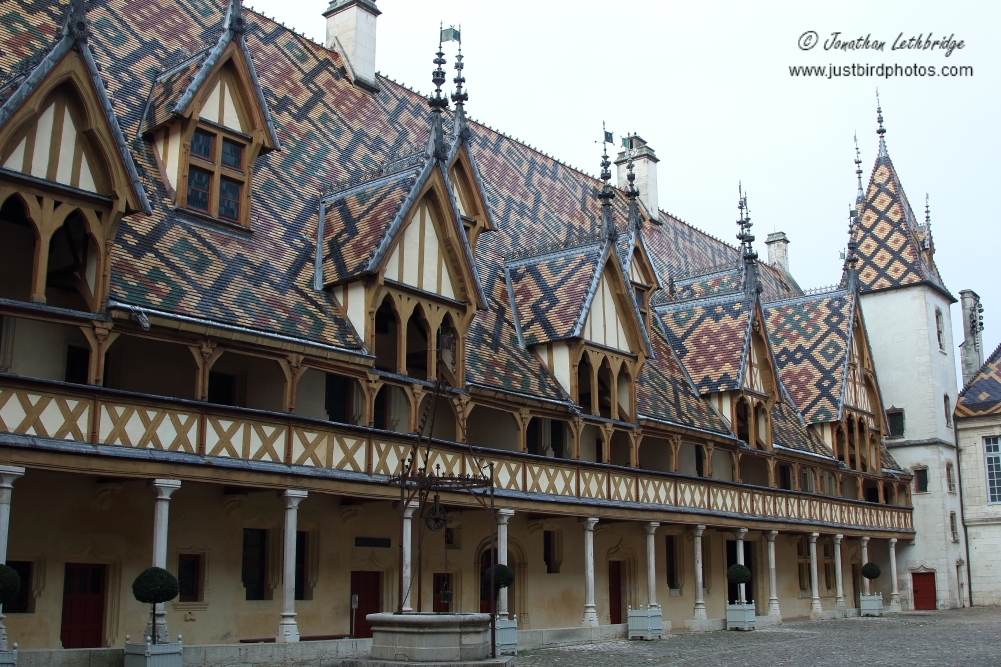
The inner courtyard of the Hospices de Beaune


Beaune is next up, the administrative centre and hub of the whole of the Côte d'Or. It is a lovely town in its own right, and even if you did not like wine you could happily spend a day walking around its cobbled streets and visiting local landmarks, the most notable of which is the Hospices de Beaune, a hospital for the poor set up in 1443, predating the NHS by 500 years. It still functions as that today, although the medical side is now elsewhere in Beaune and the original buildings of the Hotel-Dieu are now a museum. The architecture is stunning, inside and out, and it has been immaculately preserved, thanks in no small part to wine. Like many venerable institutions the Hospices de Beaune owns huge... tracts of land, which in this part of the world means huge revenue. These revenues are crystallised once a year by means of a famous charity wine auction that attracts the whole world, keen for a slice of the action. The Hospices both makes and bottles its own wine, and local vignerons also contribute by either given them a barrel, or by vinifying some of the Hospice's holdings.
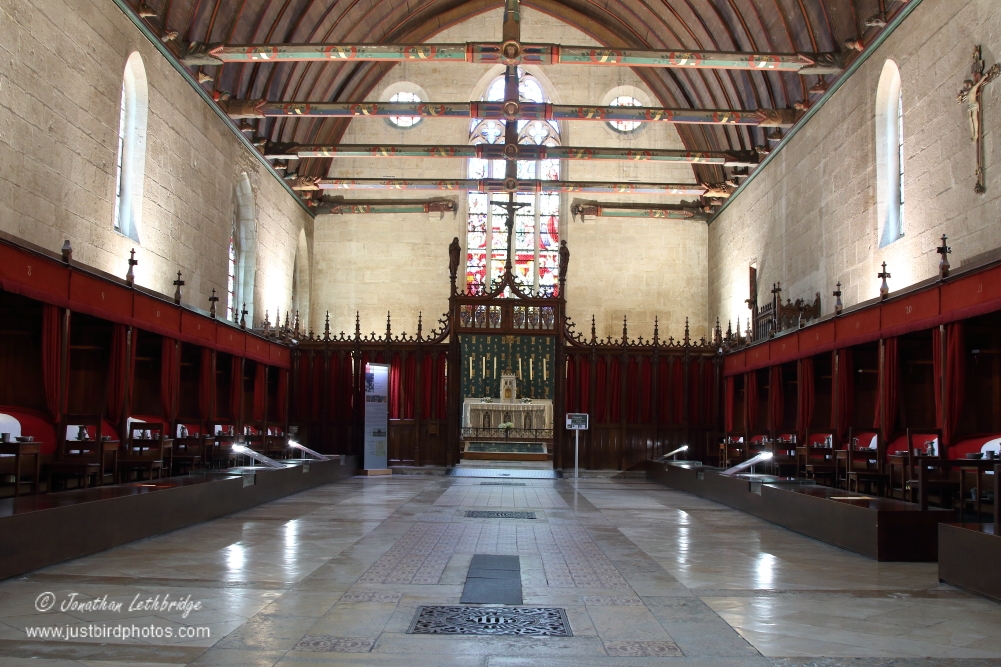
Just a regular ward


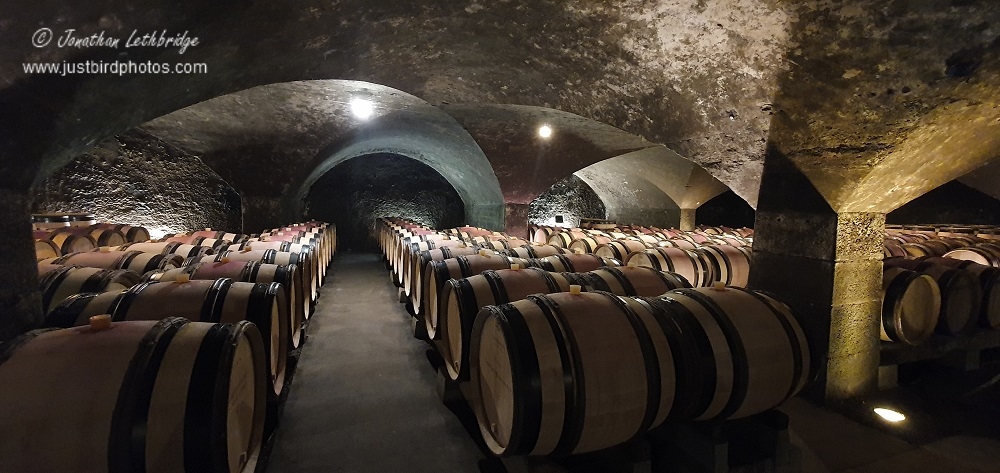
Chanson's cellar in the Beaune bastion


These and all the other Beaune vineyards are mostly to the west of the town. Although some white wine is made I associate Beaune squarely with reds, and there are a plethora of great lieu dits that start to cause mild salivation. Les Grèves, Les Fèves, Les Marconnets, Clos des Mouches - I could go on. There is no single way to describe Beaune - you can find masculine wines that are burly and long-lived; you can have seductive lighter styles if that is what you are after. The only thing to do is to taste as many as possible to see what you like. I based my trip in Beaune....
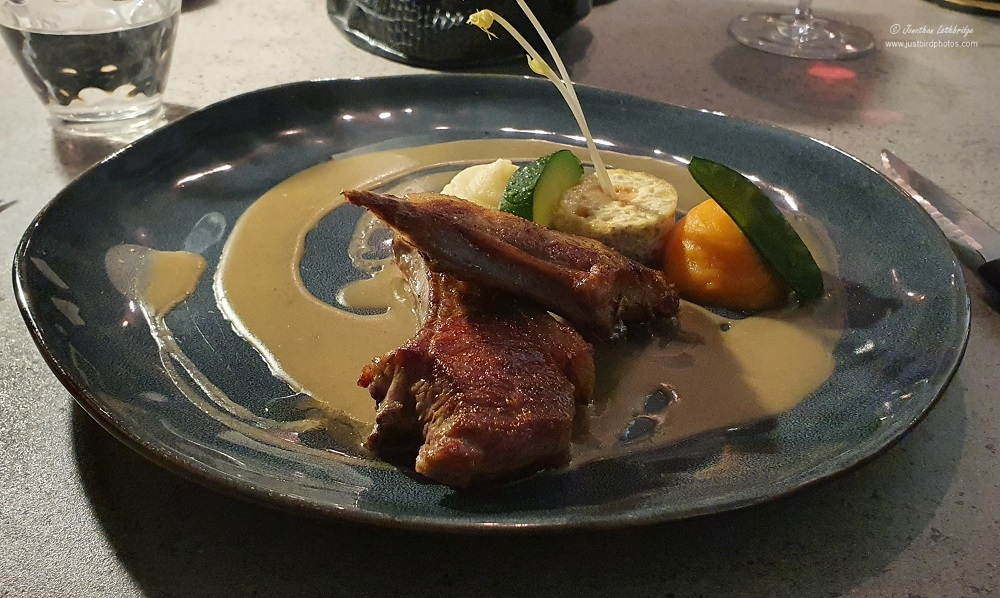
Gluttony at La Ciboulette


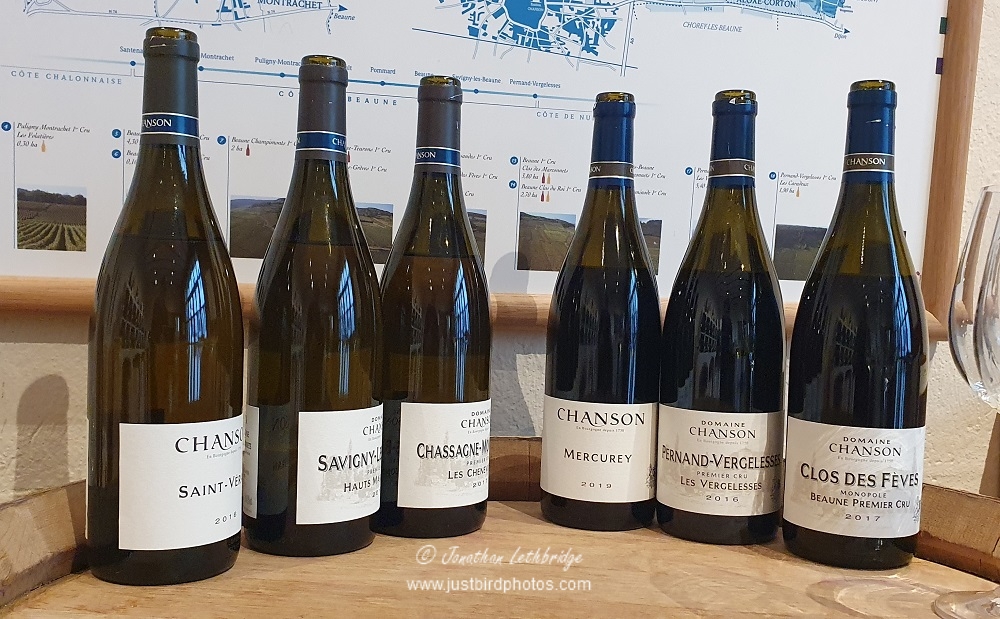
I had three nights there as well as a free morning, and I spent all this time eating and drinking, as all visitors to the town should. I visited the big negotiant Chanson Père et Fils, and was taken on a tour of their cellars in the town walls followed by a tasting session. I also went to a fantastic wine shop called Mon Millésime, and ate at several establishments that served wine by the glass so that I could extend the breadth of my experience. Burgundian food is solid stuff - no light salads here or delectable platters of seafood. This is a diet based on red meat, rich creamy sauces, and cheese. Oh the cheese! To die for, which if I lived there I probably would have done by now. 

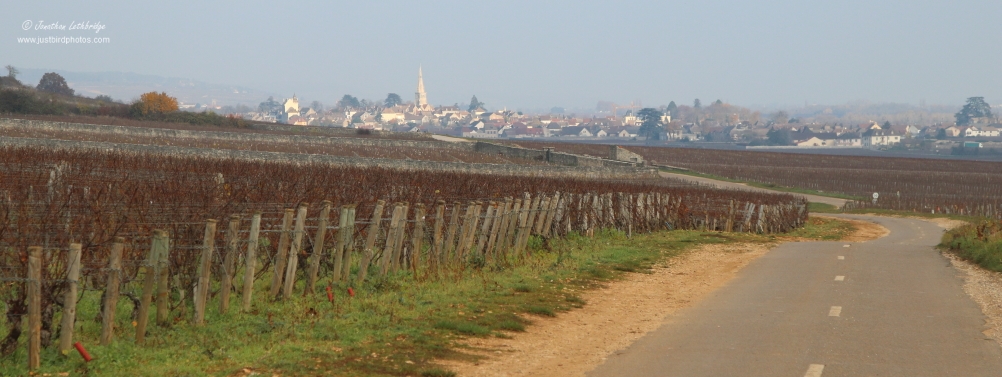
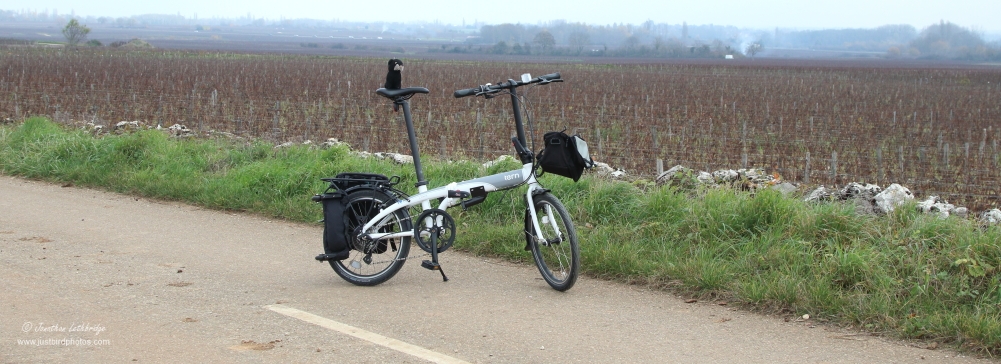
This was partly the reason for taking Mrs L's fold-up bike with me in the back of the car. Also in my thoughts were the ability to enjoy wine with lunch on at least one day, and to get a far better appreciation of the literal lie of the land. There is a well marked cycle path that runs south from a park on the west side of Beaune and goes through all the major villages and their vines, so what better way to get to lunch in Puligny?

*** WARNING: BIRD CONTENT COMING UP ***

I recorded 16 species in the Parc de la Bouzaise before pedalling south, including Nuthatch , Siskin, and Short-toed Treecreeper.

*** BIRD CONTENT FINISHED ***


It is a short cycle to Pommard, a lovely little village. The wines here have a reputation for being rustic and powerful, although as ever you need to go with individual producers. I much prefer Volnay, the next village along. Here the wines are known for their silken elegance, and if you find a bottle from a good producer that expresses the typicity of the appellation then I guarantee you will not look back. Sorry, what I meant to say is that it is all totally disgusting and if I were you I would avoid it completely. Also don't bother buying wine from Monthelie or Auxey-Duresses, villages slightly to the west of the main côte before you get to Meursault. They represent incredibly poor value and should not be touched with a bargepole. Clear?
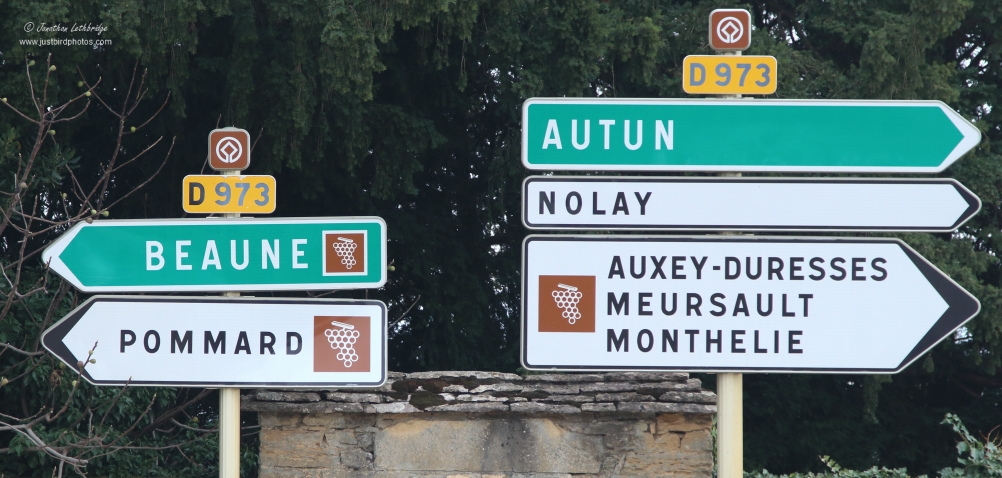
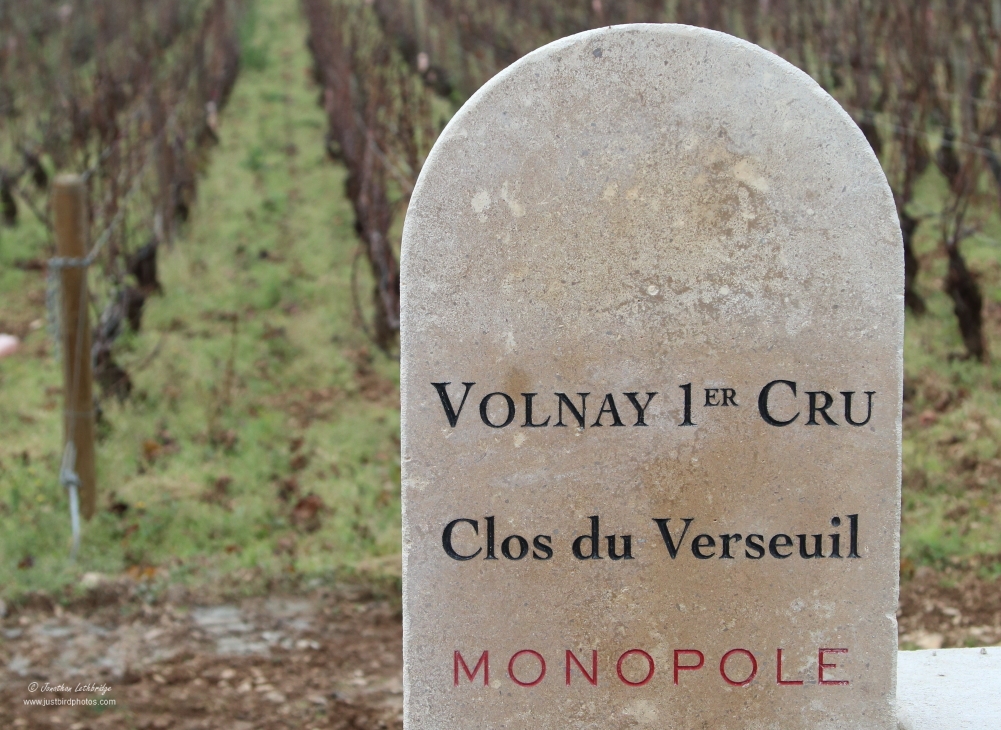


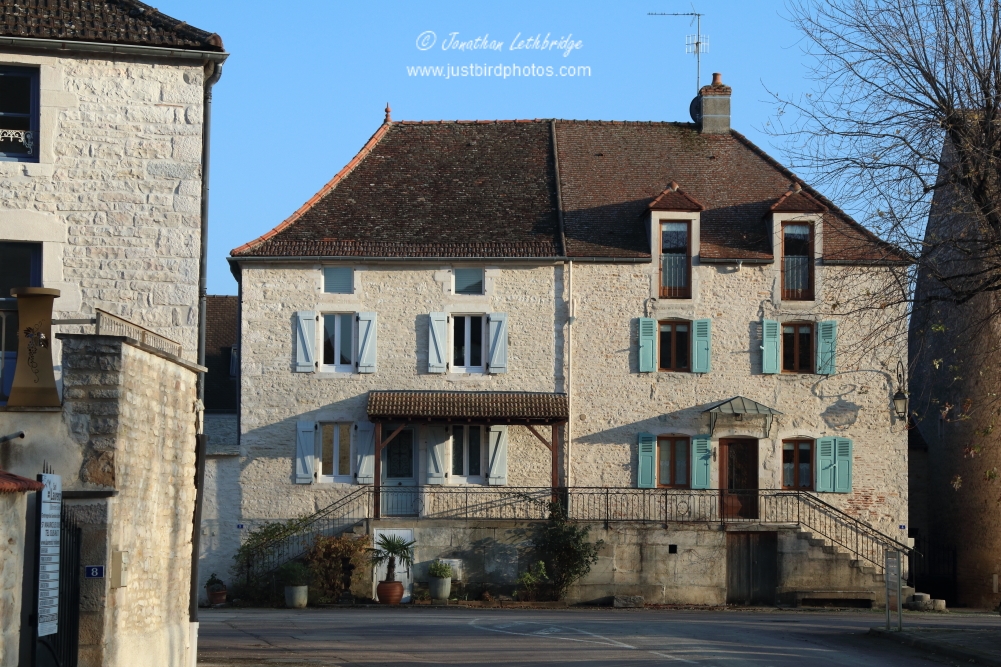
In the centre of Volnay, just underneath the small village, the cycle path heads east across the main road next to the Clos de Verseuil, a monopole vineyard belonging to Clerget, and after Carelle Sous la Chapelle heads south towards Meursault. Volnay and Pommard produce only red wine, but Meursault is dominated by white. And what a white it is! The best examples in my view are the ones which have a creamy butteriness that is simply not found anywhere else, brilliant with food. At lunch later on I tried a Meursault made by a producer based in Puligny, and it had none of this, it was simply taut and mineral. It wasn't that it was bad, far from it and I love that style of wine, but I just found it pointless. This is why learning about individual producers and tasting wine is so important - from that point on I resolved not to buy Meursault from here. Puligny, Saint-Aubin and Chassagne yes, Meursault no. One of my most memorable experiences in my formative wine appreciation days is from here. With our Guide Hachette in hand Mrs L & I knocked on a random producer's door in Meursault, which typically is also the family home. The vigneron I think had been eating lunch, yet happily led us to his cellar, reached down some steps in his garage, and which stretched under the main road, a long, dark and cool space. Here we tasted a range of the last year's production and were totally captivated. Wine has never really tasted the same since, but very occasionally a bottle opened here in Wanstead can transport me back to that cellar. We left with several bottle at 200 francs each (my memory is a little hazy but I think this trip was in the late nineties - good luck getting a bottle of Meursault for that today!), and were sent to see his mates at the next village along. They were a raucous post-prandial bunch, insisting they were peasants barely scraping a living, and clearly deeply amused by two fresh-faced english twenty-somethings mangling french and trying to cadge some free wine. We had a great visit! For the life of me I cannot remember the names of either of these two places, and it is only in writing this that I now wish that I had deviated from the cycle route to try and find them. I have a clear memory or a regular white house with the garage off to the right next to the road. I've scanned satellite images and can't find it, and trawling through the names of vignerons has drawn a blank. A shame. I would have liked to have gone back to see if was the same. 
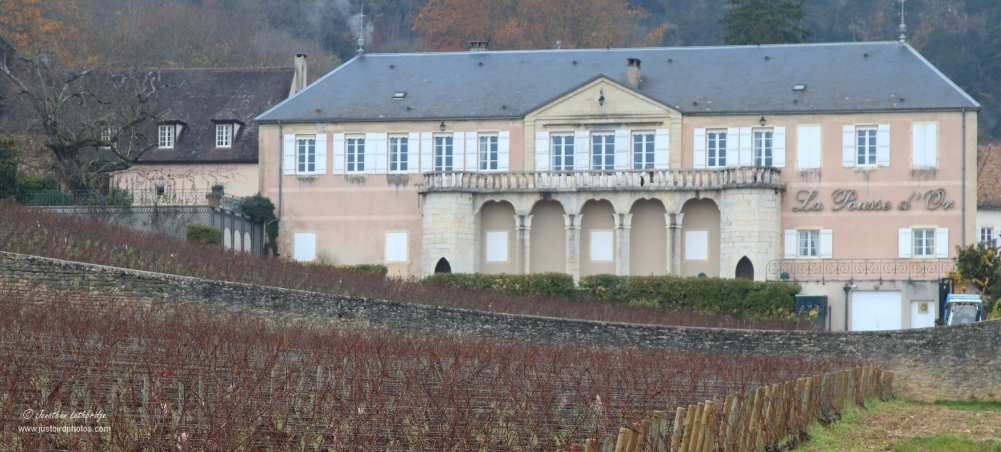


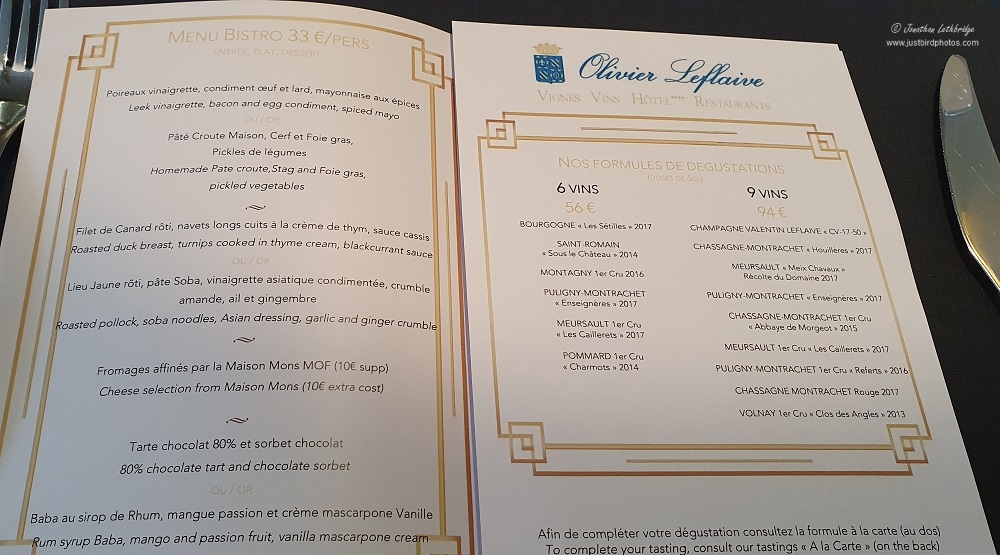
It was a longer cycle to Puligny-Montrachet, and I had stopped so frequently for rests and to take photos that I only just made it to my lunch booked at Domaine Olivier Leflaive in time. This is a big domaine with fingers in multiple pies, including a hotel and restaurant in the village. Their range of wine is so vast I can actually afford to drink at the lesser end of their scale, and it is very good indeed - their "Les Sétilles" is essentially our house white, and comes from various parcels around Puligny and Meursault. The sommelier solemnly wheeled my bike into an inner courtyard as I had left the key to the lock in Beaune, and I sat down to a fantastic tasting lunch. Puligny and neighbouring Chassagne are very much white wine villages, so the tasting flight was mostly chardonnay and thankfully the food was on the lighter side to match. Apart from the obligatory cheese course, naturally, but white wine does in fact go very well with creamy cheeses.
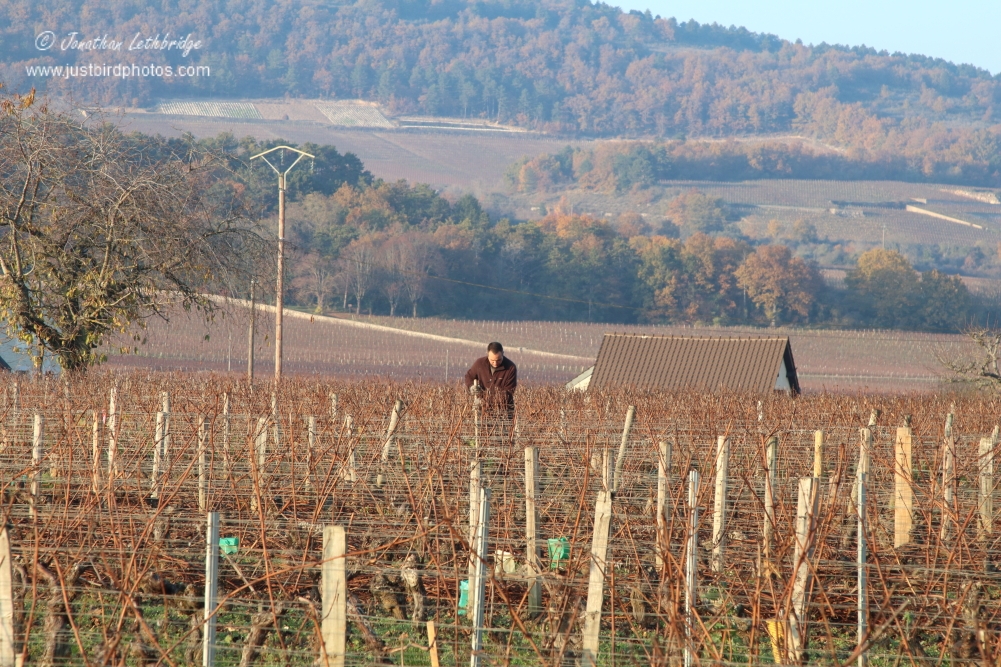


After lunch I rolled straight onto a vineyard tour where we walked a little west towards the slope of the hill. If you have been paying attention this is one of those places where vineyards that are the greatest of the great sit right next door to lowly village wines. We were led to one of these hallowed crossroads. Behind me were the 'normal' vineyards. To my right was the top 1er Cru Les Pucelles, origin of my horribly tainted wines from many years ago. To my left the Grand Cru of Bienvenue-Bâtard-Montrachet. Directly above that is Montrachet itself, and above that Chevalier-Montrachet. It was being ploughed with a tractor and I joked they should be using a horse but nobody got it. Along with Meursault, Puligny-Montrachet is my favourite white, and were money no object I would head here every time. As it is, Saint-Aubin, slightly to the west, is a favoured village. Sorry, what I meant to say was that wines from Saint-Aubin are vile and undrinkable and that you should not under any circumstances seek them out.
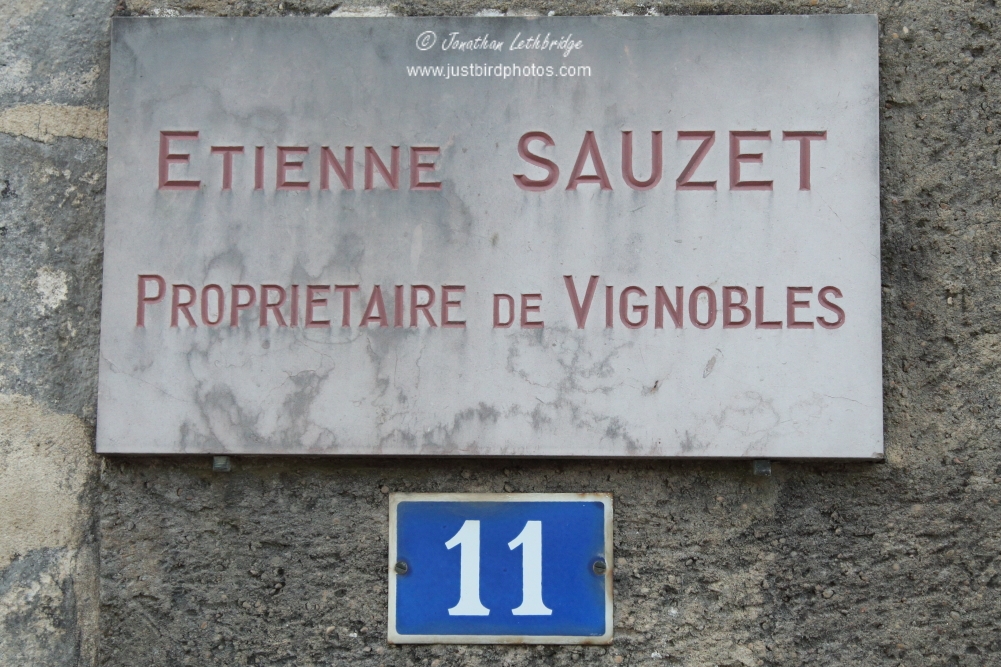
Another prestigious address that I rarely get to sample

Back at the domaine the other tour participants headed off for a tasting, and I headed to the local wine shop/bar. Here I fell in with some locals who had dropped in for a glass of wine after work, and ended up spending the rest of the day here talking about the folly of Brexit, COVID, food, and absorbing the frequent anti-English jovial ribbing that english people who speak french are always subjected to. It was a fun couple of hours. By now it was dark and my new friends could not believe I was about to cycle back to Beaune, so one of them, Benoit, offered to drive me back in his Range Rover. Mais bien sûr! He was a vineyard broker, big business in Burgundy, and despite the fact he was likely several sheets to the wind I accepted happily. I don't condone it obviously, and would not do so myself, but.....nice big car, quiet roads, and frankly Benoit had probably done this more than once. Perhaps every night in fact, and of course we made it without any problem at all and I made my dinner appointment right on time after having put my bike back in the car along with my newly acquired stash of wine.
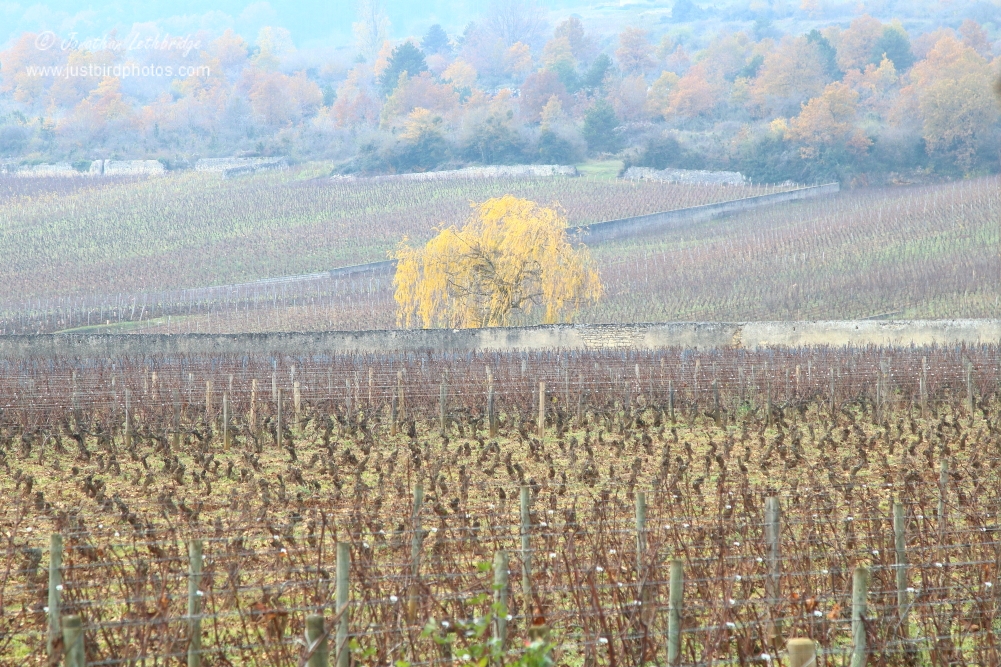
You might be bored but you can't say it isn't pretty


This of course meant I never made it to Chassagne-Montrachet or Santenay, the next and final villages that make up the Côte de Beaune. I like Chassagne a lot, it does not quite have the purity of Puligny, but it tends to be a little cheaper and if you can find a decent producer you can find simply lovely wines that are lean and mean but with a slightly more colourful character than those from the neighbouring village. Less steel, more soul perhaps? By the way, there is a wonderful book about the area simply called "Puligny-Montrachet" by Simon Loftus, more about the people than the wine and a highly enjoyable window into France.

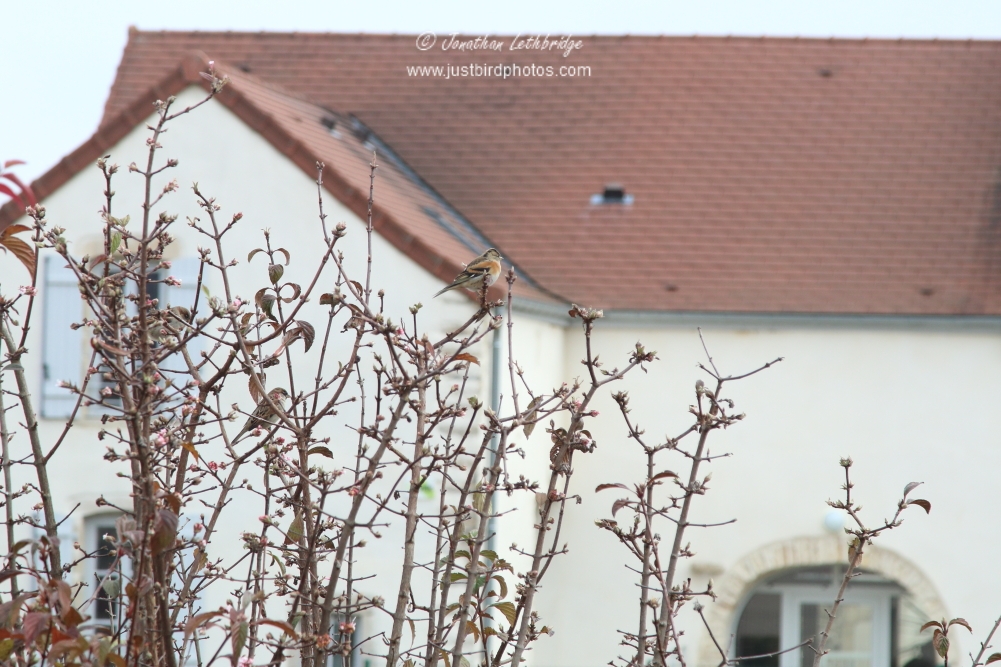
Burgundy continues south into the Côte Chalonnaise, but the Côte d'Or and my trip both finish here. Oh yes, I forgot to say, where the stream cuts through Meursault, just before the big hill south out of the village, I found a Brambling in with House Sparrows. Apologies if this is a little off-topic.


Tuesday, 14 December 2021

Snow patrol

Remarkably I've been away. Omicron and some severe weather conspired against me slightly, but overall my American road-trip went off pretty well. This was of course my second attempt, the first one blew up in late October when I caught the virus, but travelling over a month later, in December, did mean that the suite of birds on offer was slightly different, and not in a bad way. In a kind of very cold, very white and extremely snowy kind of way. Here is a brief highlight whilst I sort myself out. Prior to last week I'd seen one Snowy Owl in my entire life. Or rather, the top third of one Snowy Owl. Now for the first time I have seen an entire one, in fact several entire ones. And take it from me that they don't get boring.