Thursday, 6 April 2023

Time

A four day weekend is nearly upon us, and during 'prime time' too. I am not working, I am not travelling, I am here and I am looking forward to it. I will likely stay here, in Wanstead, and see very little. As usual. A day of seeing nothing though might see me looking further afield, the draw of the coast.... perhaps I will consult online birding weather sages as to where to go? Hopefully the North-east is not their answer. You will no doubt have noticed, as I have, that Norfolk's star seems to have waned. Once upon a time it seemed to be the only place you needed to go. Start at Holme, finish at Sheringham, a full day birding top sites west to east, mopping up a cornucopia of juicy arrivals. Nowadays everything seems to touch down at Hartlepool.

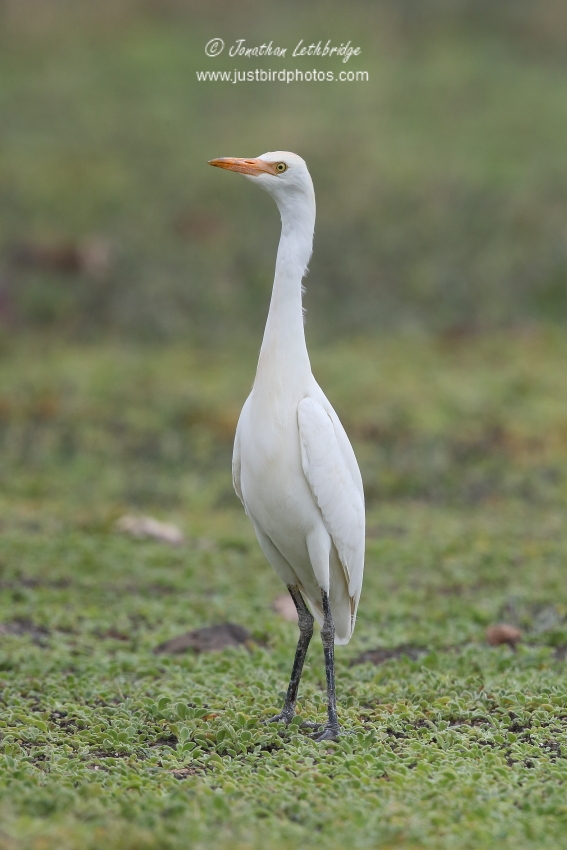
Wanstead has had minimal juice - a Great White Egret flew over a fews days ago but I was not here to see it. I was not too bothered, happy where I was. I have seen several over the patch, but for me the real prize is now the house list and one day I hope to see it from here. This list is marooned on 98, and perhaps one or other of the southern Egrets will feature as 99 or 100? We were having this conversation just the other day, that surely Cattle Egret will fall soon. Flocks of hundreds in the South-west, a regular feature as close as Rainham, and southern wetlands drying up at an alarming rate. My focus tomorrow and onwards will be on humbler fare though. Sand Martins, Swallows, maybe a Willow Warbler. Most migrants have been in excrutiatingly short supply locally, but there is a puff of wind from the south east on Sunday and maybe that will be the catalyst for movement.

Even if there had been gazillions of fresh arrivals here I would not have seen them. Poor health continues to plague me. A tough cold in mid February was followed by food poisoning in mid March which took a week to subside. No sooner had I rid myself of that when Covid struck me down, my second visitation from this vile plague. That took a week to get rid of, though I am still coughing today, and just as I felt better from that I had an attack of diverticulitis, an unpleasant occasional consequence of a short section of my lower intestines being a bit shot (I will spare you the grisly details). This went on for over a week, prolonged you would have to say by my own stubborn stupidity, and only earlier this week did I start to feel I had turned the corner after a short spell of sunshine and rest (clue: I wasn't here). So a torrid run and I have been feeling a bit sorry for myself. My parents, bless them, are still here to lecture me, and so this is all my fault for repeatedly burning the candle at both ends and thinking I am still 30 and not nearly 50. They may have a point, but of course I could never admit that.

Perhaps more of this and less running around like an idiot?

Anyway, a relaxing four days of birding is mere hours away and I am very much looking forward to it. The trouble with birding though is that it requires early starts...

Wednesday, 29 March 2023

Movement

Things are beginning to awaken in Wanstead, including me. The main headline BREAKING NEWS is that I have seen a Wheatear. Five in fact, with the first on March 18th, and then a few more this past weekend. They are lovely, exceedingly so. They were also hugely distant - not that I bother taking a camera around Wanstead these days - as they were inside the newly repaired Skylark fence. At some point recently some ne'er-do-well went on a slashing spree and ruined large portions of it, meaning the whole lot had to be replaced, rather than just filling in the gaps that had been opened up over the autumn and winter. I have mixed feelings about the fence, as I would dearly like to bird in there, but I suppose it is for the best. Also the stupid Skylarks spend as much time outside the area as in it. There is however no doubt in my mind that being able to step out of the house and within mere minutes hear the glorious sweet song of Skylarks is a rare privilege indeed, so anything that helps that endure ultimately gets my vote. 

Wheatear is of course not the only bird I've seen. Spending time on the patch tends to mean you see more birds, who knew? Last weekend I spent the whole morning out there as I just knew that a Red Kite was going to come through. It took something like five hours for this to become a reality, but with it came a certain amount of satisfaction. In the same half hour a Hobby came through, our earliest by several days and possibly my first March bird. It was sufficiently notable for eBird to want to me to expand on the sighting, which I duly did. I am still some way behind previous years, and trailing the pack of super-keen local birders by quite a distance, but time is on my side.

The other news I wish to share is that on Sunday I did two things. The first was that I twitched an Alpine Swift at Walthamstow, having dipped an Alpine Swift on Saturday at Dagenham. As is typically the case with influxes, the fear of missing out gradually builds until you have to do something about it. Saturday was a disaster. Dagenham is only a few miles away but it took me 45 minutes to get there at a crawl, by which time a sharp shower had sent the bird elsewhere. I stuck it out for as long as I could and then headed home, which took another 45 minutes. Naturally the bird reappeared in the early evening but I couldn't face it. So on Sunday morning when someone found another bird over the Coppermill Filter Beds I was there within 20 minutes and this time my luck was in.with the bird soaring high above me. So far they have evaded Wanstead. I've seen three Alpine Swift in the UK now, and interestingly all have been in London with two of them really not far from home at all.

The garden does NOT looks like any more!


The scond and final piece of news is that I have entered the greenhouse. It was like staring death in the face, deadm sagging and browning leaves everwhere, rotten succulents, a strong smell of decay and unhappiness. It was slow going, but over the course of about six hours I gradually sorted it out, the as yet fallow vegetable patch outside the entrance acting as a staging ground for the deceased. It was very sad, I have a large collection of labels that I need to go through and erase on the inventory (well of course I have a spreadsheet!). I have not done that yet, I can't face it at the moment. But I did painstakingly chop up all the leaves, empty dead pots into larger containers, and then mid-afternoon I filled the car to the brim and went to the local tip. That was quite catharctic actually, to be rid of it, and feel as if I can now start again. There is more do of course, a ton of fungus and grime that needs to be cleansed away before it will start to feel more positive. I'll get to that over Easter when I have a bit more time, but the really hard part is now done. There were a few positive outcomes, Agapanthus that I thought were toast in the flowerbeds seem to springing to life from the base, and the Tetrapanax has a new growth point. Mainly the story is of mush though, with plants that I had through bomb-proof all succumbing. South African Aloes that were enournous and had gone through snow and big freezes are all dead, gutted. The big palms are fine, palms that in many cases I raised from small seedlings and that have lived and grown happily in Wanstead for close to 20 years now. Some of them are taller than me! But the newer crop, smaller plants that I started perhaps five years ago, are mostly all goners - a fatality rate of approaching 80% which I find extraordinary. Often the same species as the bigger brethren sat just a few feet away, they just couldn't cope. It was the combination of the cold and damp - it has been a very wet winter here. Cold by itself tends to be fine, but when you add in the incessant rain that's when it gets ugly. I don't think I'll replace them. Anyway, the trajectory is now upwards, and time is a great healer, both of me and of plants that currently have no leaves!


Friday, 17 March 2023

Busy

I might have explained before - get your tiny violins out - but my job is rather intense. And so it should be frankly and I deserve no sympathy whatsoever. As December ticks over into January, Year End reporting kicks in and lasts for weeks and weeks and weeks. Once upon a time I was only involved in a part of it and I was over and done much quicker.l, but nothing ever stays the same and alongside massive regulatory change my responsibilities have also grown substantially. I only recently surfaced for air to find a sea of neglect stretching to the far horizon.

My greenhouse in is dire straits. For obvious reasons I did not fire up the heaters this year and it has been carnage. I am not sure I have the emotional energy to deal with it, but deal with it I will have to. In summary I need a skip. Then there was the London Bird Report for 2021. Luckily I did a lot of the prep work for this back in 2022, but as seems to be increasingly the case I ended up delivering my work much later than I had hoped to. There were many other boring things too, too dull to list save one. This blog.

It appears to be been about six weeks since I last wrote anything. Six weeks! Mind you it is not as though I have done much birding in Wanstead that I can report on. I can count my patch visits in 2023 on one hand! I did manage some birding in Fife back in Feburary when we went up for a few days during half term, but that is the only non-local UK birding I have managed this year barring a cheeky visit to Staines in January. It's not really very note-worthy, and given I enjoy birding so much I do worry how I can let it slide quite so easily. The trouble is that real life gets in the way. I am aware that other people have real life too and yet still manage to go birding a great deal, so this is perhaps unique to me. Perhaps it has something to do with leaving the local grapevine back in January? You may or may not recall that I crafted a long and moany post about news dissemination on the patch towards the start of the year. To cut a long story short I gave up and quit. Despite attempts to regulate the output, Redwings and Blackbirds continued to be considered noteworthy and I threw my toys out my pram and left. I have still not rejoined and I have no idea what I have missed during the period other than being able to say that my Wanstead year list is lower than at any equivalent mid-March date that I have lived here. Actually that is not true, I do know that I have missed the first of this year's Wheatears on the patch. I was considering venturing out this week to have a look but as luck would have it I contracted Covid again instead and so wasn't able to. I can report that it is nearly but not quite as fun second time around, but that it seems to be quicker and rather than a ten day rollercoaster it is more like five. Still, I suppose it is good to get a new whack of antibodies as there is no sign of another booster coming my way any time soon. Hopefully this has me covered for a little while.

I suppose what I could have blogged about was a little bit of travel, but I never got round to it. There is, as usual, a fair bit to consider. I went to Greece briefly in late January, driving clockwise around the Corinthian Gulf over the course of a weekend, birding some brilliant wetlands in Western Greece and then getting a wholesome dollop of culture by visiting the ancient site of the Oracle at Delphi. Then as mentioned above I had a long weekend in Fife in mid February where I got a good dose of winter birding - Geese, Ducks, Waders and Auks that are all in short supply in the south east are plentiful along the Fife Coast and even though I was only able to go birding for a few hours it was just superb. I even managed a Fife tick in the form of a Black Guillemot off Leven. More recently, in late February, I had a manic few days birding the southern half of the Yucutan peninsula. Mick and I flew to Cancun and then drove as far away from Cancun as we could, using remote Mayan ruins as a way to get into pristine forest. This was unguided birding and extremely hard work, but ultimately incredibly rewarding and great fun. I'll get to it on here in due course. And then this weekend prior to being struck down I went to Lisbon for a city break and walked about 40km in two days, which may not sound enormous but flat Lisbon most definitely is not! This week when all the aches and pains kicked in I initially assumed it was Portugese hills that had done for me before putting two and two together and taking a lateral flow test. Remember those?! 

Anyway life goes on - rapidly - how is it mid March already? I've blogged about this about eight million times before, but I simply have more hobbies and interests than I have time outside of work to pursue. The busier you are the quicker time passes I suppose, and to my mind I just have so much going on that I have to be quite picky about what I do. I am probably just being dramatic. Anyway, suffice to say that blogging fell off the bottom of the list again but that I am still alive and kicking. And coughing.

Is Snuffi 'The One'?


Thursday, 2 February 2023

Lanzarote - Day 3


We were up early packing, put all the stuff in the car, and set off for some final birding. We made a quick stop at another water treatment plant, this one imaginatively called EDAR Arrecife II, which is on the way to the Jable del Medio from the main town. More Cattle Egrets here, tons of Short-toed Larks, and a Grey Wagtail within the compound itself.

The Hoopoes were still attending their nest, and very pleasingly were perching on the rock we had placed on the junction box the evening before. The light was nice and the birds were constantly returning with food. We positioned the car between us and the sun and sat tight. I love it when a plan comes together! 


We could not stay long as we had an early afternoon flight, but we did our best with the Hoopoes and then explored a nearby quarry. This had lots of Trumpeter Finch, seemingly preferring the rocky environment, but we couldn't take the car into it and attempts to close the distance on foot proved tricky. A few grab shots and then we had to go. Gear packed up, changed clothes, checked the car for anything left in it, and headed the relatively short distance to the airport. It had been a fun couple of days, warm, decent food, and good birds.

Trumpeter Finch


Wednesday, 1 February 2023

Lanzarote - Day 2


After the frustrations of the previous day we went south, to the Salinas de Janubio, a large area of salt pans and a lagoon on the coast. This was heaving with birds, and although we wished for a scope we were still able to add many waders to the list. There are a series of shallow intertidal pools between the beach and the salt farm, but rather frustratingly there were signs asking people not to walk to the edge, so we had to view from a bund some distance away. I guess this is to protect a fragile habitat, there were some quite interesting looking plants growing in the black volcanic sand. Anyway, no photos, but we did manage 19 species here, which in Lanzarote terms is a decent list. The Salt Pans themselves held a few Ruddy Shelduck and a decent number of Black-necked Grebe. Viewing the pans is very distant, you really do need a scope.


At Playa Blanca hopes of a sea watch were dashed instantly - zero birds other than a few Sandwich Terns and Yellow-legged Gulls. Plan B was to go look for Egyptian Vulture and lunch on the nearby hillside. On the way we stopped at a small water treatment plant, EDAR de Playa Blanca. Amazingly (or I thought so at least) I picked up a Yellow-browed Warbler on call at the southern end where there is a small recycling centre. These birds travel far beyond Shetland! Also present here were a family of Great Grey Shrikes and a Song Thrush.

As it happened any Egyptian Vultures were hidden in low clouds, so we stopped and had some lunch whilst admiring the view (the post header from a few days back) and contemplating our next move. This was to head back to the plains via Punta Lima (just below the airport) where African Collared Doves were known to hang out. This is not a great tick of course, but it does count, and listing fiend that I am I was keen to try and pick one out from the numerous Collared Doves. The two-note song is the best indicator, as lots of the birds seemed unusually pale, and eventually a couple of birds did the decent thing though I lost them quiet quickly as the birds moved around a lot. 

Hoopoe. Pre rock.


Back at the Jable del Medio we couldn't refind the Houbaras, but we did notice that a Hoopoe was returning to the same spot near a small junction box with food. I guess birds breed all year round in Lanzarote, and sure enough we found a hole whilst the adults were away. Positioning the car for a nice shot we waited here for the rest of day and in the absence of a better plan decided to return the following morning, hoping that there would be some sunshine. Spiders, and quite large ones at that, seemed to the most common meal, but sometimes they came back with an enormous fleshy grub. Before we left we hit upon the great idea of placing an attractive rock on top of the junction box in the hope that the birds would naturally perch on this before entering the hole. I've used this tactic before with good results in the UAE and Cyprus for Wheatears, turning crappy situations into good ones. I expected that a rock, whilst different, wouldn't prove problematic for the birds. A good one was duly sourced from the surrounding habitat and placed on top of the concrete, after which we left for the day.

Tuesday, 31 January 2023

Lanzarote - Day 1

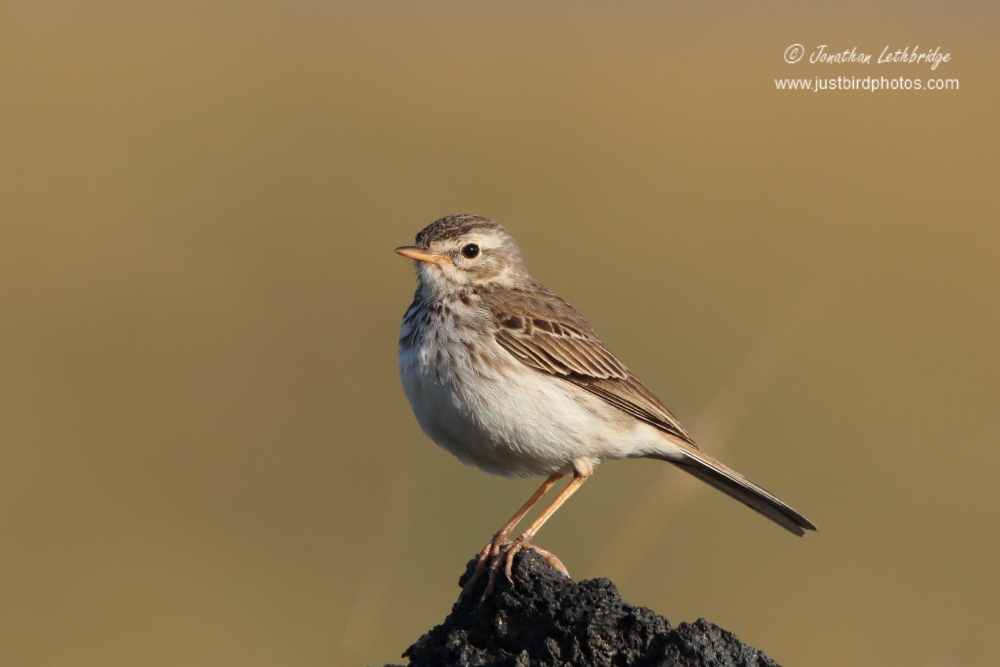
A trip to a small island is unlikely to feature a massive number of birds, and Lanzarote is no different. As such the main focus was on a small number of specialty species for which the wider Canary Islands are known, particularly the inhabitants of the large sandy plains like Cream Coloured Courser and Houbara Bustard. Mick and I started at the Jable de Famara in the north-west of the Island. As you descend towards the plain from its eastern edge it does not look particularly large, but as you head into it the size becomes apparent. A few main tracks that are perfectly easy to drive cross it east to west, and there are then innumerable smaller paths that with care you can also drive along in order to cover a bigger area. I don't know how many Bustards and Coursers inhabit this area, but in two hours that morning we didn't see a single one! In short, hard work. Berthelot's Pipit and Short-toed Lark were very common, and we also encountered a few Raven, a ringtail Hen Harrier and several Great Grey Shrikes. 


Berthelot's Pipit


Approaching mid-morning we gave up, and after a bite to eat in a nearby village we went to explore La Isleta on the west coast. This was pretty good for waders, and per eBird is one of the better sites on the island. This was simply for a breather really, and we were soon back on the plains for round two. Another hour and a half trying new tracks netted excellent views of a party of Coursers on the western side, but even that was brief, and as for Bustards!

Slightly to the east of the Jable de Famara is the Jable del Medio. This is greener and less dusty, with more agriculture, and amazingly we found a Houbara after a few hours of searching. Getting anywhere near it, even in the car, proved almost impossible, and whilst we gave it a go we lost the light. As dusk approached, the original Bustard joined three others that must have been lurking nearby and we got clear if distant views as they fed unconcernedly in a field.

Houbara Bustard! Five seconds of opportunity after a day of looking!


Wednesday, 25 January 2023

Lanzarote - Logistics and itinerary


Lanzarote, 10th-13th December 2022

I am still playing catch up from last year. Colombia took so long to write up that I only completed it about two months after getting back, but actually only a few weeks after returning I had a few days in Lanzarote with Mick. In some ways it was a bit soon after getting back from South America, but I have a habit of doing this. I book up trips with great enthusiasm many months in advance, thinking that it will all be fine, but when it comes to it I would actually rather be at home than packing my bag and trekking to the airport again to subject myself to the vagiaries of international travel. Until I get there of course, when I revel in being in a new place with new birds. It was not a long trip, just three days, and this was the perfect length actually as Lanzarote is not a big island and there are only a few primary birding areas. Having visited Tenerife, Gran Canaria and Fuerteventura, this was the last major Canary Island on my list. It was warm and there were birds, and it was ridiculously cheap. And we missed the bulk of the freezing conditions back home!


Logistics
  • A three day trip in mid December departing London on Saturday afternoon and returning on Tuesday afternoon.
  • Flights: from Heathrow to Arecife on British Airways.
  • Covid logistics: None, Spain has totally dispensed with all controls.
  • Car Hire: Avis, a bargain little VW of some sort.
  • Accommodation: A two bedroom apartment on the outskirts of Arecife, extremely cheap out of season. Fully appointed kitchen but we ate out instead as we were  not staying long enough to go shopping.
  • Food: Tapas!
  • Literature: The Collins and eBird.


Itinerary

Day 0: Arrived ACE at 7pm, picked up the car and then a short drive to the flat. Dinner and bed.
Day 1: Spent most of the day driving small tracks in the Jable de Farama area (1), La Santa (2), and the Jable del Medio (near 1) looking for Bustards and Coursers.
Day 2: The south of the Island, starting at the Salinas de Janubio (3), and then the Playa Blanca area (4), returning to Punta Lima (4) in the afternoon to look for African Collared Dove. Final hour at the Jable del Medio where we found a pair of Hoopoe feeding young.
Day 3: A morning session with the Hoopoes and then back to the airport.