Showing posts with label lanzarote. Show all posts

Wednesday, 1 February 2023

Lanzarote - Day 2


After the frustrations of the previous day we went south, to the Salinas de Janubio, a large area of salt pans and a lagoon on the coast. This was heaving with birds, and although we wished for a scope we were still able to add many waders to the list. There are a series of shallow intertidal pools between the beach and the salt farm, but rather frustratingly there were signs asking people not to walk to the edge, so we had to view from a bund some distance away. I guess this is to protect a fragile habitat, there were some quite interesting looking plants growing in the black volcanic sand. Anyway, no photos, but we did manage 19 species here, which in Lanzarote terms is a decent list. The Salt Pans themselves held a few Ruddy Shelduck and a decent number of Black-necked Grebe. Viewing the pans is very distant, you really do need a scope.


At Playa Blanca hopes of a sea watch were dashed instantly - zero birds other than a few Sandwich Terns and Yellow-legged Gulls. Plan B was to go look for Egyptian Vulture and lunch on the nearby hillside. On the way we stopped at a small water treatment plant, EDAR de Playa Blanca. Amazingly (or I thought so at least) I picked up a Yellow-browed Warbler on call at the southern end where there is a small recycling centre. These birds travel far beyond Shetland! Also present here were a family of Great Grey Shrikes and a Song Thrush.

As it happened any Egyptian Vultures were hidden in low clouds, so we stopped and had some lunch whilst admiring the view (the post header from a few days back) and contemplating our next move. This was to head back to the plains via Punta Lima (just below the airport) where African Collared Doves were known to hang out. This is not a great tick of course, but it does count, and listing fiend that I am I was keen to try and pick one out from the numerous Collared Doves. The two-note song is the best indicator, as lots of the birds seemed unusually pale, and eventually a couple of birds did the decent thing though I lost them quiet quickly as the birds moved around a lot. 

Hoopoe. Pre rock.


Back at the Jable del Medio we couldn't refind the Houbaras, but we did notice that a Hoopoe was returning to the same spot near a small junction box with food. I guess birds breed all year round in Lanzarote, and sure enough we found a hole whilst the adults were away. Positioning the car for a nice shot we waited here for the rest of day and in the absence of a better plan decided to return the following morning, hoping that there would be some sunshine. Spiders, and quite large ones at that, seemed to the most common meal, but sometimes they came back with an enormous fleshy grub. Before we left we hit upon the great idea of placing an attractive rock on top of the junction box in the hope that the birds would naturally perch on this before entering the hole. I've used this tactic before with good results in the UAE and Cyprus for Wheatears, turning crappy situations into good ones. I expected that a rock, whilst different, wouldn't prove problematic for the birds. A good one was duly sourced from the surrounding habitat and placed on top of the concrete, after which we left for the day.

Tuesday, 31 January 2023

Lanzarote - Day 1

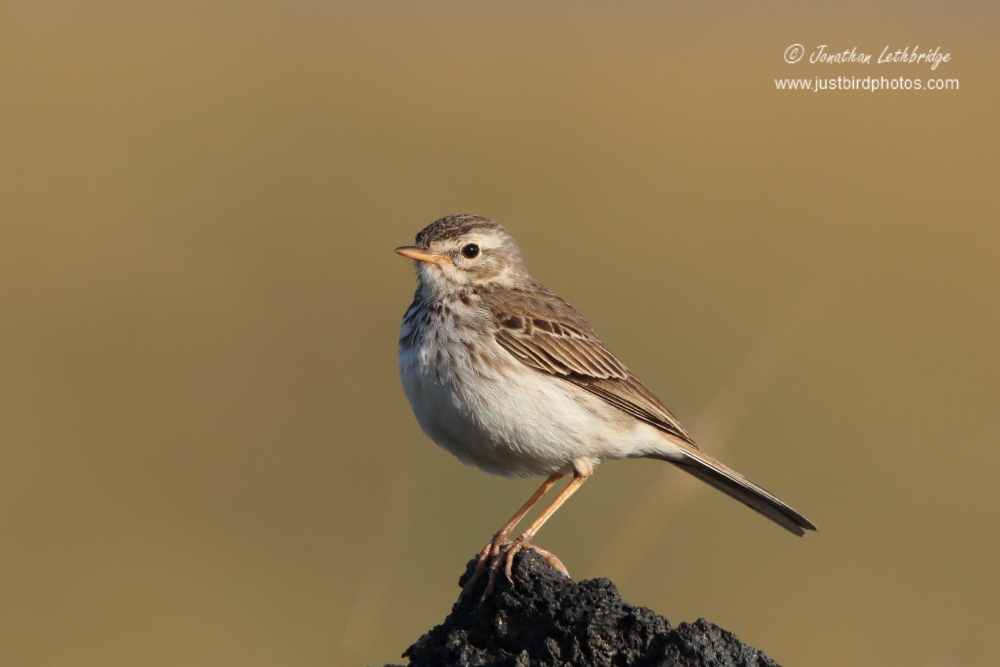
A trip to a small island is unlikely to feature a massive number of birds, and Lanzarote is no different. As such the main focus was on a small number of specialty species for which the wider Canary Islands are known, particularly the inhabitants of the large sandy plains like Cream Coloured Courser and Houbara Bustard. Mick and I started at the Jable de Famara in the north-west of the Island. As you descend towards the plain from its eastern edge it does not look particularly large, but as you head into it the size becomes apparent. A few main tracks that are perfectly easy to drive cross it east to west, and there are then innumerable smaller paths that with care you can also drive along in order to cover a bigger area. I don't know how many Bustards and Coursers inhabit this area, but in two hours that morning we didn't see a single one! In short, hard work. Berthelot's Pipit and Short-toed Lark were very common, and we also encountered a few Raven, a ringtail Hen Harrier and several Great Grey Shrikes


Berthelot's Pipit


Approaching mid-morning we gave up, and after a bite to eat in a nearby village we went to explore La Isleta on the west coast. This was pretty good for waders, and per eBird is one of the better sites on the island. This was simply for a breather really, and we were soon back on the plains for round two. Another hour and a half trying new tracks netted excellent views of a party of Coursers on the western side, but even that was brief, and as for Bustards!

Slightly to the east of the Jable de Famara is the Jable del Medio. This is greener and less dusty, with more agriculture, and amazingly we found a Houbara after a few hours of searching. Getting anywhere near it, even in the car, proved almost impossible, and whilst we gave it a go we lost the light. As dusk approached, the original Bustard joined three others that must have been lurking nearby and we got clear if distant views as they fed unconcernedly in a field.

Houbara Bustard! Five seconds of opportunity after a day of looking!


Wednesday, 25 January 2023

Lanzarote - Logistics and itinerary


Lanzarote, 10th-13th December 2022

I am still playing catch up from last year. Colombia took so long to write up that I only completed it about two months after getting back, but actually only a few weeks after returning I had a few days in Lanzarote with Mick. In some ways it was a bit soon after getting back from South America, but I have a habit of doing this. I book up trips with great enthusiasm many months in advance, thinking that it will all be fine, but when it comes to it I would actually rather be at home than packing my bag and trekking to the airport again to subject myself to the vagiaries of international travel. Until I get there of course, when I revel in being in a new place with new birds. It was not a long trip, just three days, and this was the perfect length actually as Lanzarote is not a big island and there are only a few primary birding areas. Having visited Tenerife, Gran Canaria and Fuerteventura, this was the last major Canary Island on my list. It was warm and there were birds, and it was ridiculously cheap. And we missed the bulk of the freezing conditions back home!


Logistics
  • A three day trip in mid December departing London on Saturday afternoon and returning on Tuesday afternoon.
  • Flights: from Heathrow to Arecife on British Airways.
  • Covid logistics: None, Spain has totally dispensed with all controls.
  • Car Hire: Avis, a bargain little VW of some sort.
  • Accommodation: A two bedroom apartment on the outskirts of Arecife, extremely cheap out of season. Fully appointed kitchen but we ate out instead as we were  not staying long enough to go shopping.
  • Food: Tapas!
  • Literature: The Collins and eBird.


Itinerary

Day 0: Arrived ACE at 7pm, picked up the car and then a short drive to the flat. Dinner and bed.
Day 1: Spent most of the day driving small tracks in the Jable de Farama area (1), La Santa (2), and the Jable del Medio (near 1) looking for Bustards and Coursers.
Day 2: The south of the Island, starting at the Salinas de Janubio (3), and then the Playa Blanca area (4), returning to Punta Lima (4) in the afternoon to look for African Collared Dove. Final hour at the Jable del Medio where we found a pair of Hoopoe feeding young.
Day 3: A morning session with the Hoopoes and then back to the airport.